
Alexander Island (Antarctica)
Largest island of Antarctica, lying in the Bellingshausen Sea; known for its ice-covered landscapes, scientific sites such as Hodgson Lake, and its discovery and naming in 1821.
Overview
Alexander Island is the largest island associated with the Antarctic region and lies close to the continent's western side near the South Pole sector. Despite its size and proximity to the Antarctic mainland, it is uninhabited and largely covered by ice and mountain ranges. The island is often discussed in polar science because of its glaciology, isolated lakes and its role in understanding the geology and paleoclimate of Antarctica.
Image gallery
8 Images



Location and physical characteristics
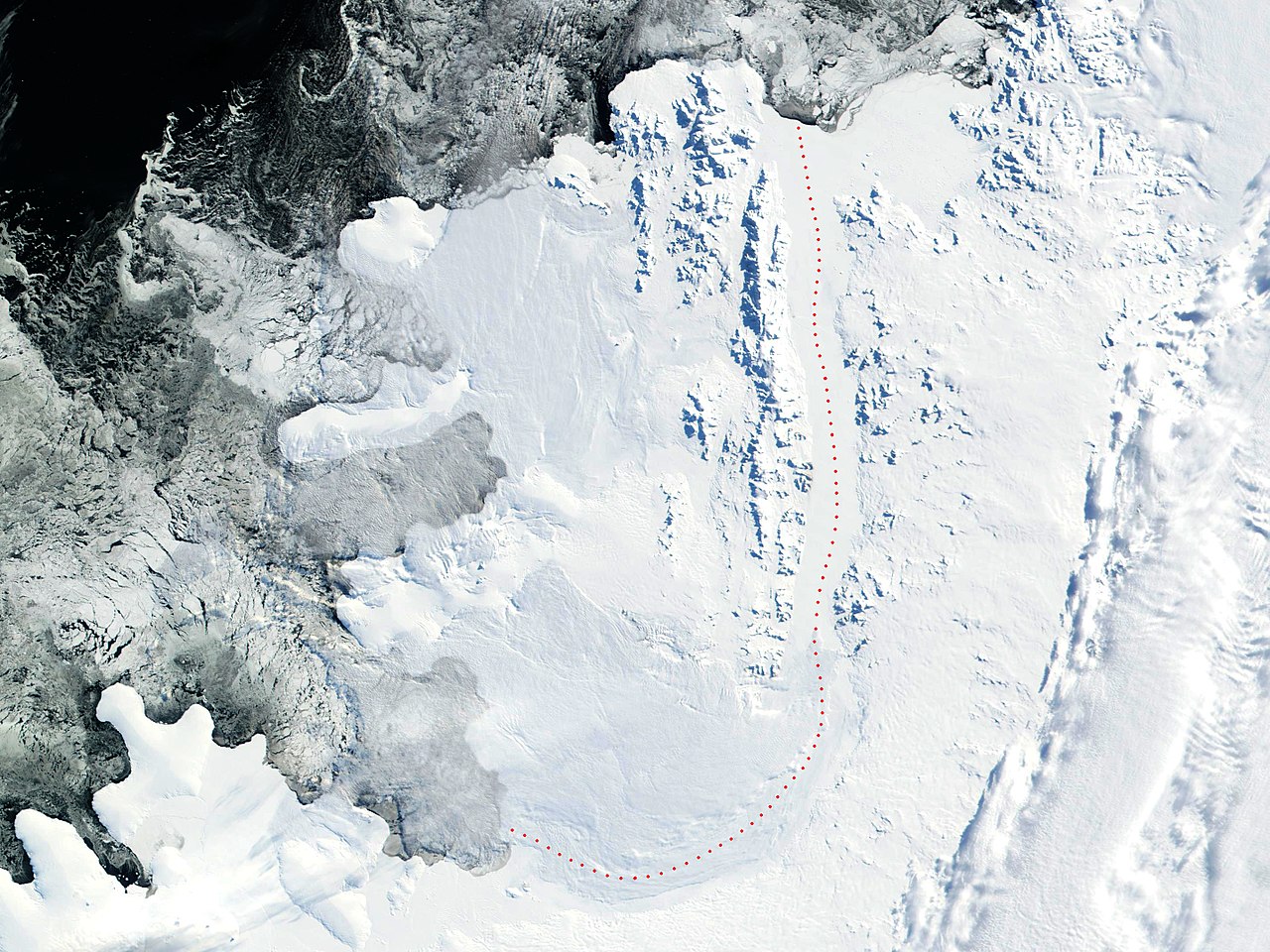
Alexander Island sits in the Bellingshausen Sea, to the west of the portion of the mainland known as Palmer Land. It is separated from the main Antarctic Peninsula by water bodies including Marguerite Bay and the ice-filled George VI Sound, which effectively connects the island to Palmer Land across a corridor of packed sea ice and shelf ice. The island also partly encircles Wilkins Sound on its western side.
The island measures roughly 240 miles (390 km) from end to end. Its width varies markedly: about 50 miles (80 km) across in the north and expanding to around 150 miles (240 km) in the southern reaches. These dimensions make Alexander Island the largest island in the Antarctic region and one of the largest uninhabited islands on Earth, second in that category only to Devon Island.
Geology, ice and climate
Alexander Island displays a mix of exposed rock, mountain ranges and extensive ice cover. Mountain chains and nunataks (peaks protruding above the ice) interrupt inland ice sheets; these features offer windows into the geological history of the area. The regional climate is polar: extremely cold, windy and dominated by sea ice and ice shelves for much of the year. George VI Sound, the narrow channel between Alexander Island and the Antarctic Peninsula, is commonly choked with pack and glacier-derived ice, which historically led explorers to treat the island as part of the continental mainland.
Discovery and naming
European sighting of the island is recorded on 28 January 1821 during early nineteenth-century Antarctic voyages. It was named in honor of the reigning Russian monarch at the time, Alexander I, reflecting the common practice of the era to name polar features after sovereigns and patrons. For more than a century explorers and cartographers believed the landmass to be a peninsula of Antarctica until later surveys and aerial reconnaissance in the twentieth century demonstrated a separating water/ice-filled channel, reclassifying it as an island.
Notable features and scientific importance
Among the island's distinctive features is Hodgson Lake, a previously subglacial lake that became exposed when the overlying ice retreated. Hodgson Lake is roughly 2 km by 1.5 km and contains a deep water column that has been sealed beneath perennial lake ice. Such environments are important to scientists because they preserve unique microbial ecosystems and records of past climates. Research on Alexander Island contributes to broader Antarctic studies in glaciology, paleoclimate reconstruction and biology, often coordinated through international programs based on the continent of Antarctica.
Human presence and status
There is no permanent civilian population on Alexander Island. Occasional field parties and scientific teams visit during the austral summer for specific studies; any activity is governed by the Antarctic Treaty System and environmental protocols. The island's uninhabited status and remote location make it a valuable natural laboratory for studying relatively undisturbed polar processes.
Quick facts
- Region: part of the Antarctic realm, west of the Antarctic Peninsula (Antarctic Peninsula).
- Sea margin: bordered by the Bellingshausen Sea and adjacent sounds.
- Size: approximately 240 miles (390 km) long; width varies from ~50 miles (80 km) to ~150 miles (240 km).
- Discovery: sighted in 1821 and named for Alexander I of Russia.
- Distinction: largest Antarctic island and one of the world’s largest uninhabited islands.
For further detailed maps and expedition reports consult specialized polar research sources and repositories identified by international scientific organizations and archives: polar references, historical records, and institutional data portals maintained by national Antarctic programs.
Researchers and readers interested in visiting or studying Alexander Island should refer to logistics and permitting information through treaty bodies and national Antarctic programs represented by scientific operators: see logistical guides, environmental impact resources for the Antarctic Peninsula region, and conservation frameworks that apply to uninhabited polar territories.
Questions and answers
Q: What are some other names for Alexander Island?
A: Alexander Island is also known as Alexander I Island, Alexander I Land, Alexander Land, Alexander I Archipelago, and Zemlja Alexandra I.
Q: Where is Alexander Island located?
A: Alexander Island is located near the South Pole in the Bellingshausen Sea west of Palmer Land.
Q: How large is Alexander Island?
A: Alexander Island is the largest island of Antarctica and about 240 miles (390 km) long. It is 50 miles (80 km) wide in the north and 150 miles (240 km) wide in the south.
Q: What is Hodgson Lake?
A: Hodgson Lake is a former subglacial lake on Alexander Island that has come out from under an ice sheet that covered it. It has a 93.4 m (306 ft) deep water column that is sealed beneath 3.6 to 4.0 m (12 to 13 ft) thick lake ice.
Q: When was Alexander Island discovered and by whom?
A: Alexander Island was discovered on January 28, 1821, and was named for the reigning Tsar Alexander I of Russia.
Q: Is Alexander Island inhabited?
A: No, Alexander Island is uninhabited and is the second largest uninhabited island in the world, with Devon Island being the largest.
Q: What separates Alexander Island from the Antarctic Peninsula?
A: Marguerite Bay and George VI Sound separate Alexander Island from the Antarctic Peninsula. George VI Sound is filled with ice and connects Alexander Island to Palmer Land.
Related articles
Author
AlegsaOnline.com Alexander Island (Antarctica) Leandro Alegsa
URL: https://en.alegsaonline.com/art/2366
Sources
- geonames.usgs.gov : U.S. Geological Survey Geographic Names Information System: Alexander Island
- commons.wikimedia.org : Alexander Island