
Courtship in Animals: Behaviors, Functions and Notable Examples
Courtship in animals comprises the behaviors that attract and secure mates, ranging from dances and displays to chemical signals; it shapes sexual selection, pair bonds, and reproduction across many taxa.
Courtship in animals refers to the suite of behaviors used to attract, evaluate and secure mating partners. These behaviors serve the proximate purpose of initiating copulation and the ultimate evolutionary function of increasing reproductive success. Courtship forms a broad category of social and sexual interactions that vary widely by species, ecology and mating system. For a concise overview of the concept, see courtship.
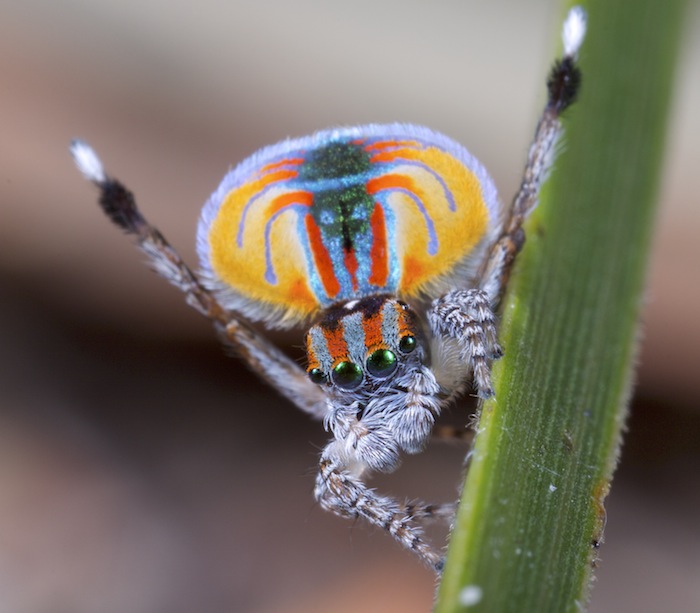
Typical courtship elements include visual displays (plumage, dances, postures), acoustic signals (songs, calls), chemical signals (pheromones), tactile contacts (pre-mating caresses) and material gifts (food, nest structures). Some males advertise their quality through ornaments or elaborate constructions; some females signal receptivity or quality. These signals may be honest indicators of genetic or phenotypic fitness, or, in special cases, they may involve deception or coercion. The link between courtship and reproduction is fundamental: such behaviors determine which individuals mate and thus influence which genes are transmitted to offspring (reproduction).
Image gallery
10 Images



Common patterns and notable examples
- Bowerbirds — Several species of bowerbird are famous for males that build and decorate elaborate structures (bowers) with carefully selected objects to attract females; the artistic arrangement and maintenance of these structures are key to female choice (bowerbird).
- Great Crested Grebes — Pairs perform complex mutual displays and synchronized movements; observers have documented distinct routines used at pair formation, reunion and parental phases (Great Crested Grebe).
- Drosophila and insects — Insects often rely on species-specific courtship sequences. For example, male fruit flies perform patterned dances and songs; mutations that disrupt these sequences can prevent mating, illustrating genetic control over components of courtship (Drosophila, mutations).
- Other taxa — Fish, amphibians, reptiles and mammals exhibit diverse courtship: courtship feeding, nest building, vocal duets, territory displays and scent marking. Even organisms with simple nervous systems can show highly stereotyped mating behaviors.
Not all courtship follows the pattern of male display and female choice: sex roles can reverse, be mutual, or be influenced by ecological constraints and parental care. In species where both parents contribute heavily to offspring rearing, courtship often reinforces pair bonds and coordinates cooperative breeding efforts. In polygynous systems, displays may emphasize short-term mating success rather than long-term cooperation.
Behavioral components of courtship arise from a mix of inherited tendencies and learning. Many species exhibit innate, species-typical sequences, while others refine signals with experience, social feedback or imprinting. The study of courtship therefore bridges ethology, neurobiology and evolutionary biology. Researchers use experimental genetics and controlled observations to dissect how specific genes and neural circuits shape courtship patterns; classic examples include genetic studies in laboratory species such as Drosophila and experimental descriptions of ritualized displays like those recorded for the grebe (see studies).
Understanding courtship has practical implications. Conservation and captive-breeding programs often replicate or stimulate natural courtship cues to promote successful reproduction. Comparative study of courtship also illuminates how sexual selection drives morphology, behavior and speciation. For broader context on cognitive requirements, note that complex courtship is not limited to large-brained animals; even simple organisms can exhibit precise mating rituals (brain size and behavior).
For further reading on evolutionary and ecological perspectives, consult summaries of mating systems and sexual selection, and follow primary research links for particular taxa (reproduction resources, overview). Empirical case studies and genetic experiments continue to reveal how courtship both emerges from and shapes animal biology and diversity.
Questions and answers
Q: What is courtship in animals?
A: Courtship in animals is the behaviour by which different species select their partners for reproduction. Usually, the male starts the courtship and the female chooses to either mate or reject him based on his performance.
Q: Which animal has well-studied courtship rituals?
A: The bowerbird has well-studied courtship rituals, where the male builds a "bower" of collected objects.
Q: What kind of partnerships do Great Crested Grebes form?
A: Great Crested Grebes form life (or at least long-lasting) partnerships. They also have pair-bonding dances throughout the mating season and while raising young.
Q: Is this behaviour inherited?
A: Yes, this behaviour is inherited, though individual birds remember the place and partner permanently.
Q: Are mammals and birds the only animals with complex brains that engage in courtship?
A: No, mammals and birds are not the only animals with complex brains that engage in courtship. Male Drosophila flies have to do a mating dance in front of females before they will allow them to mate; if it's not correct for that species she rejects him. This behaviour is advantageous to females whose genes have a better chance of contributing to future generations if her partner is biologically fit. Other insects also have mating rituals as well.
Related articles
Author
AlegsaOnline.com Courtship in Animals: Behaviors, Functions and Notable Examples Leandro Alegsa
URL: https://en.alegsaonline.com/art/23655