
Counties of Croatia (Županije)
Overview of Croatia's counties (županije): organization, role, history, and notable facts including Zagreb's special status and the division into cities and municipalities.
The counties of Croatia, known in Croatian as županije, are the principal administrative units of the Republic of Croatia. In current practice there are 20 counties plus the capital city of Zagreb, which functions simultaneously as a city and a county-level unit. This arrangement produces 21 county-level entities in total. The counties are further subdivided into 128 cities and 428 municipalities, which handle local services and governance.
Image gallery
7 Images


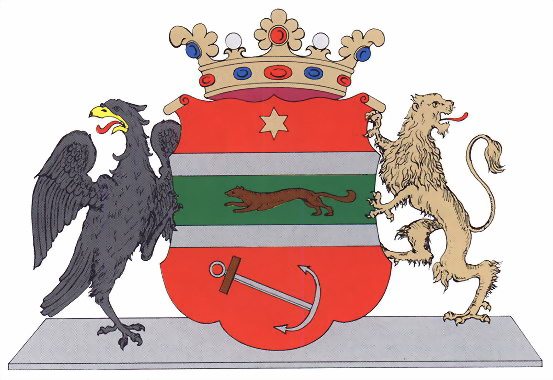


Organization and governance
Each county has a representative body, the county assembly (Croatian: županijska skupština), whose members are elected for four-year terms. Executive authority is led by a county head, commonly called the župan (prefect), supported by appointed officials. Counties operate as first-level administrative divisions, coordinating public services that extend beyond municipal boundaries.
Functions and responsibilities
Counties are responsible for tasks such as managing secondary education institutions, certain healthcare services, social welfare programs, regional road networks and public transport, spatial and developmental planning, and economic promotion. They act as intermediaries between the national government and local authorities, allocating resources and implementing regional policies.
Historical context and development
The modern county system was established after Croatia gained independence in the early 1990s and was shaped by constitutional and legislative reforms during that period. Over time the system has balanced local autonomy with centralized standards; for statistical and EU purposes counties correspond to NUTS-3 level regions, which aids regional analysis and funding.
Notable distinctions and examples
- Zagreb has a special status: the capital city is administered as both a municipality-level city and a county, distinct from the surrounding Zagreb County.
- Counties vary widely in area and population: some are largely urban, others predominantly rural or island-based.
- The official count of 20 counties plus Zagreb reflects the current administrative map used in governance and public administration.
Importance and contemporary role
Counties shape regional planning and service delivery, influencing education, transport, health, and local economic strategies. They provide a framework for regional identity and cooperation while serving as the basic unit for certain public funding programs and intergovernmental coordination. For more on terminology and specific county functions see authoritative sources and legal texts linked by national institutions and regional administrations (both a county and a city).
Further information on administrative divisions, individual county profiles, and electoral procedures is available through official channels and regional offices responsible for county governance, planning and statistics. For comparative context and specific data consult regional guides and government publications (administrative division, national context).
Questions and answers
Q: How many counties are there in Croatia?
A: There are 20 counties in Croatia and the capital city of Zagreb which is also considered a county and a city.
Q: What is the meaning of županije?
A: županije is the Croatian word for counties, which are the first-level administrative divisions of the Republic of Croatia.
Q: How many cities are there in Croatia's counties?
A: There are 128 cities in Croatia's counties.
Q: What is the role of county assemblies in Croatia?
A: County assemblies have the responsibility of governing the counties in Croatia.
Q: How long is a term of the county assembly members?
A: Members of the county assembly are elected for a four-year term in Croatia.
Q: Are the counties and the capital city of Croatia governed in the same way?
A: No, the capital city of Croatia is governed in a different way than the counties even though it is considered a county and a city.
Q: How many municipalities are there in Croatia's counties?
A: There are 428 municipalities in Croatia's counties.
Related articles
Author
AlegsaOnline.com Counties of Croatia (Županije) Leandro Alegsa
URL: https://en.alegsaonline.com/art/23485
Sources
- sabor.hr : The Constitution of the Republic of Croatia (consolidated text) - Croatian Parliament
- hgk.biznet.hr : "Gospodarski profil Grada Zagreba i Zagrebačke županije"
- narodne-novine.nn.hr : "Zakon o područjima županija, gradova i općina u Republici Hrvatskoj"
- narodne-novine.nn.hr : "Zakon o područjima županija, gradova i općina u Republici Hrvatskoj"
- poslovni.hr : "Popovača dobila status grada"
- narodne-novine.nn.hr : "Zakon o lokalnim izborima"
- dzs.hr : "Counties, surface area, population, towns, municipalities and settlements, 2011 census"
- dzs.hr : "Gross domestic product for Republic of Croatia, statistical regions at level 2 and counties, 2011"