
Council of Jerusalem (Apostolic Council, c. 50 CE)
An early meeting of Christian leaders recorded in Acts 15 that dealt with whether Gentile converts must follow Mosaic law; a key event in the separation of Christianity from Judaism.
Overview
The Council of Jerusalem, often called the Apostolic Council, is the name given to a gathering of early Christian leaders described in the New Testament book of Acts (chapter 15). It is usually dated to around 49–50 CE and convened to address a practical and theological dispute: whether Gentile converts to the Christian movement must observe the Mosaic law, notably circumcision. The meeting is one of the earliest recorded decisions shaping the identity and mission of the emerging Christian community. For the account in Acts, see Acts 15.
Image gallery
7 Images


Context and participants
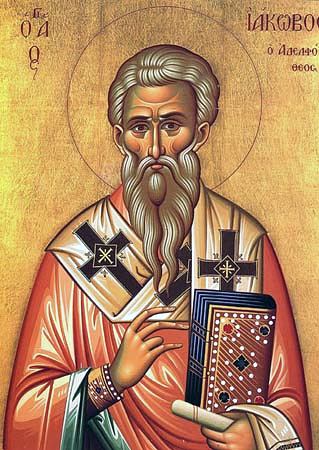
By the mid‑first century the Christian movement had spread from Jerusalem into Judea, Syria and Asia Minor. Gentile conversions in cities such as Antioch provoked debate because some Jewish Christians (sometimes termed "Judaizers" in later literature) insisted that Gentile believers should be circumcised and keep the law. Key figures associated with the Jerusalem meeting in the sources include the apostles Peter and James, and missionaries Paul and Barnabas. The leader James the Just is portrayed as playing a decisive role in formulating the council's judgment; his historical prominence in the Jerusalem church is also noted in other early sources and is commonly linked with the period before his death around the early 60s CE (James the Just).
Decisions and outcome
The council concluded that Gentile converts were not required to observe the full burden of Mosaic law or undergo circumcision as a condition of membership in the Christian community. Instead, the assembly issued a limited set of practical requirements intended to ease fellowship between Jewish and Gentile believers. The measures recorded in Acts are often summarized as prohibiting:
- food sacrificed to idols,
- consumption of blood,
- meat from strangled animals, and
- sexual immorality.
These directives were communicated to Gentile churches by letter and missionary delegates, aiming to balance respect for Jewish sensitivities with the freedom of Gentiles from full ceremonial law.
Significance and legacy
The council marked a turning point: it allowed the predominantly Gentile turn of much of the early church without making full Jewish observance a requirement. Historians see it as a formative moment in how Christianity came to define itself distinct from Judaism while retaining elements of Jewish ethical teaching. The event is also significant for the precedent it set for communal decision‑making and for later ecclesiastical councils.
Scholarly perspectives and debates
Scholars debate the precise chronology and the relationship between the Acts account and Paul's references to a Jerusalem visit in Galatians. Some argue Acts presents a single formal council, while others suggest a more extended negotiation or that multiple meetings occurred. Regardless of these details, the Jerusalem decision is widely regarded as a crucial early resolution that helped shape Christian doctrine, mission strategy, and communal practice.
Questions and answers
Q: What is the Council of Jerusalem?
A: The Council of Jerusalem is a meeting reported in the Acts of the Apostles chapter 15 of early Christian leaders.
Q: When did the Council of Jerusalem take place?
A: The meeting must have happened around the year 50, at the latest some time before the death of James the Just in 62.
Q: What was the purpose of the Council of Jerusalem?
A: The purpose of the Council of Jerusalem was to discuss and settle a dispute within the early Christian church on whether Gentile converts needed to follow Jewish law.
Q: Who attended the Council of Jerusalem?
A: Early Christian leaders attended the Council of Jerusalem including Peter, James, and Paul.
Q: Did the Council of Jerusalem make a decision on the dispute?
A: Yes, the Council of Jerusalem made a decision to allow Gentile converts to become Christians without following Jewish law.
Q: How significant was the Council of Jerusalem in early Christianity?
A: The Council of Jerusalem was a significant event in early Christianity as it helped to establish the relationship between the Jewish and Gentile elements of the church.
Q: Is the Council of Jerusalem still relevant today?
A: The decision made at the Council of Jerusalem remains relevant today as it established the Christian principle that faith, rather than observance of religious law, is the key to salvation.
Related articles
Author
AlegsaOnline.com Council of Jerusalem (Apostolic Council, c. 50 CE) Leandro Alegsa
URL: https://en.alegsaonline.com/art/23452