
Council of Chalcedon (451)
An ecumenical council convened in 451 at Chalcedon that defined the two natures of Christ, issued canons affecting church order, and shaped major doctrinal divisions in Christianity.
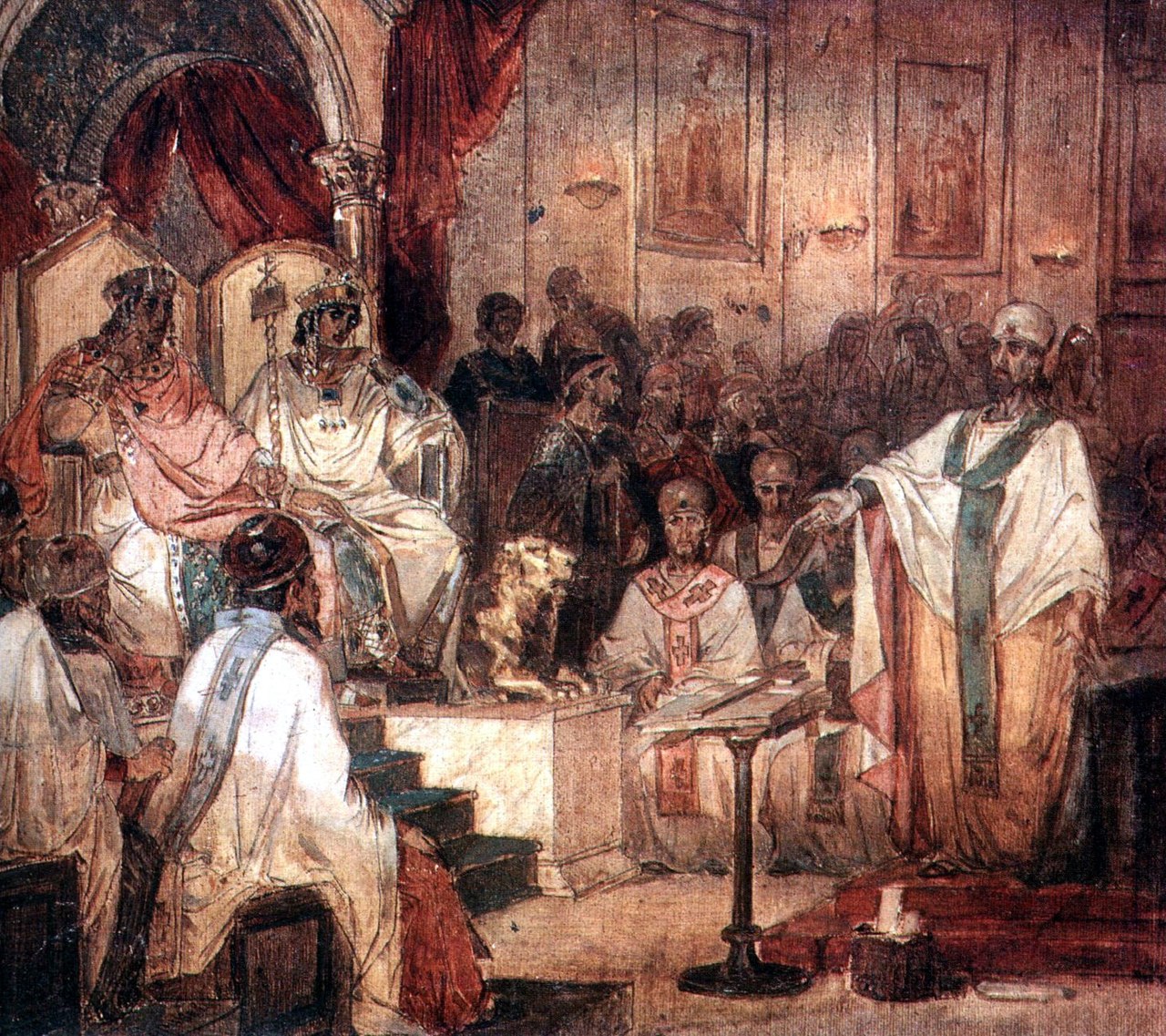
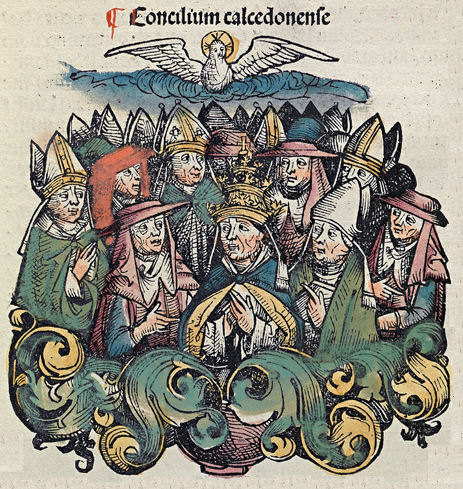
The Council of Chalcedon was an ecumenical assembly convened in 451 CE to settle urgent Christological disputes. It opened on October 8 and closed on November 1, meeting at Chalcedon, a city in ancient Bithynia. The location is on the Asian shore of the Bosphorus, today part of Istanbul. The council is commonly referenced as one of the early ecumenical gatherings in the history of the Christian church (ecumenical council).
Image gallery
6 Images



Context and contested questions
The assembly responded to debates following earlier synods and the teachings of figures like Nestorius and Eutyches. These controversies concerned how the divine and human natures coexisted in the one person of Jesus Christ. In the decades before Chalcedon theologians, bishops and emperors had sought a formula that would avoid extremes while preserving both Christ’s full divinity and full humanity.
Definition and canons
The council produced a definitive statement — often called the Chalcedonian Definition — that described Christ as one person in two natures, fully God and fully man, "without confusion, without change, without division, without separation." In addition to this doctrinal verdict, the council issued a set of canons dealing with practical church governance. One notable administrative act recognized an elevated status for the see of Constantinople, a decision that later generated disputes with the Bishop of Rome.
Aftermath and divisions
While Chalcedon was accepted by the imperial church in the East and by churches that later became Orthodox, Catholic and many Western traditions, it was rejected by several churches in Egypt, Syria and Armenia. Those communities, later known as the Oriental Orthodox churches, held to alternative formulations (often labeled miaphysite or non-Chalcedonian), which led to enduring schisms and separate ecclesial identities.
Importance and legacy
Chalcedon had long-term influence on Christian theology, ecumenical relations and church structure. Its Christological language remains central to many denominations' doctrinal standards, and its canons shaped the balance of authority among major sees. The council is studied as a turning point in late antique Christianity and as a reference point in modern ecumenical dialogues.
Questions and answers
Q: What is the Council of Chalcedon?
A: The Council of Chalcedon was an ecumenical council that took place in 451 AD in Chalcedon, which is now part of Istanbul.
Q: When did the Council of Chalcedon take place?
A: The Council of Chalcedon took place from October 8 to November 1, 451 AD.
Q: Where did the Council of Chalcedon take place?
A: The Council of Chalcedon took place in the city of Chalcedon, which is now part of Istanbul on the Asian side of the Bosphorus.
Q: What is an ecumenical council?
A: An ecumenical council is a gathering of representatives from the entire Christian Church to discuss and make decisions on important matters of faith and practice.
Q: What was the purpose of the Council of Chalcedon?
A: The purpose of the Council of Chalcedon was to clarify the Christian belief regarding the nature of Jesus Christ and determine that he was one person with two distinct natures, one fully divine and one fully human.
Q: Who attended the Council of Chalcedon?
A: The Council of Chalcedon was attended by approximately 520 bishops and their delegates, who represented the Christian Church from various regions of the Roman Empire.
Q: Why was Chalcedon chosen as the location for the council?
A: Chalcedon was chosen as the location for the Council of Chalcedon because it was a neutral location between the rival cities of Rome and Constantinople, and because it had a large enough meeting space to accommodate the number of attendees.
Related articles
Author
AlegsaOnline.com Council of Chalcedon (451) Leandro Alegsa
URL: https://en.alegsaonline.com/art/23447