
Corvidae — the crow family: crows, ravens, jays and allies
Corvidae is a widespread family of passerine birds including crows, ravens, jays, magpies and allies. Noted for intelligence, social behaviour and adaptability, the family contains over 120 species found on most continents.
The Corvidae are a diverse family of passerine birds often referred to as the crow family. For a general overview see Corvidae. Corvids are true passerines (perching birds) but many species lack the melodious songs associated with other songbirds. The family includes more than 120 species across a range of forms and sizes. One major genus, Corvus, contains the well known crows, as well as jackdaws and large ravens.
Image gallery
10 Images


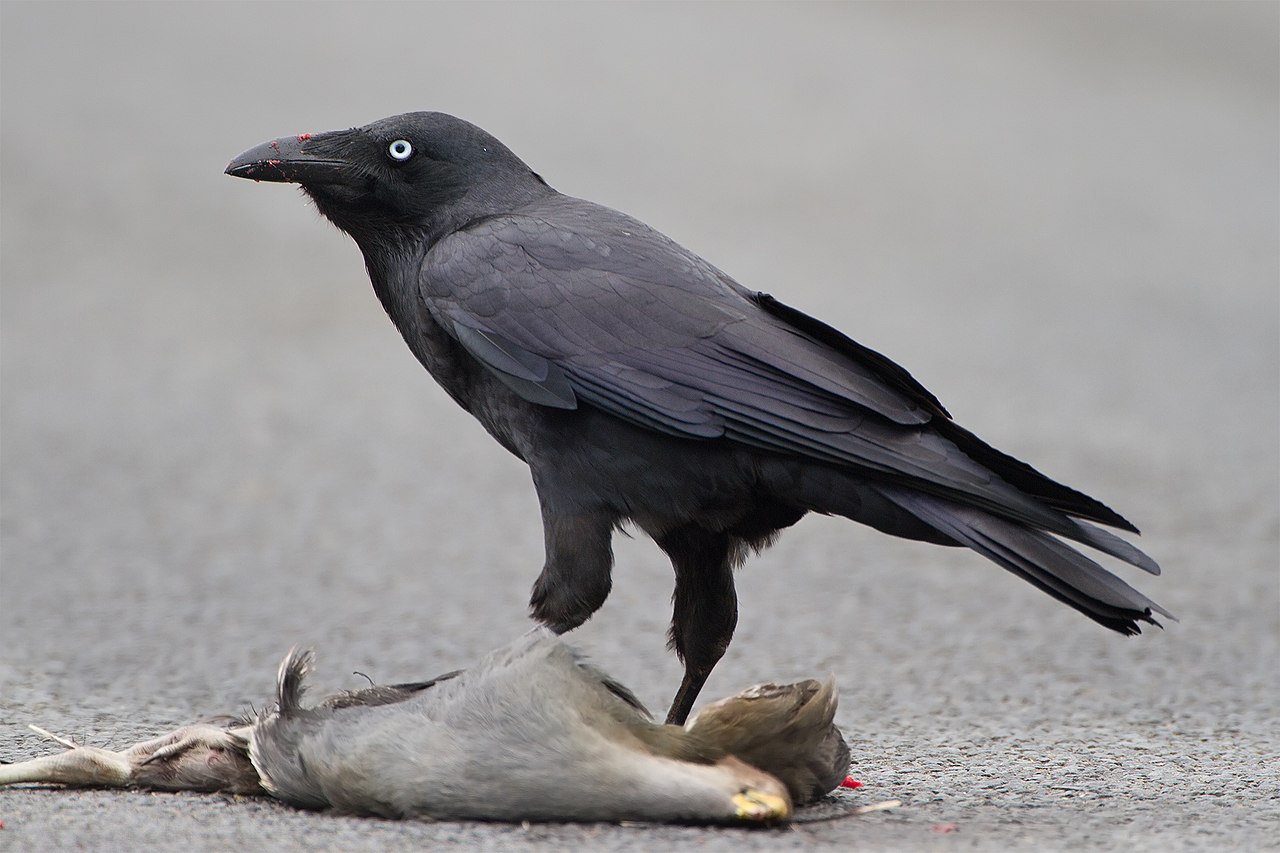


Characteristics and classification
Corvids are generally medium to large passerines with strong, stout bills, robust bodies and feet adapted for perching and handling food. Plumage ranges from glossy blacks in many crows and ravens to bright blues, greens and patterned black-and-white plumage in many jays and magpies. Corvid skull and brain morphology supports advanced cognitive abilities relative to body size, and many species show complex problem solving and social learning. Taxonomically the family is divided into several genera based on morphology and behaviour; for systematic detail see resources on Corvidae classification and genus-level accounts such as Corvus.
Distribution and habitat
Corvids have a near-global distribution and occur on most continents. They are absent from Antarctica and are uncommon or absent from some isolated oceanic islands and parts of southern South America. Highest species diversity is found across parts of Europe, Asia and the Americas, including Central America and South America. Fewer but ecologically important species occur in Africa, Australia and North America, where corvids occupy habitats from dense forests to open farmland and urban areas.
Behaviour and cognition
Corvids are renowned for intelligence: many species cache food and remember cache locations, use and fashion simple tools, and solve multi-step problems. Social behaviour ranges from territorial pairs to large communal roosts; some species engage in cooperative breeding or complex play. Vocal communication is varied and often harsh or raucous rather than melodic; local dialects and contextual calls are common. A group of crows is popularly called a murder, a cultural name reflecting human impressions of their gatherings and scavenging habits.
Ecological role and human interactions
As omnivores and opportunistic scavengers, corvids contribute to seed dispersal, carrion removal and control of invertebrate pests. Their adaptability has led many species to exploit human environments; urban corvids are successful but sometimes cause conflicts through noise, predation on other birds or impacts on crops. Corvids feature widely in folklore, art and scientific study as symbols of intelligence and adaptability, and they are subjects of conservation concern in regions where habitat loss or persecution threatens local populations.
Further information and species lists are available in family and genus accounts: general references (Corvidae overview), genus treatments such as Corvus, and regional notes for Europe, Asia, Central America and other areas. Additional resources include regional field guides and conservation assessments (passerine references, crow accounts, jackdaw studies, raven research, continental lists, South American notes, Antarctic absence, African species, Australian species, North American species).
Questions and answers
Q: What is the Corvidae family?
A: The Corvidae family is a group of passerines, commonly known as the crow family.
Q: How many species are in the Corvidae family?
A: There are over 120 species in the Corvidae family.
Q: What is the genus that includes crows, jackdaws and ravens?
A: The genus that includes crows, jackdaws and ravens is called Corvus.
Q: Where are most crows found?
A: Most crows can be found in South America, Central America, Europe and Asia.
Q: Are there any continents without crows?
A: Crows can not be found in the southern area of South America or Antarctica.
Q: How many species of crows are there in Africa, Australia and North America?
A: There are only 10 species each of crows in Africa, Australia and North America.
Q: What do you call a group of crows?
A: A group of crows is called a murder.
Related articles
Author
AlegsaOnline.com Corvidae — the crow family: crows, ravens, jays and allies Leandro Alegsa
URL: https://en.alegsaonline.com/art/23278