
Cornish Rebellion of 1497: the tax revolt and march on London
A 1497 popular uprising in Cornwall against taxes raised by Henry VII to fund a campaign in Scotland; led by Michael An Gof and Thomas Flamank, it culminated in a march to London and defeat at Blackheath.
Overview
The Cornish Rebellion of 1497 was a regional uprising in southwestern England prompted by economic grievances and perceived assaults on long‑standing local rights. Men and women from Cornwall marched inland in protest after taxes were levied by King Henry VII to finance military action against Scotland. The movement combined social, legal and patriotic elements and became one of the most notable popular disturbances of the early Tudor period.
Image gallery
3 Images

Causes and grievances
At the heart of the rising were objections to a new royal subsidy: many Cornish tin miners and rural communities argued that the levy violated exemptions once confirmed by earlier monarchs. The tin industry in Cornwall had special privileges administered through the stannary system; these exemptions dated back to arrangements under Edward I and were defended by local institutions. Opposition also reflected broader resentment of taxation perceived as benefiting interests in the north and court policy in faraway Britain.
Leaders, march and defeat
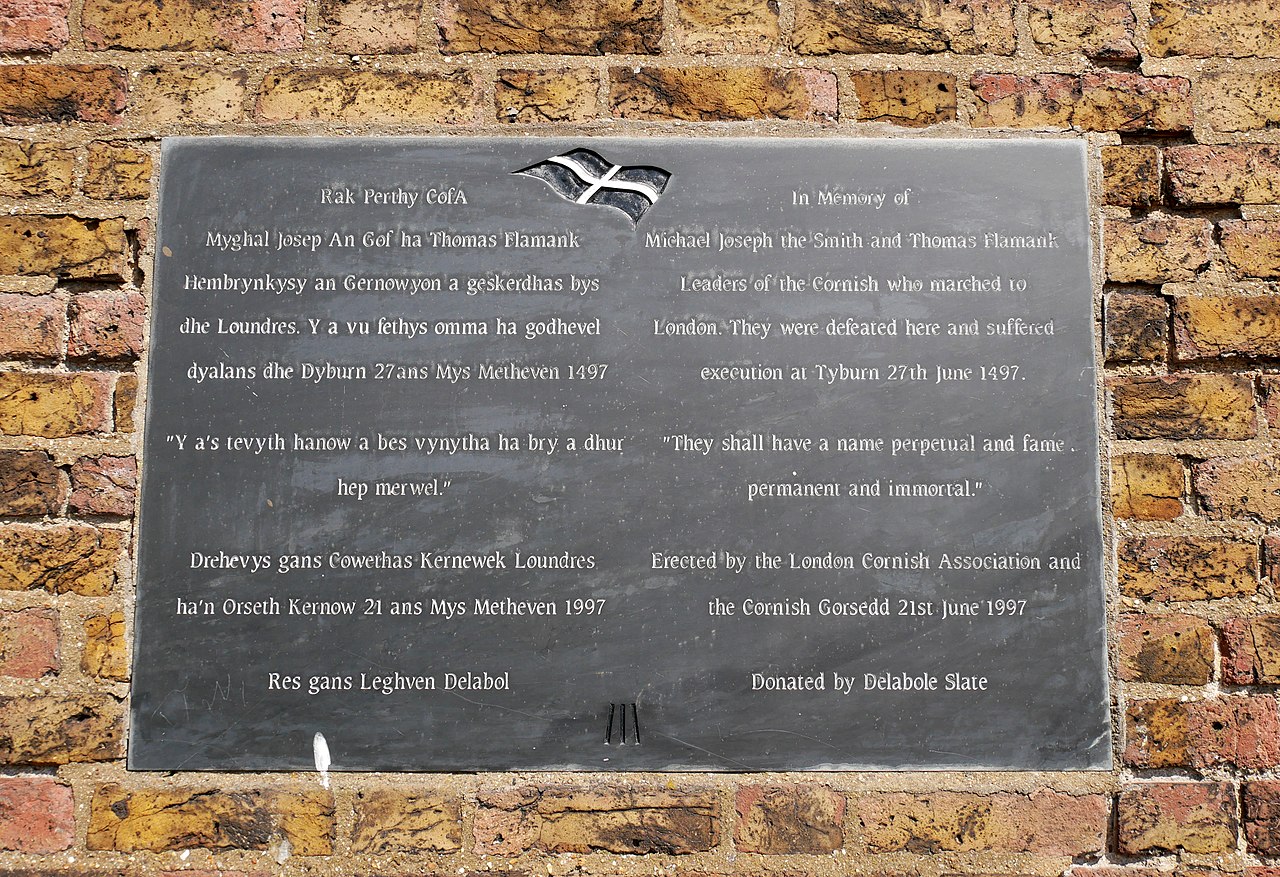
Two prominent figures emerged as spokesmen for the protest: Michael An Gof, a blacksmith from St Keverne, and Thomas Flamank, a lawyer from Bodmin. They led a force made up largely of rural men that marched east toward London, gaining recruits and attention as it advanced. The royal army met and routed the rebels at Deptford Bridge (often called the battle of Blackheath) on the approaches to the capital. The leaders were captured and later executed in London, while many participants faced fines, imprisonment or dispersal.
Consequences and significance
The rebellion exposed tensions between regional legal traditions and Tudor fiscal needs. Although suppressed decisively, it revealed weaknesses in Henry VII's early rule and the limits of royal authority when local customs were felt to be trampled. The episode also encouraged later caution in tax collection and helped shape the Crown's responses to popular protests. Within Cornwall it remained a potent memory of identity and resistance.
Related events and distinctions
The 1497 tax revolt is distinct from, but linked to, other disturbances of the same year. Later in 1497 the pretender Perkin Warbeck sought support in the southwest, and separate armed episodes occurred that summer and autumn. When studying these events it is useful to separate the popular, locally driven Cornish uprising from the political manoeuvres of Yorkist claimants and foreign powers.
Further reading
Questions and answers
Q: What was the Cornish Rebellion of 1497?
A: The Cornish Rebellion of 1497 was a popular uprising by the people of Cornwall in the far southwest of Britain.
Q: What was the primary cause of the Cornish Rebellion?
A: The primary cause of the Cornish Rebellion was the people's response to the raising of war taxes by King Henry VII to pay for a campaign against Scotland.
Q: Who were particularly angered by the war taxes?
A: Tin miners were particularly angered by the war taxes.
Q: What did the taxes overturn?
A: The taxes overturned previous rights granted by Edward I of England to the Cornish Stannary Parliament which exempted Cornwall from all taxes of 10ths or 15ths of income.
Q: Why was Cornwall exempted from these taxes by Edward I?
A: Cornwall was exempted from these taxes by Edward I due to the rights granted by the Cornish Stannary Parliament.
Q: What was the purpose of the taxes raised by King Henry VII?
A: The purpose of the taxes raised by King Henry VII was to pay for a campaign against Scotland.
Q: How was the rebellion described in terms of popularity?
A: The Cornish Rebellion was described as a popular uprising by the people of Cornwall.
Related articles
Author
AlegsaOnline.com Cornish Rebellion of 1497: the tax revolt and march on London Leandro Alegsa
URL: https://en.alegsaonline.com/art/23164