
Cordaitales: extinct order of early woody gymnosperms
Cordaitales were a group of extinct gymnosperm trees and shrubs that thrived in the Carboniferous and Permian; they had strap-like leaves and cone-like reproductive organs and may be related to early conifers.
Overview
Cordaitales is an extinct order of woody seed plants that belonged to the gymnosperms. They are known from abundant fossils and were an important component of late Paleozoic vegetation. Cordaitalean plants ranged from tall, tree-like forms to smaller, shrub-like species and are often cited in discussions of the early evolution of conifers and other modern gymnosperms. Modern descriptions emphasize their elongated leaves and cone-like reproductive structures as key identifying traits.
Image gallery
5 Images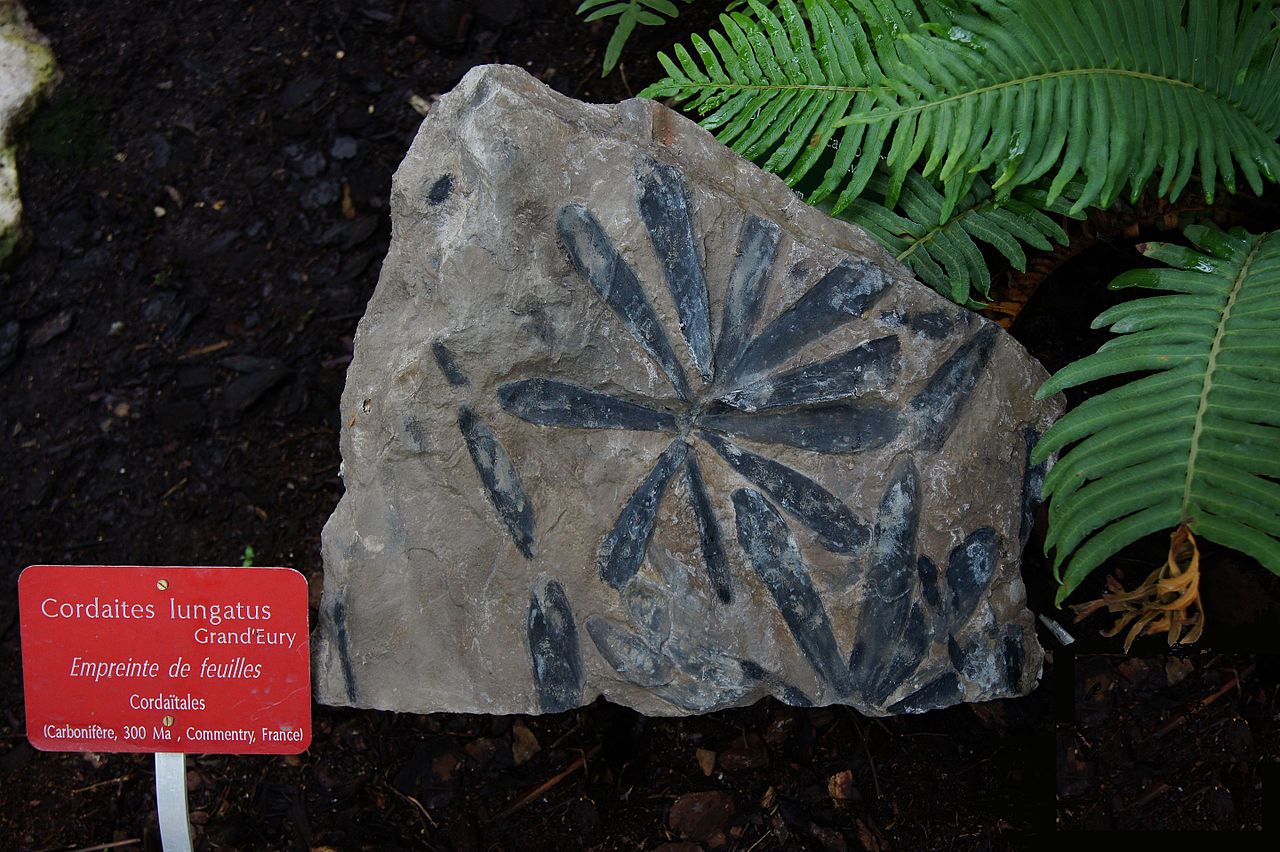


Morphology and distinguishing characteristics
Cordaitales shared a set of features that make them recognizable in the fossil record. Typical characteristics include:
- Long, strap-shaped or lanceolate leaves, often with parallel venation and a tough, leathery texture in life.
- Woody trunks and a branching habit that could produce sizable trees in some species.
- Reproductive organs arranged in cone-like structures (strobili) bearing seeds rather than enclosed carpels, a typical gymnosperm condition.
- A combination of anatomical features in wood and reproductive tissues that suggest affinities with early conifer-like groups.
Because they are seed plants that bear exposed ovules, Cordaitales are classified as gymnosperms. Some researchers have interpreted their anatomy as evidence that they were related to or ancestral to certain early conifers, though exact relationships within seed-plant evolution remain a subject of study.
Geological range and paleoecology
Cordaitales first appear in the fossil record during the Carboniferous period and continued to be abundant through the Permian. They occupied a variety of habitats: many species grew on relatively drier, upland sites within tropical and subtropical regions, while others adapted to wetter conditions. Some cordaitalean forms have been interpreted as occupying mangrove-like coastal or estuarine settings, resembling modern mangrove growth habits in certain respects.
Fossil remains occur in both terrestrial and coal-bearing sediments. In some basins cordaitalean wood, leaves and reproductive organs are preserved alongside peat and swamp deposits, which link them to the same environments that produced significant coal. Coal swamp deposits and terrestrial strata with plant fossils illustrate that cordaitalean plants were part of complex Carboniferous and Permian landscapes, including seasonal wetlands and nearby drier ground. Many fossils are found within sedimentary rocks that formed in or near ancient swamps.
Historical importance and extinction
Cordaitales were prominent members of late Paleozoic floras and are important to paleobotany because they help document the transition from early seed-bearing plants to the dominance of later gymnosperm lineages. Their broad geographic distribution and frequent preservation make them useful for reconstructing ancient ecosystems and climates.
The order declined during the late Permian and did not persist beyond the end-Permian mass extinction. This terminal decline removed a group that had been ecologically significant for many millions of years and opened ecological space later occupied by other gymnosperms and, eventually, angiosperms.
Notable comparisons and modern analogues
Leaves of many cordaitalean species resemble the long, tough foliage seen in some extant southern hemisphere conifers. For example, cordaitalean leaves are sometimes compared to those of members of the families Araucariaceae and Podocarpaceae, which also have elongated, often strap-like leaves in some species. Such resemblances are morphological and functional rather than evidence of direct descent; they illustrate how similar leaf forms can evolve in different times and lineages to suit comparable environments.
Further study and resources
Cordaitales remain a subject of active research: paleobotanists examine fossil wood anatomy, leaf architecture, and reproductive structures to refine their placement among seed plants. For introductory reading on gymnosperm evolution and fossil plant groups see general paleobotany resources and specialist literature that treat late Paleozoic floras.
Selected topics for deeper exploration:
- Leaf anatomy and venation patterns in cordaitalean fossils
- Structure and interpretation of cordaitalean reproductive cones
- Distribution of cordaitalean fossils in coal-bearing and terrestrial deposits
For context on broader gymnosperm evolution and fossil floras, consult resources linked in the text and specialized paleobotanical reviews.
Gymnosperm overview | Conifer relationships | Carboniferous period | Mangrove ecosystems | Coal formation | Swamp environments | Permian period | Araucariaceae & Podocarpaceae
Questions and answers
Q: What are Cordaitales?
A: Cordaitales are an extinct order of woody plants.
Q: What type of plants are Cordaitales?
A: Cordaitales are gymnosperms, which may have been early conifers.
Q: What kind of reproductive structures did Cordaitales have?
A: Cordaitales had cone-like reproductive structures, rather like those of modern conifers.
Q: When did Cordaitales appear?
A: Cordaitales appeared during the Carboniferous period.
Q: Where were Cordaitales commonly found?
A: Cordaitales made big trees that were common on drier ground in tropical environments.
Q: When did Cordaitales die out?
A: Cordaitales were abundant during the Permian, but died out at the end of the Permian.
Q: What type of leaves did Cordaitales have?
A: Many Cordiatales had elongated strap-like leaves, which look like the leaves of some modern-day conifers of the Araucariaceae and Podocarpaceae.
Related articles
Author
AlegsaOnline.com Cordaitales: extinct order of early woody gymnosperms Leandro Alegsa
URL: https://en.alegsaonline.com/art/23048