
Coracle — the small, lightweight traditional boat
A coracle is a lightweight, skin-on-frame or woven-wood boat used for fishing and river transport in Britain and similar simple boats elsewhere in Asia and the Middle East. Valued for portability and heritage.
The coracle is a small, lightweight boat with a rounded or oval hull that has been used for centuries on rivers, estuaries and sheltered coasts. Built from a simple skeletal frame overlaid with a waterproof covering, coracles are notable for their buoyancy, shallow draft and ease of carriage. Propelled by a short single paddle and often used by a lone fisherman, they represent an economical, locally adaptable solution to shallow-water transport.
Image gallery
10 Images
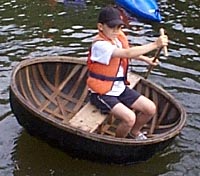


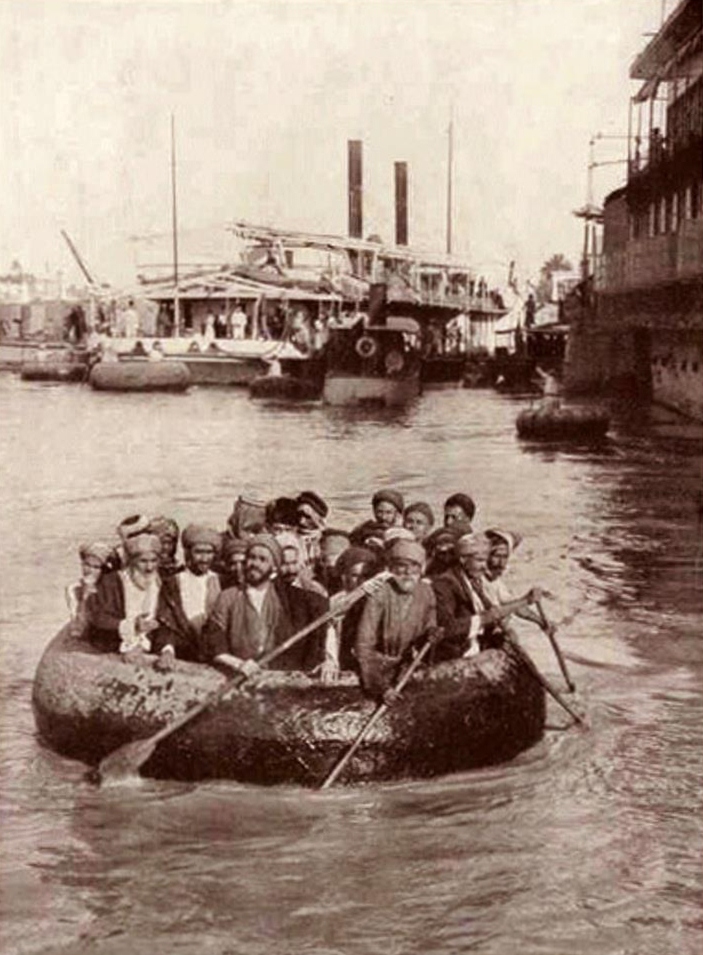

Construction and materials
Traditional coracles were built from flexible timbers—commonly willow, ash or other pliant woods—woven into a light framework. The frame is then covered with an animal hide, prepared bark, canvas or other membrane and made waterproof with pitch, tar or resin. Modern makers sometimes substitute cotton canvas coated with oil or modern synthetic coatings, while retaining the basic skin-on-frame principle that gives the boat its characteristic lightness and strength.
Building process and design principles
Construction typically begins with a simple form or mold to shape the ribs and gunwales. Frames are lashed rather than nailed, allowing some flexibility under wave action. The wide beam and shallow hull distribute weight over a large area, which reduces draft and makes the craft well suited to weedy, muddy or rapidly changing riverbeds. A coracle is usually large enough for one person and a modest catch or load; when empty it can be carried on the shoulders or roof of a vehicle.
Technique and use
Fishermen using coracles often work from the boat by standing or kneeling and using a single-handed paddle to steer and propel. In some traditions a circling technique is used to surround shoals of fish, while in others the coracle serves primarily as a means of crossing rivers and transporting goods short distances. Their portability made them common among subsistence fishers and river communities before modern boats became widespread.
Regional types and related craft
- Wales is closely associated with a distinctive coracle tradition, where the craft remain a symbol of rural river life.
- Variations developed in parts of western and southwest England, adapted to local river conditions and fishing methods.
- Comparable small boats are found in Ireland and Scotland, linked by related words and building techniques.
- Round skin-on-frame and woven boats with similar function appear outside Britain in places such as India, Vietnam, Iraq and Tibet, showing convergent solutions to shallow-water transport.
History and language
The English word "coracle" derives from the Welsh term cwrwgl and is related to Gaelic terms such as currach. The name and the craft are recorded in early modern English sources; these historical references illustrate how small boats of this type were integral to local economies, fishing practices and river travel. Regional spellings and names reflect the diffusion and adaptation of the basic boat form across communities.
Modern revival and cultural significance
Today coracles are often preserved as heritage craft and demonstrated at museums, festivals and waterways events. Enthusiasts and traditional boatbuilders work to keep the skills alive while experimenting with safer or longer-lasting materials. Cultural programmes and local histories point to surviving examples and accounts in early English records and regional studies. As simple, economical craft, coracles remain an emblem of human ingenuity in designing boats suited to local conditions.
Safety and preservation
Because of their shallow draft and limited seaworthiness, coracles are best used in calm, sheltered waters and by those experienced in local conditions. Preservation efforts emphasize documentation of construction techniques, training of new builders and careful curation of surviving boats so that the craft and their associated cultural knowledge are not lost.
Questions and answers
Q: What is a coracle?
A: A coracle is a small, lightweight boat that was used in Wales, parts of Western and South West England, Ireland, and Scotland.
Q: Where was the coracle used?
A: The coracle was used in Wales, parts of Western and South West England, Ireland, and Scotland.
Q: What is the origin of the word "coracle"?
A: The word "coracle" comes from the Welsh word cwrwgl which is related to the Irish and Scottish Gaelic word currach.
Q: When did English start using the term "coracle"?
A: The term "coracle" has been recorded in English as early as the 16th century.
Q: Are there any other spellings for "coracle"?
A: Yes, other old English spellings include corougle, corracle, curricle and coricle.
Q: Are there similar boats to a coracles found elsewhere?
A: Yes, similar boats to a coracles can be found in India, Vietnam, Iraq and Tibet.
Q: Is there an Irish or Scottish Gaelic equivalent for “coracles”?
A: Yes, the Irish and Scottish Gaelic equivalent for “coracles” is currach.
Related articles
Author
AlegsaOnline.com Coracle — the small, lightweight traditional boat Leandro Alegsa
URL: https://en.alegsaonline.com/art/23007
Sources
- books.google.com : Irish Folk Ways
- data-wales.co.uk : The coracle, an ancient little boat
- en.wikisource.org : "Coracle"
- koti.kapsi.fi : The Nature of a Coracle
- ads.ahds.ac.uk : The Excavation of An Early Bronze Age Cemetery at Barns Farm, Dalgety, Fife
- britannia.com : Wales on Britannia: Facts About Wales & the Welsh
- members.coraclesociety.org.uk : The Coracle Society constitution
- coraclesociety.org.uk : Coracle Society events listings
- coraclemaker.co.uk : The Coracle Maker – Calendar of events
- coraclesociety.org.uk : Coracle Society safety guidelines
- isciencetimes.com : isciencetimes.com
- dwelly.info : dwelly.info/index.aspx