
Coppo di Marcovaldo — Florentine painter of the Italo‑Byzantine tradition
Coppo di Marcovaldo (c.1225–c.1276) was a Florentine painter active in Tuscany known for large icons and mosaic work in a Byzantine-derived style; few works are securely attributed to him.
Overview
Coppo di Marcovaldo, active in the mid‑13th century (c.1225–c.1276), is remembered as one of Florence's important early painters. Born in Florence, he worked across central Italy, particularly in the region historically known as Tuscany. Coppo belongs to the period when Italian painters still followed Byzantine visual conventions but were beginning to explore greater naturalism.
Image gallery
5 Images


Style and typical subjects
Coppo is usually associated with the Italo‑Byzantine style: a formal, devotional visual language adapted from Byzantine models for Western Christian worship. He painted monumental icons — images intended for veneration rather than narrative description. Typical subjects include the Blessed Virgin and Child, Christ in Majesty, and large depictions of the Last Judgment used in public devotional settings.
- Gold ground and frontal, hieratic figures conveying spiritual presence.
- Strong linear drapery patterns and stylized facial types derived from Byzantine prototypes.
- Use of tempera on panel for painted icons and tesserae for mosaic decoration.
- Emphasis on monumentality and legibility to serve liturgical and civic functions.
Works and attributions
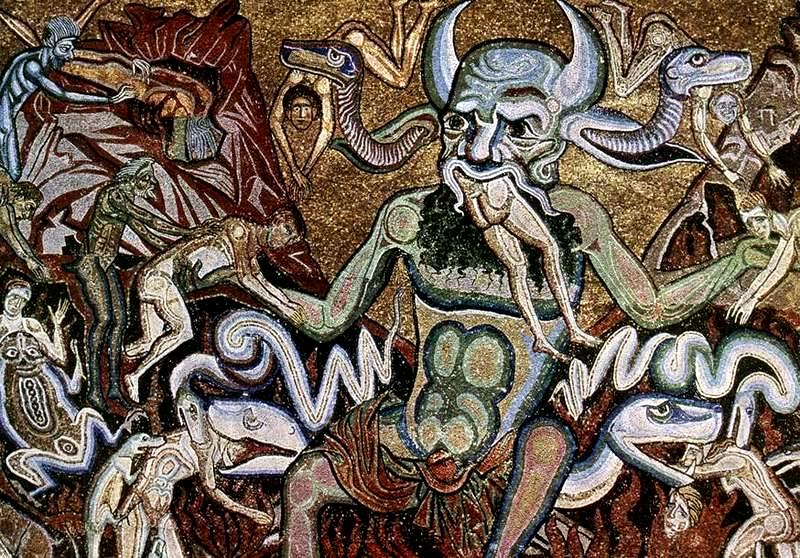
Only a small number of works are securely tied to Coppo. Chief among them is a large panel of the Virgin and Child now in the church of the Servants of Mary in Siena, often called the "Madonna del Bordone." A related, closely attributed panel is kept in the Servants of Mary church at Orvieto. An additional painting traditionally associated with his hand is preserved in the civic museum of San Gimignano. Local tradition and some art‑historical accounts also connect him with mosaic work in the Baptistery of Florence's program of the Last Judgment, though large baptistery mosaics were usually produced by teams and attributions can be debated.
Historical context and anecdotes
Coppo worked during a turbulent era of factional warfare and civic rivalry in Tuscany. According to long‑standing tradition, he was captured after the Battle of Montaperti (1260) and taken to Siena; while there he is said to have painted the great Madonna for the Servants of Mary as an act linked to his captivity. He is also recorded as having worked in smaller Tuscan centers such as Pistoia, reflecting the itinerant nature of artists' practice in the thirteenth century.
Importance and legacy
Although relatively few works survive or are uncontestedly by his hand, Coppo di Marcovaldo occupies a useful place in the history of Italian art. His works exemplify how Florentine painters absorbed Byzantine conventions and adapted them to local devotional needs, helping to set a visual foundation later generations would transform toward greater naturalism. His panels remain important for studying materials, workshop practice, and the exchange between painted icons and mosaic programs in medieval Italy.
Where to see his work
Surviving paintings attributed to Coppo can be seen in churches and civic collections across Tuscany and Umbria. Principal locations associated with him include the Servants of Mary churches in Siena and Orvieto, the civic museum of San Gimignano, and references to commissions or activity in Pistoia. For context about his birthplace and influence, visitors and researchers often look to resources in Florence and study the Baptistery mosaics of the city, sometimes linked by scholars to the broader artistic environment in which Coppo worked (Last Judgment mosaics).
Because of the limited corpus and workshop practices of the period, attributions remain cautious: museums and scholars continue to reassess authorship using stylistic comparison, documentary evidence, and technical study.
Questions and answers
Q: Who was Coppo di Marcovaldo?
A: Coppo di Marcovaldo was an artist born in Florence who painted large icons of the Blessed Virgin Mary and Christ Child in the Byzantine style.
Q: What is his most famous work?
A: His most famous work is the mosaic of the Last Judgement in the Baptistery of Florence.
Q: Where did he work aside from Florence?
A: He also worked in the towns of Pistoia and Siena.
Q: How many paintings are known to be by Coppo?
A: There are only two paintings that are known to be by Coppo.
Q: Where can those two paintings be found?
A: One is in the Church of the Servants of Mary in Siena and the other is in the Church of the Servants of Mary in Orvieto.
Q: Is there another painting that might be by Coppo?
A: Yes, another painting thought to be by Coppo di Marcovaldo can be seen in the Civic Museum in San Gimignano.
Q: What period did Coppo di Marcovaldo work in?
A: He worked in Italy in the Late Medieval period.
Related articles
Author
AlegsaOnline.com Coppo di Marcovaldo — Florentine painter of the Italo‑Byzantine tradition Leandro Alegsa
URL: https://en.alegsaonline.com/art/22975