
Conwy Castle
Late 13th-century Welsh fortress built by Edward I; a well-preserved example of medieval military architecture and part of a UNESCO World Heritage Site in Conwy, Wales.
Conwy Castle, known in Welsh as Castell Conwy, is a large medieval fortress overlooking the Conwy estuary in the town of Conwy, North Wales. Erected during the late 13th century as part of the English crown's expansion, the castle forms an integral element of the town's fortifications and has long been recognised for its state of preservation and its architectural quality in a medieval military context (castle, Middle Ages).
Image gallery
10 Images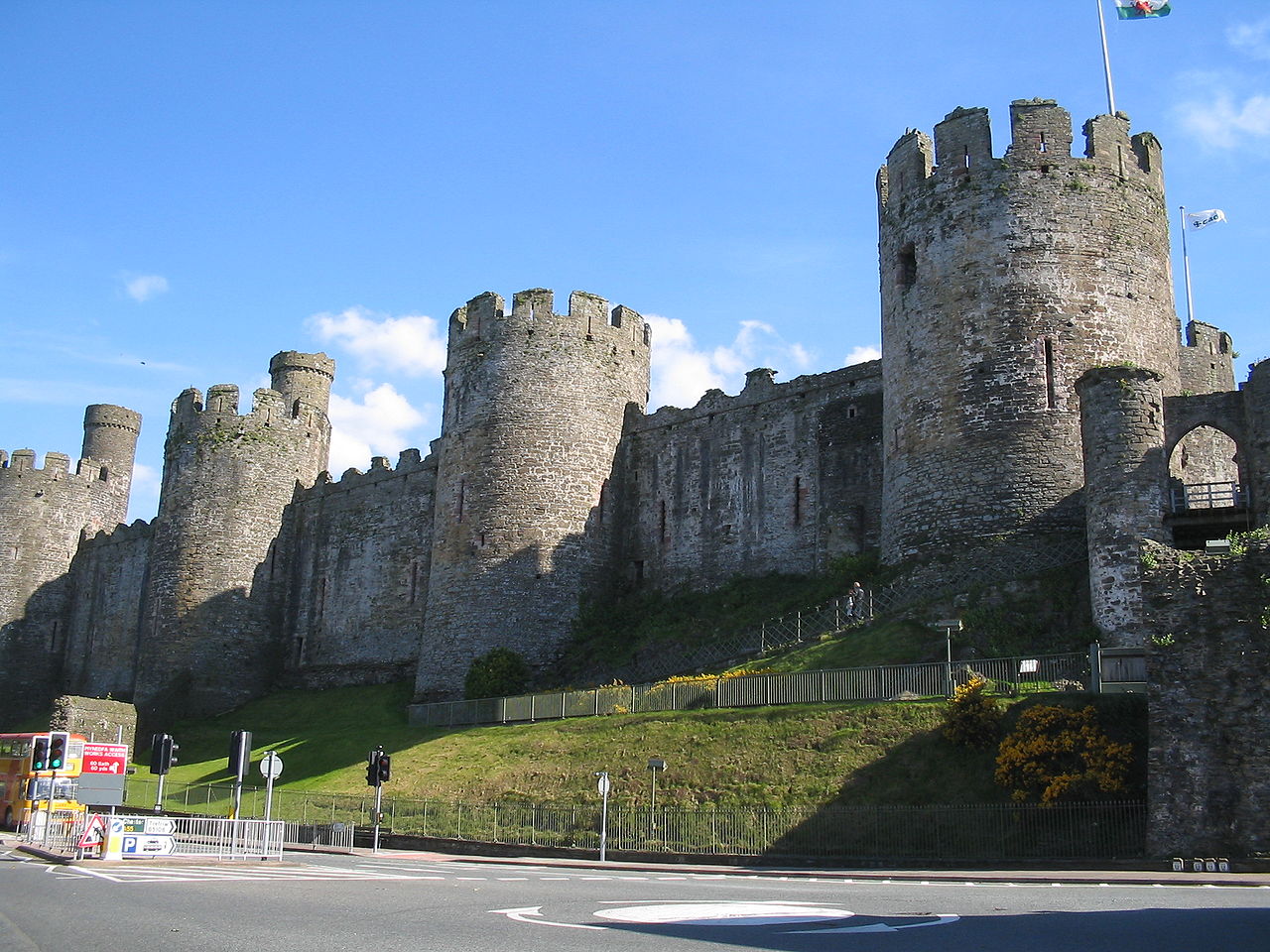




Overview and location
Built under the command of King Edward I between the 1280s and 1290s, Conwy Castle occupies a compact, rectangular site beside the River Conwy. It was conceived as both a defensive stronghold and a royal residence, linked to the town walls so that the urban defences and the castle could operate together. The structure was constructed largely from locally quarried stone and masonry transported from nearby sources (local stone).
Principal features
- Plan: a roughly rectangular inner ward and outer ward with gatehouses and curtain walls.
- Towers: multiple towers of varying size are arrayed along the walls; the keep and towers provided defence and accommodation.
- Barbicans and gates: fortified approaches control access and create overlapping fields of fire.
- River wharf: a sally path descends to the river, allowing resupply and access to boats.
- Medieval innovations: early use of machicolations and strong domestic quarters suitable for royal use.
History and development
The castle was part of a coordinated program of castle-building during Edward I's campaigns in Wales and benefited from the expertise of continental and Savoyard masons. It was completed within a few years and cost what contemporaries then described as a substantial sum. Conwy saw military action in later centuries: it sheltered refugees and claimants, including Richard II in 1399, and was occupied by the Welsh rebel Owain Glyndŵr in the early 15th century. During the English Civil War supporters of Charles I held Conwy until it was captured by Parliamentary forces (the Roundheads); following the conflict the castle was deliberately slighted to prevent future military use.
Decline, art and tourism
After its military role diminished, the castle partly fell into ruin. Valuable fittings of metal such as iron and lead were removed in the 17th century, accelerating decay. From the 18th century onward artists drew and painted the picturesque ruins (18th and 19th centuries), and it became a destination for visitors and antiquarians. By the modern era Conwy Castle has been managed as a historic monument and is open to the public as a heritage attraction (tourism).
Significance and protection
Conwy Castle is widely regarded as an outstanding example of late 13th-century military architecture. It forms part of the group of castles and town walls in north Wales recognised by UNESCO and inscribed as a World Heritage Site for its historical importance and state of preservation. Conservation efforts seek to stabilise the masonry, interpret the site for visitors and balance public access with long-term protection.
For further information see local guides and conservation resources: Welsh name, general castle studies at castle resources, historical overviews (medieval), the municipality (Conwy), national contexts (Wales), and biographies or events associated with Edward I, Richard II, Owain Glyndŵr, the English Civil War, Charles I, and the Roundheads. Technical notes on material loss: iron and lead. Cultural interest in the 18th and 19th centuries boosted tourism. Official recognitions include UNESCO and the World Heritage listing. Construction used local stone and imported materials.
Questions and answers
Q: What country is Conwy Castle located in?
A: Conwy Castle is located in the country of Wales.
Q: Who built Conwy Castle?
A: Conwy Castle was built by Edward I of England.
Q: When was Conwy Castle built?
A: Conwy Castle was built between the years of 1283 and 1289.
Q: How much did it cost to build the castle?
A: It cost £15,000 to build the castle.
Q: What wars has the castle survived?
A: The castle has survived wars like Madog ap Llywelyn and the English Civil War.
Q: What shape is the castle?
A: The castle is rectangular in shape.
Related articles
Author
AlegsaOnline.com Conwy Castle Leandro Alegsa
URL: https://en.alegsaonline.com/art/22857
Sources
- whc.unesco.org : "Castles and Town Walls of King Edward in Gwynedd"
- luminarium.org : "Richard II, King of England (1367–1400)"
- measuringworth.com : "Measuring Worth Five Ways to Compute the Relative Value of a UK Pound Amount, 1830 to Present"
- alva.org.uk : "Attractions Industry News"
- economigwynedd.info : "Gwynedd Destination and Marketing Audit"
- cadw.wales.gov.uk : "Part 2: Significance and Vision"
- worldcat.org : 1392314
- worldcat.org : 31592053