
Converter (metallurgy): reactors for turning pig iron into steel
An overview of metallurgical converters: history, design, chemistry, operation, and modern uses — from Bessemer vessels to basic oxygen furnaces and their role in steelmaking.
A converter in metallurgy is a high‑temperature reactor used to transform pig iron into steel by oxidizing unwanted elements—chiefly carbon—into gaseous and slag phases. Pig iron, the product of the blast furnace, typically contains several percent carbon and other dissolved elements that make it hard, brittle, and unsuitable for most applications. Converting that material into ductile, predictable steel requires controlled oxidation and removal or adjustment of those impurities.
Image gallery
6 Images


Historical development
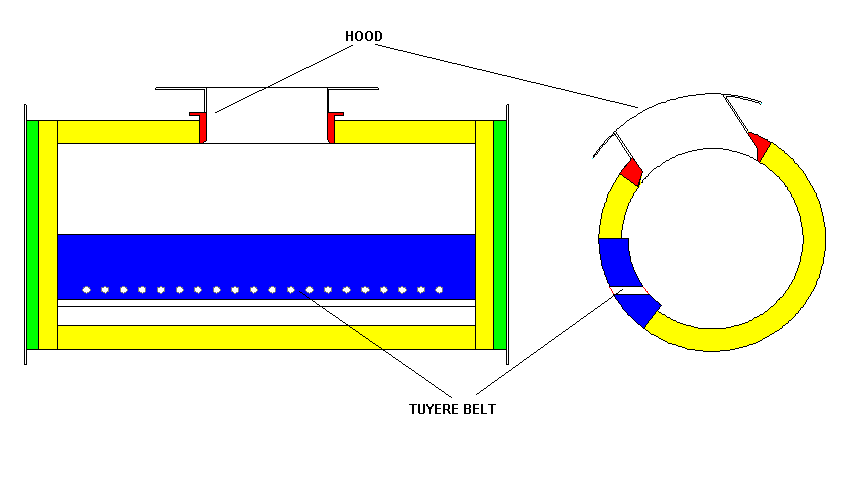
The first practical converter process was introduced in the mid‑19th century and revolutionized steel production by sharply reducing cost and increasing scale. The early Bessemer converter was a large, pear‑shaped vessel equipped with tuyeres—nozzles that injected air into molten metal—to burn off carbon and other impurities. Its rapid, exuberant reaction made mass steelmaking economically viable. In the mid‑20th century the industry moved to oxygen‑based converters, commonly called basic oxygen furnaces, which use nearly pure oxygen to achieve faster, cleaner decarburization and better control of chemistry. The basic oxygen approach was developed in the late 1940s in Austria and became the dominant large‑scale steelmaking route.
Design, parts and operation
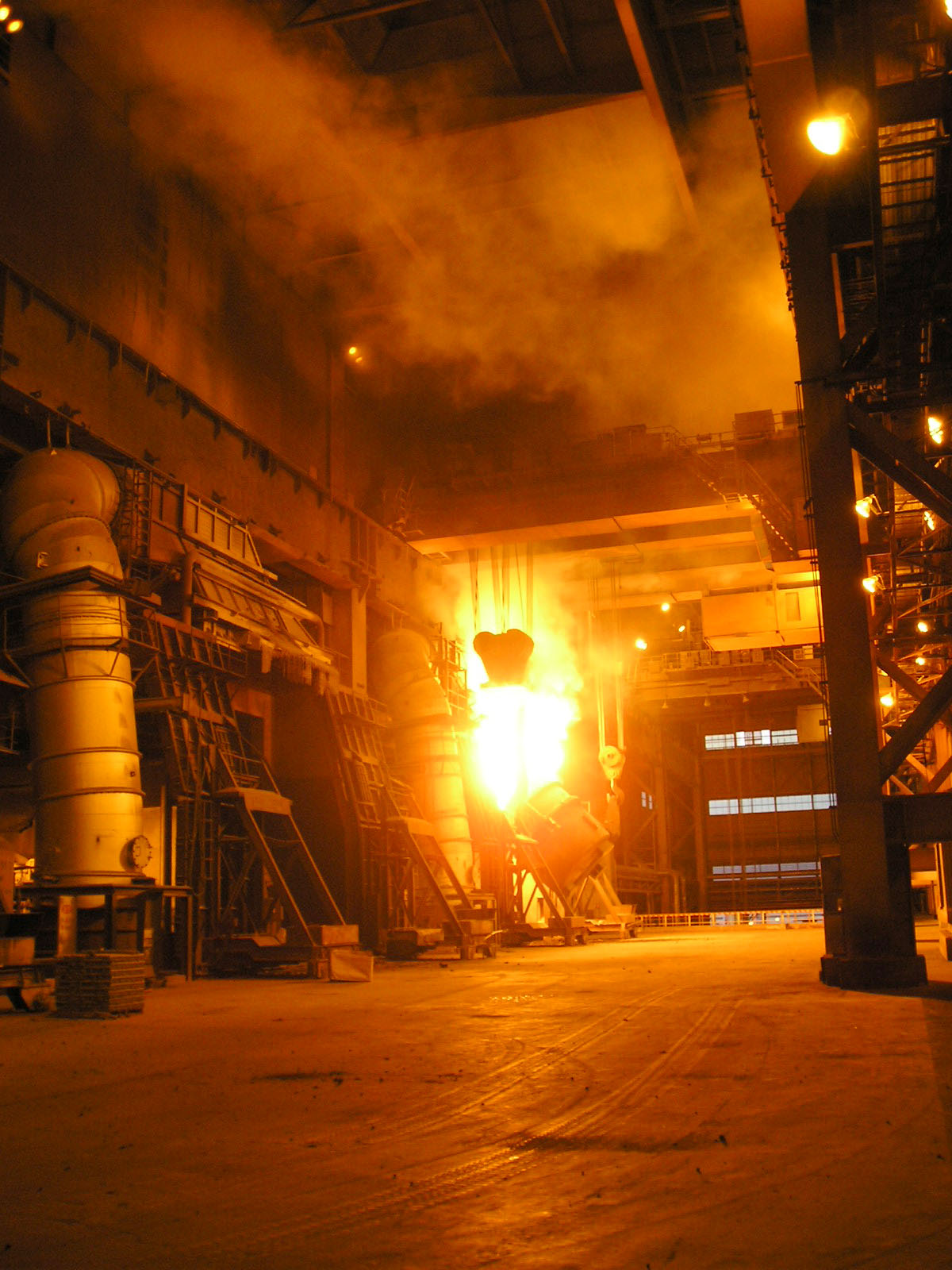
Modern converters are large, refractory‑lined vessels mounted to tilt for charging and tapping. Typical elements and stages include:
- Charging: molten pig iron, often mixed with scrap metal, is poured into the vessel.
- Refractory lining: a basic lining (e.g., magnesia and lime bricks) protects the steel shell and helps control slag chemistry and phosphorus removal.
- Oxygen delivery: an oxygen lance injects a focused stream of oxygen into the bath to oxidize carbon and other impurities.
- Slag formation and refining: fluxes such as lime capture oxidized impurities into a separate slag phase for removal.
- Tapping and secondary treatment: refined liquid steel is poured out and further treated to adjust composition and temperature before casting.
Converters are engineered to withstand extreme thermal shock and corrosive slag. The vessel shell is typically made from structural steel steel and relies on periodic relining to maintain service life.
Chemistry and metallurgical mechanisms
The core reactions in a converter are oxidations: oxygen reacts with carbon to form carbon monoxide and carbon dioxide, and with silicon, manganese, and phosphorus to form oxides that either escape as gas or are incorporated into slag. The oxidation sequence, rate and temperature influence the final chemistry and quality of the steel. Scrap metal often contains rust (iron oxides) and other oxygen‑bearing compounds; these can contribute heat when they reduce in the molten bath, so scrap is used strategically alongside molten pig iron to manage energy and temperature. When air was used historically, dissolved nitrogen could enter the steel and impair certain properties; modern converters avoid this by using nearly pure oxygen supplied by an oxygen plant or oxygen cylinder system oxygen.
Practical uses, scale and variants
Converters—especially basic oxygen furnaces—are the primary route for producing large volumes of flat and long steel products because they convert molten iron to steel quickly and with predictable chemistry. Typical shop practice blends:
- hot metal from a blast furnace,
- various grades and amounts of scrap metal, and
- fluxes and alloying additions as needed.
Alternative steelmaking methods, such as electric arc furnaces, compete where scrap feedstocks or smaller, more flexible production are advantageous. Converters remain preferred where a steady supply of hot metal exists and very large heats are economical.
Notable distinctions and environmental aspects
Key distinctions among converters focus on the oxidant and lining chemistry. The historical Bessemer process used air and required an acidic lining; modern basic oxygen converters use oxygen and a basic lining to facilitate removal of phosphorus and sulfur into slag. Environmental concerns include emissions of carbon monoxide, carbon dioxide and particulates during blowing and tapping; these are controlled with hooding, gas cleaning, and dust capture systems. Advances in process control, gas recovery and material efficiency continue to reduce the environmental footprint of converter‑based steelmaking.
For further technical details and operational guidelines see overview references on ironmaking and steel refining processes: pig iron and carbon, basic oxygen history, and process summaries on scrap management and refractory practice scrap, oxygen, converter materials.
Questions and answers
Q: What is a converter?
A: A converter is a chemical reactor which turns raw iron into steel.
Q: What is the raw iron called?
A: The raw iron is called pig iron, which is the product of blast furnace and contains up to 4% of carbon.
Q: Who invented the first successful converter?
A: The first successful converter was invented by Sir Henry Bessemer in 1856.
Q: How does a modern basic oxygen furnace work?
A: A modern basic oxygen furnace uses pure oxygen instead of air and consists of a large pumpkin-shaped vessel made from steel and lined with refractories such as calcium oxide and magnesium oxide line so the vessel can withstand high temperatures. Molten pig iron and scrap are loaded in the converter, then a special pipe called "oxygen lance" is lowered in the pig iron, and a very fast and sharp blow of oxygen is blasted in to burn all the carbon away. Once all carbon has been burned away, some extra carbon may be inserted to raise contents to desired level resulting in liquid steel that can be tapped away for rolling mill production.
Q: What happens when air containing nitrogen enters the process?
A: Air containing nitrogen can be harmful for some steel grades, so it should not enter into this process.
Q: What did Bessemer's invention do for steel production? A: Bessemer's invention enabled plentiful and cheap production of steel, thus beginning an era of increased availability of this material.
Related articles
Author
AlegsaOnline.com Converter (metallurgy): reactors for turning pig iron into steel Leandro Alegsa
URL: https://en.alegsaonline.com/art/22841