
Constitutionalism: Principles, Development, and Forms of Government
Constitutionalism is the political idea and practice that government should be limited by a constitution to protect liberty, prevent arbitrary power, and ensure laws and officials conform to fundamental rules.
Overview
Constitutionalism refers to a political doctrine and practice aimed at restraining government power by law. Its central goal is to prevent arbitrary or tyrannical rule and to protect individual rights and procedural fairness. Rather than describing only the text of a charter, constitutionalism is a broader attitude: the belief that public authority must operate within established limits and under publicly known rules.
Image gallery
3 Images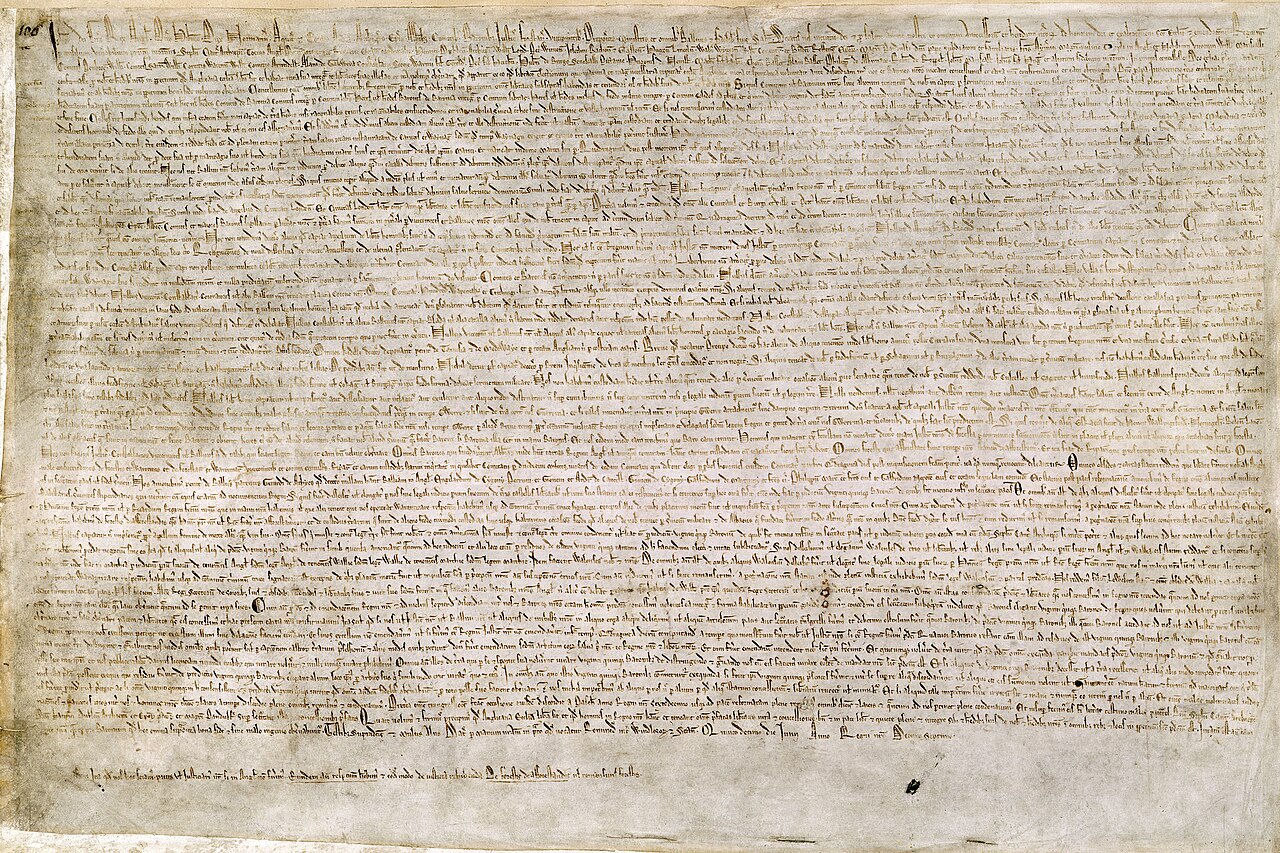


Core principles and components
Modern constitutionalism rests on a set of interrelated principles. These include:
- Limited government — state institutions and officials are subject to legal constraints so they cannot act without authorization.
- Rule of law — laws govern conduct and are applied impartially rather than being arbitrary commands.
- Separation of powers and checks and balances — distinct branches of government share power and restrain one another.
- Protection of fundamental rights — constitutions often enumerate basic civil and political rights to be safeguarded against majority excess.
- Procedures for amendment and review — established methods allow lawful change while preventing casual or capricious alteration of the constitutional order.
Historical development
The ideas behind constitutionalism evolved over centuries. Early legal charters and limits on rulers, such as medieval agreements between monarchs and elites, gradually gave way to more systematic theories during the early modern and Enlightenment periods. Thinkers who emphasized balanced government and procedural restraints influenced the drafting of written constitutions in the 18th century, most famously in the United States in 1787. From that era onward, constitutional instruments and doctrines spread widely and took many forms across different states.
Forms, examples and institutions
Constitutionalism can be realized in diverse systems. A constitutional monarchy combines a hereditary head of state with legal constraints on authority; a parliamentary republic dispenses with monarchy while still subjecting government to constitutional rules. Constitutions themselves may be written (single documents) or unwritten (collections of statutes, conventions and judicial precedents). Federal constitutions divide powers between levels of government, while unitary constitutions concentrate authority centrally. Courts, legislatures, independent agencies and constitutions' amendment procedures all play roles in enforcing constitutional limits.
Importance, practice and contestation
Constitutionalism matters because it provides predictable rules for political competition, helps protect minorities and rights, and allocates power. In practice, however, its strength depends on institutions, political culture, and enforcement. Tensions commonly arise between democratic majorities and constitutional protections when popular preferences conflict with individual rights. Disputes also appear over judicial review, the scope of executive prerogatives, and how rigid or flexible a constitution should be.
Distinctions and notable facts
It is important to distinguish a constitution as a legal text from constitutionalism as a set of political practices and values. A state may have a constitution on paper yet lack effective constitutionalism if laws are not enforced or if officials routinely ignore limits. Conversely, constitutional culture and independent institutions can sustain constitutionalism even where formal texts are sparse or evolving.
Further reading and links
- Introductory overview of constitutionalism
- Majority rule and its limits
- Rights and liberties in constitutional systems
- Constitutional texts and interpretation
- Concepts of limited government
- The exercise and limits of governmental power
- Historical figures and debates
- Foundational constitutional writings
- Executive authority and constitutional limits
- Forms of monarchy and constitutional rule
- Comparative government types
Questions and answers
Q: What is constitutionalism?
A: Constitutionalism is a form of political thought and action that seeks to prevent tyranny, including the worst result of majority rule, and to guarantee the liberty and rights of individuals. It is the conduct of politics in accordance with a constitution.
Q: What does limited government mean?
A: Limited government means that officials cannot act arbitrarily when they make and enforce public decisions. Public officials cannot simply do as they please; instead, their actions must be guided by the supreme law - the Constitution.
Q: What does Article 6 of the United States Constitution state?
A: Article 6 of the United States Constitution states that “The Constitution, and the Laws of the United States which shall be made in Pursuance thereof … shall be the supreme Law of the Land." All laws passed either by Congress or by state legislatures must conform to this supreme law.
Q: How can a legislative or executive action that violates the Constitution be declared unconstitutional?
A: A legislative or executive action that violates the Constitution can be declared unconstitutional, or unlawful, by Supreme Court.
Q: What is a constitutional monarchy?
A: A constitutional monarchy is a form of government that lies between absolutism and parliamentary republic. In this type of system, there is still a monarch but his power is limited by laws set out in a constitution.
Q: How does an absolutist system differ from a parliamentary republic?
A: In an absolutist system, there are no limits on what powers can be exercised by monarchs; they have complete freedom to do as they wish without any checks on their authority. In contrast, in a parliamentary republic there is no monarch at all; instead power rests with elected representatives who are answerable to citizens through regular elections.
Related articles
Author
AlegsaOnline.com Constitutionalism: Principles, Development, and Forms of Government Leandro Alegsa
URL: https://en.alegsaonline.com/art/22694