
Conch (marine gastropod)
Conches are large marine gastropod molluscs in the family Strombidae (true conches). This article summarizes their appearance, taxonomy, ecology, human uses, and conservation concerns.
A conch is a common name applied to several large, often conspicuous sea snails, most properly used for members of the family Strombidae, the true conches. These marine gastropod molluscs are notable for their spiral shells, a flared outer lip in adults, and a distinctive mode of locomotion. In English the final consonant cluster of the word "conch" is variably pronounced with a hard "k" or a soft "ch" sound. In informal usage many other unrelated snails are called conches, so scientific names and context are important when identifying taxa. For information on the wider environment where many conches live, see resources on marine habitats.
Image gallery
10 Images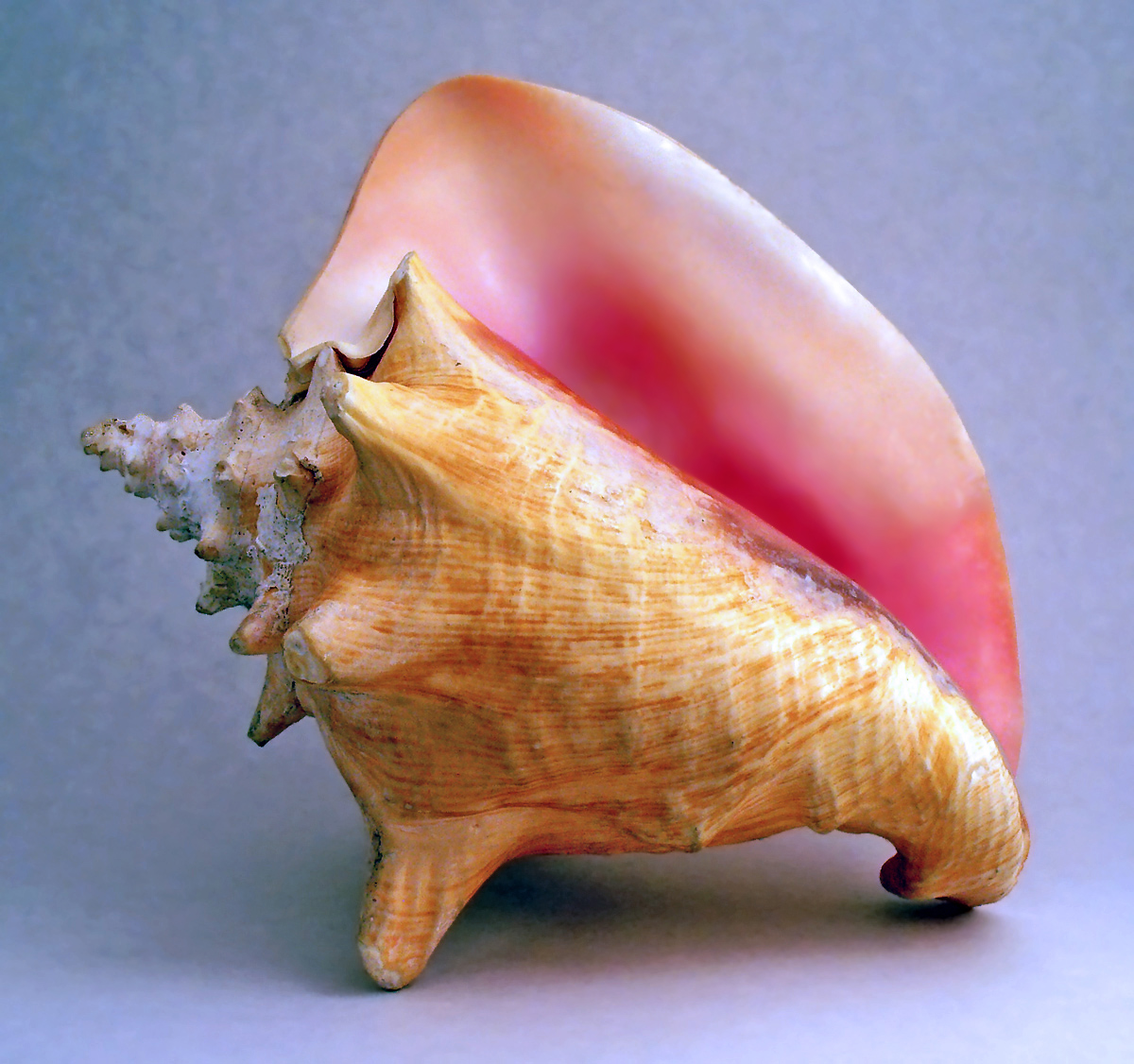


Physical characteristics and behaviour
True conches possess a relatively heavy, often ornamented shell with a long siphonal canal. Mature individuals typically develop an expanded and thickened outer lip that may be brightly coloured internally. The living animal has a well‑developed muscular foot and a claw‑shaped operculum; strombid opercula are adapted to an abrupt, leaping or hopping locomotion rather than the smooth gliding seen in many other gastropods. Their eyes are borne at the tips of long stalks and are relatively well developed. Shell sculpture varies among species and may include smooth whorls, knobs, or spines.
Feeding and ecological role
Conches are mostly herbivorous or detritivorous grazers. They feed on algae, seagrass leaves, and decomposing organic matter, scraping food with their radula. By grazing they influence algal growth and contribute to nutrient cycling in shallow coastal ecosystems. Conches serve as prey for a range of predators, including certain fish, lobsters, crabs, and rays, and they can be important components of seagrass bed communities.
Reproduction and life cycle
Reproductive biology in strombids varies by species, but many have separate sexes and reproduce by internal fertilization with eggs laid in capsules or masses on the substrate. Larvae of many species are planktonic for a period before settling and metamorphosing into benthic juveniles, whereas other species may have abbreviated larval phases. Recruitment and juvenile survival are sensitive to habitat conditions such as seagrass density and water quality.
Taxonomy and fossil record
True conches belong to the family Strombidae, which includes the genus traditionally known as Strombus and related genera. Taxonomic revisions are common; some well‑known species have been reassigned in modern classifications, so older and newer sources may use different genus names. Strombids have a rich fossil record and are represented by numerous extinct species, while at least dozens of living species occur worldwide, especially in tropical seas.
Distribution and habitat
Most true conch species are distributed in warm, shallow marine waters of the tropical Indo‑Pacific, although a smaller number occur in the greater Caribbean region. Many species inhabit seagrass beds, sandy bottoms, and coral rubble nearshore, where they find food, shelter, and suitable sites for egg deposition.
Human uses and cultural significance
Conches have long been used by coastal peoples for food, craft, and music. In parts of the Caribbean, the meat of the Queen conch is a traditional food and features in local dishes such as salads and fritters. Large shells are valued as ornaments, work materials, and — when a hole is made in the spire and the shell is blown — as signalling or musical instruments used in ceremonies and maritime contexts. Shells and decorative items made from conch have cultural importance in many societies.
Fisheries, conservation and management
Numerous conch populations have declined as a result of intensive harvesting, habitat degradation and poor juvenile recruitment. The Queen conch, long harvested across the Caribbean, has received widespread conservation attention; some populations are subject to international trade controls and national fisheries regulations. For example, certain listings under international agreements restrict trade and aim to ensure sustainability — see CITES and other conservation measures for further information. Effective management typically includes size limits, closed seasons, protected areas, and monitoring of stocks to allow breeding and recruitment.
Similar species and common name usage
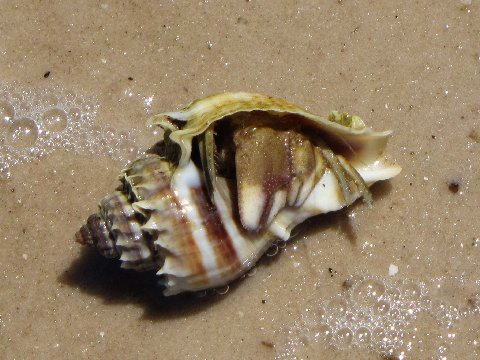
Because the common name "conch" is applied to a variety of large marine snails, it is important to note that not all species called conch are members of Strombidae. For instance, the so‑called horse conch, often encountered in literature or markets under that name, belongs to a different family and differs in biology and ecological role. Accurate identification using scientific names is important for fisheries management, legal protection and culinary use; consult taxonomic references for current genus and species assignments.
- Key features: spiral shell, flared outer lip in adults, leaping locomotion.
- Habitats: seagrass beds, sandy flats, coral rubble in warm shallow waters.
- Uses: food, decorative shells, wind instruments and cultural objects.
- Conservation: many populations impacted by overharvest; management and trade controls exist.
Further information on specific species, regional management plans, and identification guides can be found in marine field guides and conservation reports; for general background on seaward ecosystems consult resources on marine habitats and mollusc biology references such as basic entries on molluscs. For authoritative taxonomic and legal status details, specialist databases and official listings under conventions such as CITES should be consulted.
Questions and answers
Q: What is a conch?
A: A conch is a sea-dwelling mollusc.
Q: What kind of gastropod is a conch?
A: A conch is a marine gastropod.
Q: How is 'conch' pronounced?
A: The ch at the end of 'conch' may be pronounced hard or soft.
Q: Are all gastropods with 'conch' in their name true conches?
A: No, many other gastropods have common names with conch in them, but they are not true conches in the family Strombidae.
Q: What is the genus Strombus?
A: The genus Strombus is made up of the true conches.
Q: Are all Strombid species extinct?
A: No, at least 65 species still exist, although most are in the Indo-Pacific Oceans and six are in the greater Caribbean region.
Q: What are some living true conch species?
A: Some living true conch species include the Queen Conch and the West Indian Fighting Conch.
Author
AlegsaOnline.com Conch (marine gastropod) Leandro Alegsa
URL: https://en.alegsaonline.com/art/22393