
Concerto for Orchestra (Béla Bartók)
Bartók's Concerto for Orchestra (1943–44) is a mid‑20th‑century orchestral showpiece that treats many instruments as soloists. Premiered by the Boston Symphony Orchestra under Koussevitzky, it remains a repertory favorite.
Overview
The Concerto for Orchestra is a celebrated orchestral work by the Béla Bartók, written in 1943 and first heard on 1 December 1944. It quickly became one of the most popular large-scale pieces of the mid-20th century. Unlike a conventional concerto for a single solo instrument, Bartók's title emphasizes the ensemble as a collective of virtuosi: many individual players and sections are highlighted in turn, so the full orchestra functions as both soloist and accompanist.
Image gallery
2 Images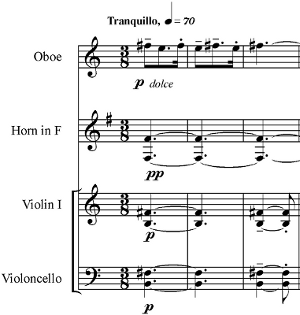

Structure and scoring
The work is cast in five movements that alternate contrasting moods and textures. Bartók employs a large orchestral palette, assigning brief solos and spotlight passages across winds, brass, percussion and strings rather than privileging one soloist. The second movement, often nicknamed "Game of Pairs," features paired wind instruments in alternating intervals; a slow elegiac movement follows; an intermezzo provides a lighter, sometimes acerbic contrast; and the finale gathers themes into an energetic conclusion. The piece showcases orchestral color, rhythmic drive, and a balance of folk-influenced modes with modern concert techniques.
Historical context
Bartók completed the score after emigrating to the United States, having left his native Hungary in the wake of World War II upheavals. The commission came from Serge Koussevitzky, who led the Boston Symphony Orchestra in the premiere; the conductor had also offered financial support to Bartók at a difficult moment in the composer’s life. The Concerto for Orchestra represented a late-period synthesis of Bartók's lifelong interest in folk melody, modal harmony and rhythmic vitality, adapted for the American concert stage.
Musical character and importance
Listeners often note the work's alternating brilliance and introspection: passages of brilliant virtuosity contrast with plaintive, sometimes mournful slow music. Bartók's writing emphasizes clear, rhythmic articulation, colorful orchestration and the use of folk-like motives without direct quotation. The piece has been celebrated both for its immediate dramatic appeal and for the way it distributes technical demands across the ensemble, turning orchestral sections into momentary soloists and thereby redefining the idea of a concerto in relation to the symphony.
Legacy, performances and related works
- The success of Bartók’s Concerto for Orchestra encouraged other composers to title ensemble showcase works with the same name, acknowledging the concept of an orchestra of soloists.
- Since its premiere it has remained a staple of concert programs worldwide and features frequently in recordings, festivals and orchestral surveys.
- Performances often highlight particular movements as concise studies in orchestral color: the winds in the second movement, the strings and brass in the final movement, and the poignant slow movement that is sometimes singled out for its emotional weight.
For listeners and players alike, Bartók's Concerto for Orchestra offers a compelling balance of technical flash and expressive depth. It stands as one of the key works of the composer's late output and as an influential model for 20th‑century orchestral writing.
Further reading and resources: introductory notes and program essays are available from many orchestras and music publishers; for authoritative scores and commentary consult modern critical editions and reputable concert program archives. See also references provided by leading orchestras and music libraries for recordings and analyses.
orchestra Hungarian composer Béla Bartók mid-20th century concerto solo instrument symphony 1943 1 December 1944 Boston Symphony Orchestra United States World War II
Questions and answers
Q: What is the title of the work for orchestra by the Hungarian composer Béla Bartók?
A: The title of the work is Concerto for Orchestra.
Q: Is Concerto for Orchestra one of the most famous orchestral pieces of the mid-20th century?
A: Yes, it is.
Q: What is unusual about the title "Concerto for Orchestra"?
A: A concerto is normally a work for one solo instrument and an orchestra, but there is no soloist in a "Concerto for Orchestra".
Q: How does the composer treat a lot of instruments in the orchestra during the piece?
A: The composer treats a lot of instruments in the orchestra like soloists during the piece.
Q: When was Concerto for Orchestra written?
A: It was written in 1943.
Q: Who conducted the first performance of Concerto for Orchestra and with which orchestra?
A: The first performance of Concerto for Orchestra was conducted by Serge Koussevitzky with the Boston Symphony Orchestra.
Q: Why did Bartók have to flee from Hungary to the United States?
A: Bartók had to flee because of World War II.
Related articles
Author
AlegsaOnline.com Concerto for Orchestra (Béla Bartók) Leandro Alegsa
URL: https://en.alegsaonline.com/art/22389