
Concertina: bellows-driven free-reed instrument, types and uses
A concise guide to the concertina — its construction, principal systems (English, Anglo, duet, Hayden), history, playing technique and common musical roles.
Overview
The concertina is a handheld, bellows-driven free-reed instrument played by pressing buttons with the fingers while expanding and compressing a central bellows. It produces sound as air flows over metal reeds and is compact enough for solo, ensemble, and dance-music use. The term "concertina" covers several related button-based instruments that differ in button layout, fingering and whether a button sounds the same on push and pull.
Image gallery
10 Images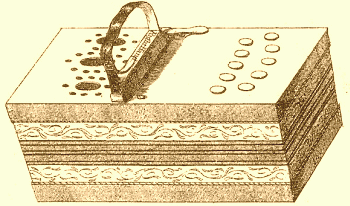




Structure and sound production
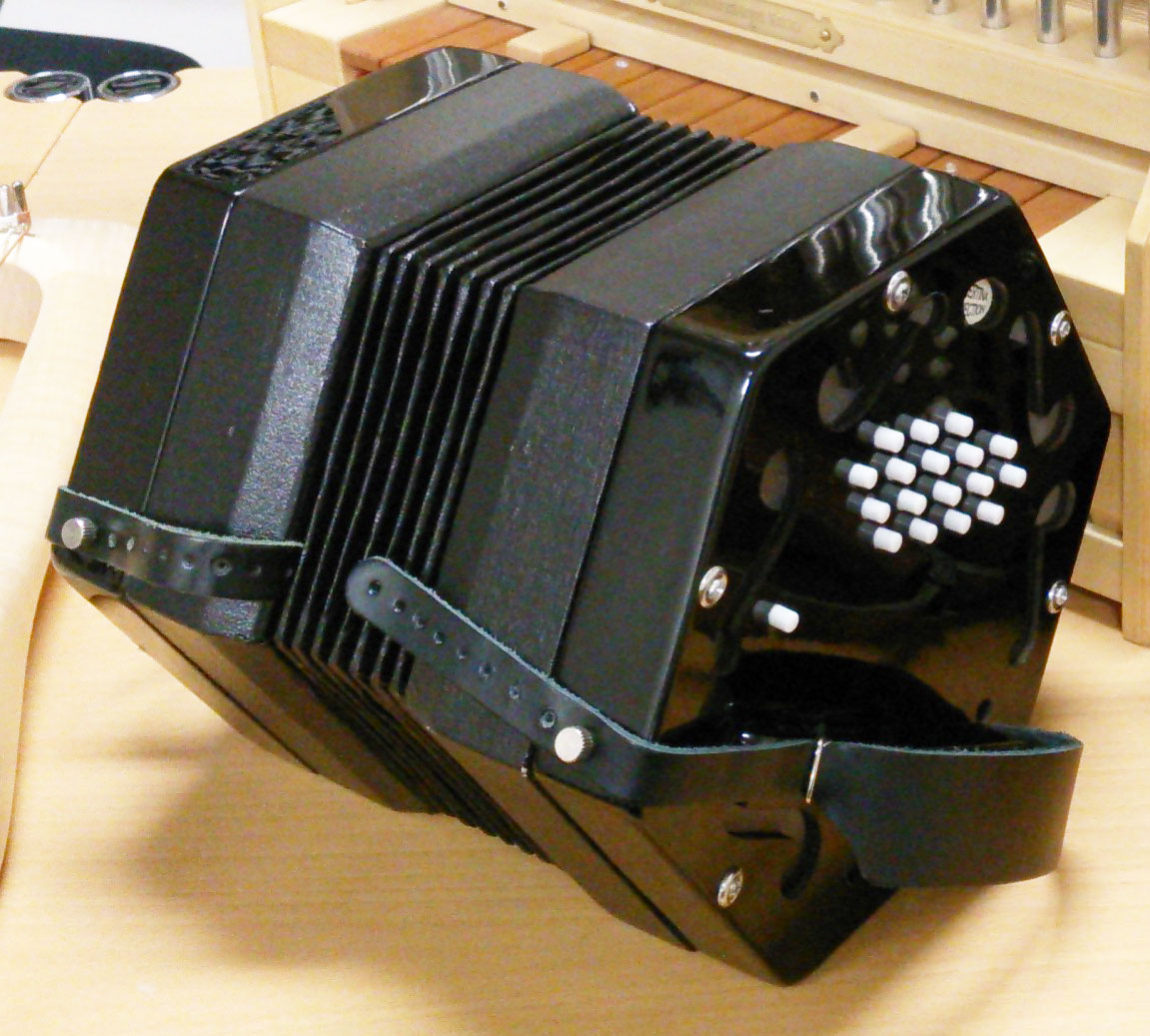
At its core a concertina has a collapsible bellows, reed plates, and two ends fitted with rows of buttons. The player holds the instrument between both hands and manipulates the bellows to force air through the reeds; each button opens one or more valves that allow air to reach selected reeds. The interaction of bellows pressure, reed tuning and button valves determines tone, dynamics and articulation. Because the bellows both power the sound and shape phrasing, concertina technique emphasizes controlled breathing with the hands.
Principal systems and distinguishing features
- English concertina — A unisonoric system (same pitch on push and pull) with alternating note layout across the two ends, designed to facilitate melody playing and rapid chromatic passages. See English concertina for more on its repertoire.
- Anglo concertina — Typically bisonoric (different notes on push and pull) and commonly used for folk dance music. The left-hand side often provides lower-pitched accompaniment. For button arrangement and folk styles, consult Anglo details.
- Duet systems — Aim to combine melody and accompaniment by offering separate ranges on each end; many duet layouts are unisonoric so a given button yields the same pitch when pushed or pulled. A prominent modern example is the Hayden duet, an isomorphic layout praised for consistent fingering across keys; it is often described in relation to its 6-plus-6 keyboard arrangement and further resources at Hayden resources.
History and development
Concertinas emerged in the 19th century alongside other free-reed instruments. Different inventors and workshops developed multiple button layouts and improvements in bellows construction. Variants adapted to regional styles: some became staples of English and Irish traditional music, while related free-reed instruments developed in continental Europe and South America, each following different design priorities.
Uses, repertoire and playing contexts
Concertinas appear in traditional folk music, maritime songs, small ensembles and occasional classical chamber settings. Their portability and expressive bellows control make them suitable for dance accompaniment and solo recitals. Players choose a system that matches the repertoire and technical demands: Anglo for rhythmic folk tunes, English for agile melodic lines, and duet systems for simultaneous melody and harmony. Instructional materials and community groups can be found through instrument societies and online hubs; see learning resources and community groups for starting points.
Notable distinctions and practical considerations
When selecting or learning a concertina, consider whether a system is bisonoric or unisonoric, the range and layout of buttons, and the availability of reeds and repair services. A number of makers and traditions persist, so players can find instruments tailored to dance bands, solo performance or contemporary composition. For maintenance, bellows and reed care are primary concerns; see repair guides at instrument care and manufacturer notes at maker information.
Questions and answers
Q: What is a concertina?
A: A concertina is a musical instrument that makes sounds using air pushed and pulled through reeds using a bellows.
Q: How do you play a concertina?
A: The fingers push buttons at both ends of the instrument.
Q: What is the difference between an Anglo and an English concertina?
A: The Anglo concertina has the bass notes at the left side and makes other tones pushing than pulling a button. The English concertina makes the same tone pushing and pulling a button.
Q: What are duet concertinas?
A: Duet concertinas have the bass notes at the left side and make the same tone pushing and pulling a button.
Q: What is the difference between the Hayden duet concertina and other duet concertinas?
A: The Hayden duet concertina has the same fingering for all scales. It has a shifted 6-plus-6 keyboard layout.
Q: How are the bass notes arranged on an Anglo concertina?
A: The bass notes are at the left side of the Anglo concertina.
Q: How does an English concertina make different tones?
A: An English concertina makes the same tone pushing and pulling a button.
Related articles
Author
AlegsaOnline.com Concertina: bellows-driven free-reed instrument, types and uses Leandro Alegsa
URL: https://en.alegsaonline.com/art/22387