
Computer Model: Definition, Structure, Uses and Limitations
An overview of computer models: what they are, how they are built and validated, common types, major applications across science and engineering, and key limitations and distinctions.
A computer model is a formal representation of a real-world system or process implemented as a computer program so it can be run, examined and tested. Models are used to simulate possible outcomes, reconstruct past behavior, or explore hypothetical scenarios when direct measurement is impossible or hazardous. They convert assumptions, laws and data into a computational form that produces numerical or qualitative output for analysis.
Image gallery
3 Images
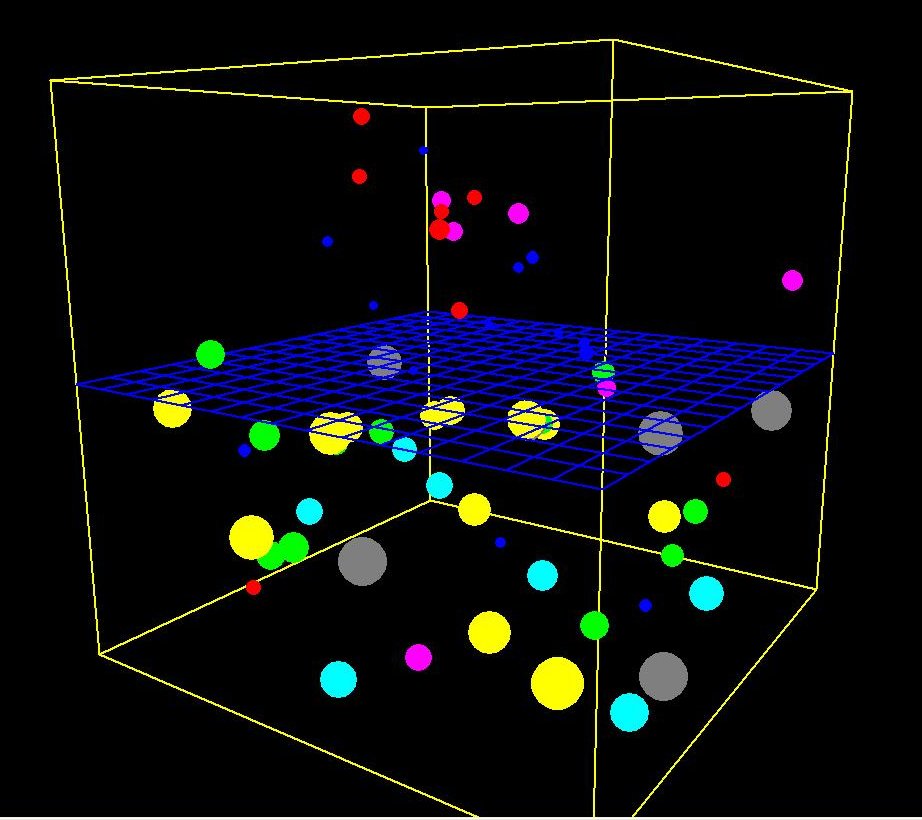
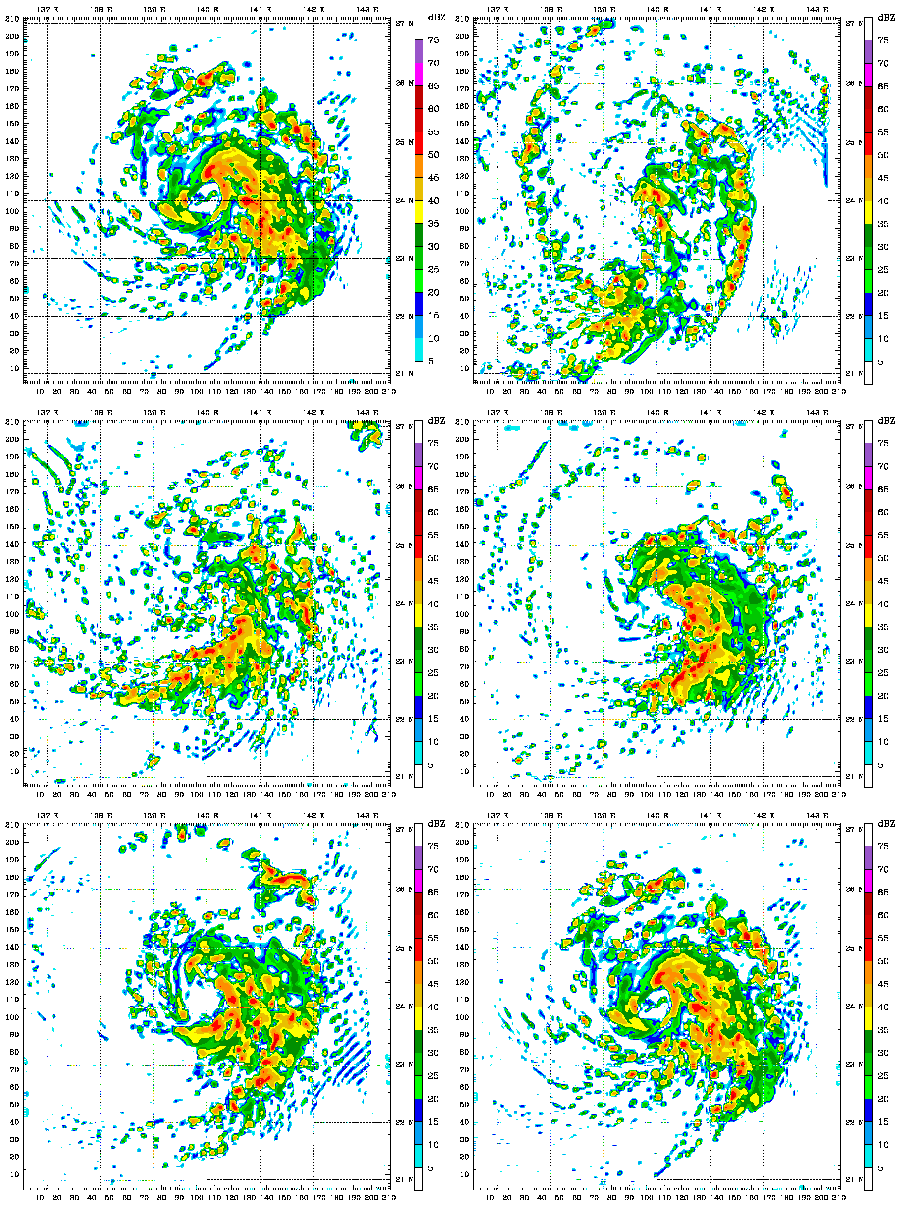
Core characteristics and components
Most computer models share a few basic elements: a specification of the system (structures, agents or equations); input data and parameters; numerical or logical algorithms to advance the system in time or calculate equilibrium; and output that can be compared with observations. Building a model commonly involves numerical analysis to approximate solutions of continuous equations, or discrete algorithms for agent interactions. Models range from simple spreadsheet calculations to large, parallel programs that run on supercomputers.
Types and modeling approaches
Models can be classified by their mathematical framework and purpose. Equation-based models express relationships with algebraic or differential equations; agent-based models represent autonomous entities and their interactions; stochastic models include randomness; deterministic models do not. Specialized methods include finite-element and finite-volume techniques for structural and fluid problems, Monte Carlo sampling to explore uncertainty, and reduced-order emulators that speed up expensive simulations.
Major applications
- Astronomy and planetary science: modeling orbital dynamics, stellar evolution and instrument observations.
- Economics: macroeconomic forecasting, market simulations and policy experiments.
- Natural sciences such as physics and biology, where models describe particles, fluids, ecosystems or cellular processes.
- Engineering applications, including earthquake performance simulation and structural analysis for building design.
- Atmospheric modeling for weather forecasts and projections of climate change, and aerodynamic studies using aerodynamics and computational fluid dynamics.
- Social systems and artificial intelligence where agent-based or network models simulate interactions between people, organizations or software agents.
Validation, uncertainty and practical limits
Computer models must be evaluated against observations through calibration, validation and sensitivity analysis. Key issues include incomplete data, uncertain parameters, and numerical error. Ensemble approaches and uncertainty quantification help convey confidence, but models can still be wrong at scales or contexts for which they were not designed. For example, broad-scale numerical weather predictions often need local adjustments or post-processing to provide useful local forecasts because grid resolution and initial-condition uncertainty limit raw output accuracy.
Distinguishing between the model (the code and equations), the simulation (a particular run of the model), and an emulator (a fast approximation of a complex model) helps clarify objectives. Good modeling practice documents assumptions, tests sensitivity, and communicates uncertainty to users. As computing power and data availability grow, models become more detailed and widely used, but human oversight and critical evaluation remain essential to avoid overconfidence in simulated results.
Questions and answers
Q: What is a computer-based model?
A: A computer-based model is a computer program that simulates what might or what did happen in a situation.
Q: In which fields are computer models used?
A: Computer models are used in many fields including astronomy, economics, physics, and biology.
Q: What are some examples of applications of computer models?
A: Computer models are used in earthquake performance simulation, making models of buildings, weather predictions, climate change, aerodynamics via fluid dynamics simulation, and agent-based modelling for social interactions in artificial intelligence.
Q: What is the purpose of numerical analysis in computer modelling?
A: Numerical analysis is used in computer modelling to approximate the real solution of the problem.
Q: What is the role of simulation techniques in computer modelling?
A: Simulation techniques are used in computer modelling to get values.
Q: Why are numerical weather predictions not accurate enough for local weather forecasts?
A: Numerical weather predictions are too inaccurate to give a good local prediction of the weather, so other methods are used to adjust them.
Q: Can computer models be used to simulate social interactions?
A: Yes, agent-based modelling is used to simulate social interactions in artificial intelligence.
Related articles
Author
AlegsaOnline.com Computer Model: Definition, Structure, Uses and Limitations Leandro Alegsa
URL: https://en.alegsaonline.com/art/22321