
Companion planting: principles, history, and practical use
Companion planting is the deliberate placement of different plants together to improve growth, manage pests, attract pollinators, and make efficient use of space and resources.
Overview
Companion planting is the deliberate practice of growing different plants side by side to gain ecological or practical advantages. In both gardening and farming, companion planting aims to make better use of available space, improve yields, and reduce dependence on synthetic chemicals.
Image gallery
6 Images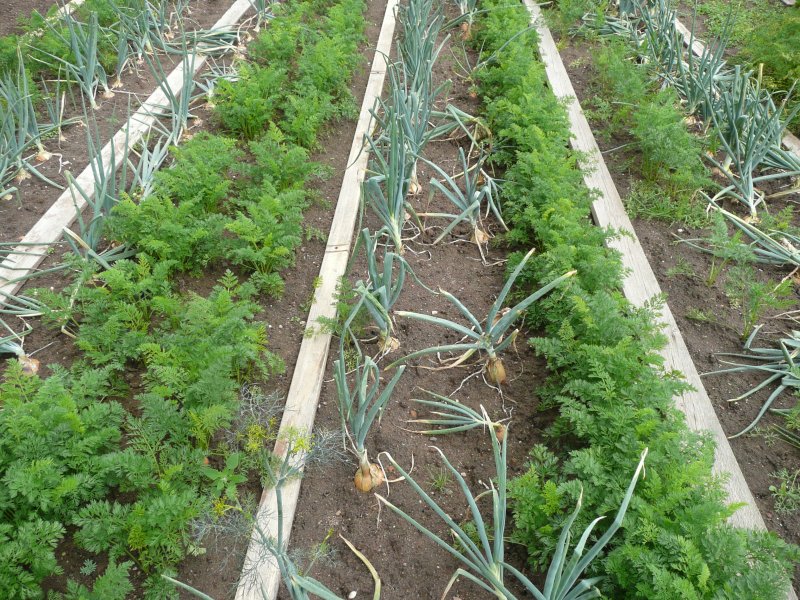




How companion planting works
Several biological interactions underlie companion planting. Some plants attract pollinators or beneficial insects, improving fruit set and overall productivity. Others emit odors or chemicals that repel pests or mask the scent of a desirable crop. Certain companions act as 'trap crops' to lure insects away, while legumes can improve soil fertility through nitrogen fixation. Practitioners choose combinations based on desired outcomes such as enhanced pollination, pest suppression, or soil improvement.
Mechanisms and common effects
Typical mechanisms include:
- Biological control: attracting predators and parasitoids that reduce pest populations.
- Physical shelter: taller plants shading or protecting more delicate species from wind or sun.
- Chemical interactions: volatile compounds from herbs or flowers deterring herbivores like caterpillars or suppressing fungal spores.
- Soil dynamics: nitrogen fixation and root architecture that influence nutrient and water availability.
History and notable traditions
Companion planting has deep historical roots. One of the best-known traditional systems is the North American "Three Sisters" polyculture, used by many Native American communities in Mesoamerica and beyond. In this arrangement, maize provides a structure for climbing beans, which in turn fix nitrogen for the soil, while squash spreads at ground level to suppress weeds and conserve moisture.
Examples and common pairings
Gardeners and small-scale farmers use many tried combinations. Examples include:
- Tomatoes with basil and marigolds — basil can improve flavor perception and marigolds may deter certain nematodes or pests.
- Carrots and onions — onions' odor can help mask carrots from herbivores.
- Brassicas planted with aromatic herbs to confuse pests and attract beneficial insects.
- Dedicated trap crops such as mustard or nasturtium used to protect a main crop.
Benefits, limits and practical guidance
Benefits include reduced pest pressure, better pollination, improved soil health, and more efficient space use. However, success is not guaranteed: some plant pairings compete for water, light, or nutrients and local climate, soil type, and pest complexes influence outcomes. Start small, observe interactions, and consult region-specific resources or extension services. For general gardening principles see resources on gardening basics and sustainable farming, and review studies that test specific combinations before large-scale adoption.
Notable facts and distinctions
Companion planting differs from intercropping and crop rotation: intercropping often focuses on yield optimization of multiple crops together, while crop rotation sequences different crops over time to manage soil fertility and pests. Companion planting usually emphasizes ecological interactions between species in close proximity. While many traditional pairings are time-tested, modern research is clarifying which associations have measurable benefits and which are anecdotal; effective practice blends traditional knowledge with observation and scientific guidance.
For further reading and region-specific recommendations, consult local extension publications or reputable horticultural guides that test companion strategies in your area.
Questions and answers
Q: What is companion planting?
A: Companion planting is the practice of planting different crops next to each other in gardening and farming to help the crops grow and use the available space as much as possible.
Q: Why do some farmers practice companion planting?
A: Some farmers practice companion planting to encourage processes that help the plants, such as pollination, to stop pests from damaging the crop, to attract pests away from the crop, and to provide shelter for different crops.
Q: What are trap crops in companion planting?
A: Trap crops are plants that are planted next to the crop to attract pests away from damaging the crop.
Q: Who used the basic principles of companion planting thousands of years ago?
A: The basic principles of companion planting were used thousands of years ago by Native American peoples in Mesoamerica.
Q: What crops did Native American peoples grow together?
A: Native American peoples grew squash, maize, and common beans together.
Q: How did the beans help the maize in Native American companion planting?
A: The beans fixed nitrogen, which helped the maize grow.
Q: What are some benefits of companion planting?
A: Some benefits of companion planting include increased plant growth and yield, improved plant health, and pest control without the use of chemicals.
Related articles
Author
AlegsaOnline.com Companion planting: principles, history, and practical use Leandro Alegsa
URL: https://en.alegsaonline.com/art/22208
Sources
- theselfsufficientgardener.com : Companion Planting and Crop Rotation
- fbae.org : The initial domestication of Cucurbita pepo in the Americas 10,000 years ago.
- botgard.ucla.edu : "Cucurbitaceae--Fruits for Peons, Pilgrims, and Pharaohs"
- digitalcommons.unl.edu : "The "How" of the Three Sisters: The Origins of Agriculture in Mesoamerica and the Human Niche"
- doi.org : 10.1098/rstb.1976.0074