
Communion (Christianity)
Communion refers to sharing in Christ and one another in Christian life, expressed both as the Eucharist (Holy Communion) and as spiritual fellowship (koinonia) with sacramental, communal, and ecumenical dimensions.
Overview
In Christian usage the word communion describes both a spiritual participation with God and a tangible sharing among Christians. The English term derives from Latin communio, meaning 'sharing in common.' The related Greek concept is koinonia (κοινωνία), often rendered as 'fellowship' or 'partnership.' Communion can refer to membership in a church, interpersonal unity among believers, or to the ritual meal known as the Eucharist or Holy Communion.
Image gallery
1 Image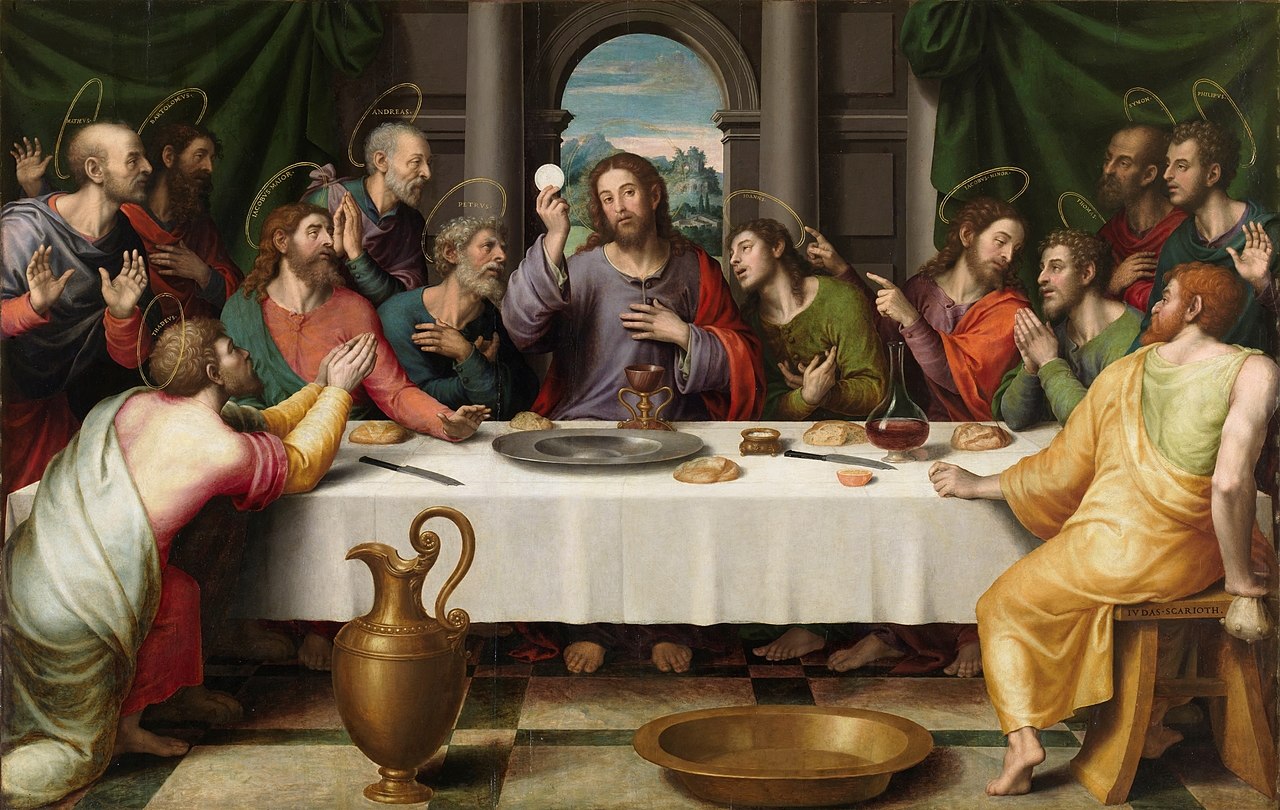
Meanings and primary forms
Communion is commonly discussed in two overlapping senses:
- Ecclesial or spiritual communion: the relational bond that unites Christians to Christ and to one another through faith, prayer, and shared life.
- Liturgical communion (the Eucharist): the rite in which bread and wine are consecrated and shared as the body and blood of Christ, celebrated under various names such as the Lord's Supper or Holy Communion.
Parts and practice
The ritual form of Communion typically involves consecration of bread and wine (or substitutes), distribution to communicants, and prayers of thanksgiving. Churches differ markedly on frequency and preparation: some celebrate weekly, others less often; some require prior confession or baptism; others invite all baptized or even all present. The practice expresses thanksgiving, remembrance, and the believer's incorporation into the body of Christ.
Theological distinctions
Theology about what occurs in Communion varies among traditions. Roman Catholic doctrine uses the term transubstantiation to describe the change of the elements into Christ's body and blood. Eastern Orthodoxy likewise affirms a real presence while emphasizing mystery. Many Protestant churches speak of a spiritual presence, a sacramental union, or a symbolic memorial. These differences have shaped ecclesial identities and sacramental discipline.
History and development
The Eucharist has its roots in Jesus' Last Supper narratives and early Christian meal customs. Over centuries the rite developed liturgically and theologically, adapting to cultural and doctrinal contexts. Debates about presence, worthiness, and who may receive Communion played central roles in schisms and in later ecumenical conversations aimed at reconciling differing practices.
Importance and ecumenical issues
Communion is central to Christian life as a sign of unity, forgiveness, and identity. It functions pastorally—to heal, welcome, and form communities—and the question of intercommunion remains a prominent ecumenical topic: agreements about 'full communion' or reciprocal reception require theological and pastoral convergence. For many believers, participation in Communion is the primary expression of belonging to Christ's church.
Questions and answers
Q: What is the origin of the term Communion in Christianity?
A: The term Communion comes from the Latin word "communio" which means "sharing in common".
Q: How is "communio" translated in Greek?
A: "Communio" is translated as "κοινωνία" in Greek, which is often translated as "fellowship".
Q: What is the basic meaning of the term Communion in Christianity?
A: The basic meaning of the term Communion in Christianity is an especially close relationship of Christians, as individuals or as a Church, with God and with other Christians.
Q: Can an individual have communion with God and with other Christians?
A: Yes, an individual can have communion with God and with other Christians.
Q: Is communion only limited to individuals in Christianity?
A: No, communion can be experienced by a Church as a whole.
Q: What does the term "fellowship" mean in Greek?
A: The term "fellowship" is translated as "κοινωνία" in Greek.
Q: What is the significance of the term Communion in Christianity?
A: The term Communion signifies an intimate and important bond between Christians and with God.
Related articles
Author
AlegsaOnline.com Communion (Christianity) Leandro Alegsa
URL: https://en.alegsaonline.com/art/22166