
Communes of the Yonne department (France)
Overview of the 454 communes in Yonne: administrative role, organization, history, notable towns and cultural importance within the Bourgogne-Franche-Comté region.
Overview
The communes of the Yonne department form the basic units of local government within this part of central-eastern France. As of current administrative organization there are 454 communes. These range from small rural villages to larger towns that serve as local service centres. A complete list of communes is maintained for administrative and statistical purposes.
Image gallery
1 Image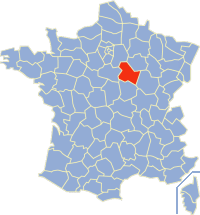
Administrative structure and characteristics
Yonne is a French département (department) in the region of Bourgogne‑Franche‑Comté with its prefecture at Auxerre. Communes are governed by a mayor (maire) and a municipal council elected by residents. They are grouped into cantons and arrondissements for electoral and state-delegated functions, and many cooperate through intercommunal bodies (communautés de communes or communautés d'agglomération) to manage services such as waste collection, economic development and transport.
History and development
The modern commune system dates from the French Revolution, when communes were established to replace older feudal and parochial divisions. Over two centuries the boundaries and numbers of communes have changed through mergers and occasional splits, but Yonne retains a predominantly rural pattern with many small-population communes shaped by agriculture, viticulture and historical settlement patterns.
Notable communes and examples
- Auxerre — the departmental prefecture and main urban centre, with administrative services and cultural institutions.
- Sens — a historic town with cathedral and long civic history.
- Avallon and Joigny — market towns that anchor local economies.
- Vézelay — famous for its basilica and role as a pilgrimage site, illustrating the department's cultural heritage.
Importance and notable facts
Communes in Yonne are important for local democracy, land use planning, preservation of built and natural heritage, and delivery of basic services. Their diversity—from vineyards in the Chablis area to forested uplands—reflects the department's economic and cultural variety. For administrative reference about the department itself, see the Yonne page: Yonne department.
For practical information about individual communes (boundaries, administrative seats, and intercommunal affiliations) consult official registers or the consolidated list of communes and national statistical resources that track changes over time.
Questions and answers
Q: How many communes does the Yonne department have in France?
A: The Yonne department has 454 communes in France.
Q: What is a commune in France?
A: A commune is a small administrative division in France.
Q: What is the Yonne department?
A: The Yonne department is an administrative division of France located in the Bourgogne-Franche-Comté region.
Q: What is the purpose of listing down the communes of the Yonne department in France?
A: The purpose of listing down the communes of the Yonne department in France is to give an overview of all the administrative divisions in this department.
Q: Is the Yonne department a city in France?
A: No, the Yonne department is not a city in France. It is an administrative division within the country.
Q: What region is the Yonne department located in?
A: The Yonne department is located in the Bourgogne-Franche-Comté region of France.
Q: How can one distinguish between communes in France and cities or towns?
A: Communes in France are similar to towns or villages and are usually smaller in size. However, they have their own mayor and government. Cities or towns, on the other hand, are usually larger in size and have more complex government structures.
Related articles
Author
AlegsaOnline.com Communes of the Yonne department (France) Leandro Alegsa
URL: https://en.alegsaonline.com/art/22157