
Communes of Seine-Saint-Denis (department 93)
Overview of the 40 communes in Seine-Saint-Denis, their administration, intercommunalities, history, major towns and social significance within the Paris metropolitan area.
Overview
The department of Seine-Saint-Denis in the Île-de-France region comprises 40 communes, forming a dense belt of suburban territory to the northeast of Paris. This collection of municipalities is commonly identified by its department number, 93, and is notable for its demographic diversity, urban density and mix of residential, industrial and commercial zones. For an official grouping or index see the list of communes.
Image gallery
2 Images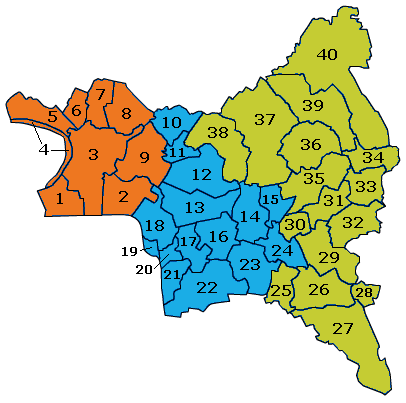

Administration and intercommunal cooperation
Communes are the lowest tier of local government in France and each is administered by a municipal council led by a mayor. In Seine-Saint-Denis many communes work together through intercommunal structures that coordinate planning, transport, housing and economic development. Important examples include:
- CAB — Communauté d'agglomération de l'Aéroport du Bourget, created in 2010, serving communes near Le Bourget airport.
- CAC — Communauté d'agglomération de Clichy-sous-Bois - Montfermeil, established in 2001; see Clichy-sous-Bois — Montfermeil for local context.
- CAS — Communauté d'agglomération Plaine Commune, formed in 2001 to coordinate development across a cluster of northern suburbs; more at Plaine Commune.
Major communes and local character
While the department contains 40 municipalities overall, several stand out by size, function or history. Some of the better-known communes are Saint-Denis (with its historic basilica and major sports and cultural venues), Montreuil, Aubervilliers, Bobigny (the departmental prefecture), Pantin and Le Bourget. Each commune has its own urban fabric, from dense housing estates to remnants of industrial activity now undergoing transformation.
History and urban development
Seine-Saint-Denis was created during the reorganization of the Paris region in the late 1960s and has been shaped by 19th- and 20th-century industrialization and waves of suburban growth. After World War II, rapid construction of social housing and new transport links integrated the communes more tightly with greater Paris, while economic shifts have prompted ongoing urban renewal programs.
Society, economy and significance
The communes of Seine-Saint-Denis play a key role in metropolitan planning: they provide housing, workplaces, cultural institutions and transport connections for millions of residents who live and work around Paris. The area is widely recognized for its cultural vitality and creativity as well as for social and economic challenges that have driven public policy debates about inclusion, employment and urban regeneration.
Further information
For administrative context see the department entry Seine-Saint-Denis and the general overview of the French departmental system department. For national context consult information on France. Maps, municipal websites and intercommunal portals offer up-to-date details on boundaries, services and projects in each commune.


Questions and answers
Q: How many communes are there in the Seine-Saint-Denis department in France?
A: There are 40 communes in the Seine-Saint-Denis department in France.
Q: What is CAB?
A: CAB stands for Communauté d'agglomération de Aéroport du Bourget, and it was created in 2010.
Q: When was CAC created?
A: CAC or Communauté d'agglomération de Clichy-sous-Bois-Montfermeil was created in 2001.
Q: What is CAS?
A: CAS stands for Communauté d'agglomération Plaine Commune, which was created in 2001.
Q: What does the term 'communes' mean?
A: The term 'communes' refers to the administrative divisions of France which are similar to municipalities.
Q: What is the importance of the Seine-Saint-Denis department in France?
A: The Seine-Saint-Denis department is an important area in France because it is located near the capital city, Paris, and is home to the Stade de France, which hosted the 1998 FIFA World Cup final.
Q: What is the meaning of 'd'agglomération' in the French language?
A: 'D'agglomération' in the French language means 'of agglomeration' or refers to a group of neighboring cities or towns that are united in some form of cooperation or decision-making body.
Related articles
Author
AlegsaOnline.com Communes of Seine-Saint-Denis (department 93) Leandro Alegsa
URL: https://en.alegsaonline.com/art/22145