
Communes of the Orne department (France)
Overview of the 505 communes of Orne, their administrative structure, intercommunal groupings, history and notable examples in the Normandy department of northwestern France.
Overview
The Orne department, located in the Normandy region of northwestern France, is divided into 505 communes — the basic units of local government in the French administrative system. A full enumeration and details of these communes can be found in the communal list. Communes range from small rural villages to larger towns such as Alençon, Flers and Argentan which serve as local service and market centres.
Image gallery
1 Image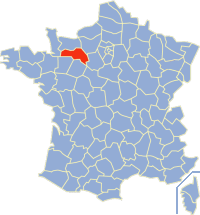
Administrative structure and groupings
Communes in Orne are grouped into arrondissements and intercommunal bodies. The department is commonly organized around several arrondissements and numerous cantons for electoral purposes. Many communes participate in intercommunalities to manage shared services and planning — for example, the urban community around Alençon and the agglomeration of Pays de Flers.
- Communauté urbaine of Alençon (CUA) — an urban community created in 1996 that includes communes partly located in the neighbouring Sarthe department and coordinates metropolitan services (Alençon community).
- Communauté d'agglomération of Pays de Flers (CAF) — an agglomeration community created around the year 2000 to pool resources and economic development efforts.
Functions and importance
Each commune is administered by a mayor and municipal council, responsible for local planning, primary schools, local roads, and civil registration. Intercommunal structures allow small communes to share waste management, public transport and economic development programs, increasing efficiency and access to services for rural populations.
History and development
The modern system of communes dates from the French Revolution and was designed to create uniform local authorities across the nation. Over time, demographic change and the need for coordinated services led to the creation of intercommunal bodies and occasional mergers, though the identity of many villages remains rooted in centuries of local history.
Notable facts and distinctions
Orne’s communes illustrate the diversity of rural and small-town France: agricultural landscapes, forested areas (notably the Perche), historic market towns and sites of industrial heritage. For administrative and reference purposes, details about the department itself are available via its departmental entry (Orne) and departmental designation (département).
For more detailed maps, statistics and a complete catalogue of municipalities, consult official departmental or national repositories and the indicated communal list links above.
Questions and answers
Q: How many communes are there in the Orne department in France?
A: There are 505 communes in the Orne department in France.
Q: What is the meaning of CUA mentioned in the text?
A: CUA stands for Communauté urbaine of Alençon, created in 1996, which is partly located in the Sarthe department.
Q: What is the meaning of CAF in the text?
A: CAF stands for Communauté d'agglomération of Pays de Flers, created in 2000.
Q: Do all the communes in the Orne department belong to CUA or CAF?
A: No, not all communes in the Orne department belong to CUA or CAF.
Q: When was CUA created?
A: CUA was created in 1996.
Q: Is CAF older or younger than CUA?
A: CAF is younger than CUA. It was created in 2000.
Q: Are there any communes that belong to both CUA and CAF?
A: The text does not mention any commune that belongs to both CUA and CAF.
Related articles
Author
AlegsaOnline.com Communes of the Orne department (France) Leandro Alegsa
URL: https://en.alegsaonline.com/art/22133