
Communes of the Hautes-Alpes department
Overview of the 177 communes in Hautes-Alpes, their governance, geography, economy, history and notable towns in this mountainous department of southeastern France.
The Hautes-Alpes department comprises 177 communes, the smallest administrative units in France. Scattered across a high, largely alpine landscape in southeastern France, these communes range from the departmental capital and larger towns to tiny mountain villages. Together they form the local framework for civil administration, public services and community life.
Image gallery
1 Image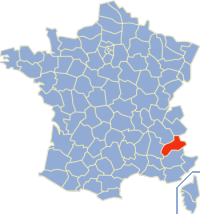
Governance and organisation
Each commune is governed by a municipal council and a mayor who manage local affairs such as schools, local roads, planning and civil records. Many communes participate in intercommunal structures to pool resources for services like waste management, tourism development and economic planning. For a complete inventory and administrative details see the list of communes.
Geography, economy and daily life
Situated in a predominantly alpine setting, the communes of Hautes-Alpes exhibit strong geographic contrasts: high valleys, mountain passes and plateaus. The economy is oriented around mountain agriculture, summer and winter tourism (hiking, skiing, climbing) and small local industries. Protected areas, including parts of major mountain parks, shape land use and conservation policies.
History and development
The communal pattern reflects centuries of settlement in the old provinces of southeastern France. Over time administrative reforms and occasional municipal mergers have adjusted boundaries, but many communes retain historic centres, local parishes and traditional festivals. The department’s institutions and identity are linked with regional history; official information can be consulted on the department page: Hautes-Alpes and related administrative portals like prefectural resources.
Notable communes and distinctions
Among the more prominent communes are Gap (the prefecture), Briançon with its historic fortified core, Embrun, Guillestre and Serres. Several communes are known for high-altitude settlements and mountain heritage; the area is often highlighted for its elevation and alpine character within France. These communes play a key role in regional tourism, conservation and the maintenance of rural mountain life.
- Gap — administrative and service centre
- Briançon — historic fortifications and mountain gateway
- Embrun — historic town with cultural landmarks
- Smaller communes — villages and hamlets preserving local traditions
Questions and answers
Q: What is the Hautes-Alpes department in France?
A: The Hautes-Alpes department is a region in France.
Q: How many communes are there in the Hautes-Alpes department?
A: There are 177 communes in the Hautes-Alpes department.
Q: What is a commune?
A: A commune is the smallest administrative division in France.
Q: Are all communes in France the same size?
A: No, communes can vary in size.
Q: Why is it important to know the communes in a specific department of France?
A: Knowing the communes in a specific department of France can be helpful for administrative purposes, such as voting and taxation.
Q: Are the communes of the Hautes-Alpes department part of a larger region?
A: Yes, the Hautes-Alpes department is part of the larger region of Provence-Alpes-Côte d'Azur.
Q: Is the list of communes in the Hautes-Alpes department exhaustive?
A: Yes, the text states that the following is a list of all 177 communes in the Hautes-Alpes department.
Related articles
Author
AlegsaOnline.com Communes of the Hautes-Alpes department Leandro Alegsa
URL: https://en.alegsaonline.com/art/22104