
Communes of the Haute‑Savoie department
Overview of the 294 communes of Haute‑Savoie (Auvergne‑Rhône‑Alpes), their administration, geography, history, economic roles and notable examples.
Overview
The communes of Haute‑Savoie form the basic units of local government in the department: there are 294 of them. This network of municipalities ranges from lakeside towns on Lake Geneva to small alpine hamlets. A complete enumeration and reference can be found in the official list of communes.
Image gallery
1 Image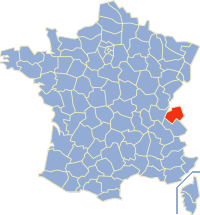
Administration and organization
Haute‑Savoie is a département in the Auvergne‑Rhône‑Alpes region; see the department summary at Haute‑Savoie. Communes are grouped into arrondissements and cantons and cooperate through intercommunal structures for services and planning. Each commune is governed by an elected mayor and municipal council, the standard model across the French département system.
Geography, size and character
The territory includes lowland lakeshores, river valleys and high mountain zones of the Alps, which gives communes very different characters. Some are urban or suburban, closely linked to cross‑border economic zones near Geneva, while others are remote, high‑altitude communities focused on agriculture or mountain tourism. The department sits within France and borders Switzerland and Italy, influencing local economies and transport.
Economy and uses
Communes play central roles in local life: providing schools, planning, local roads and cultural services. Many depend heavily on tourism (ski resorts, hiking and lake activities), others on light industry, cross‑border services, hydroelectric production or specialised agriculture. Intercommunal cooperation helps manage infrastructure for visitors and residents alike.
Examples and notable facts
- Annecy – the prefecture and one of the largest communes, known for its lake and historic center.
- Chamonix‑Mont‑Blanc – a high‑mountain resort commune within the Mont Blanc massif region.
- Other important towns include Thonon‑les‑Bains, Annemasse and Bonneville; many smaller villages preserve traditional alpine architecture and cultures.
History and distinctions
The modern commune system was established after the French Revolution and has evolved through reforms that encourage intercommunal cooperation. In Haute‑Savoie this has helped reconcile the needs of densely populated cross‑border areas with those of sparsely populated mountain communes, producing a diverse administrative landscape with strong local identities.
Questions and answers
Q: How many communes are there in the Haute-Savoie department?
A: There are 294 communes in the Haute-Savoie department.
Q: What is a commune?
A: A commune is the smallest administrative division in France.
Q: In which department are the communes located?
A: The communes are located in the Haute-Savoie department in France.
Q: Are there more than 294 communes in the Haute-Savoie department?
A: No, there are exactly 294 communes in the Haute-Savoie department.
Q: What information does the list of communes contain?
A: The list of communes contains the names of all 294 communes in the Haute-Savoie department.
Q: How can we use this information?
A: This information can be used to locate a specific commune or to better understand the administrative subdivisions of France.
Q: Is the Haute-Savoie department the only department with communes in France?
A: No, all departments in France are divided into communes.
Related articles
Author
AlegsaOnline.com Communes of the Haute‑Savoie department Leandro Alegsa
URL: https://en.alegsaonline.com/art/22102