
Communes of the Gironde department
Overview of the 542 communes of Gironde: their administrative role, variety from Bordeaux to small villages, intercommunal cooperation, history, and regional importance in southwestern France.
The Gironde department in southwestern France contains 542 communes, the basic units of local government in the French administrative system. These communes range from the large urban municipality of Bordeaux, the prefecture and the department's economic and cultural centre, to tiny rural villages and seaside communities along the Atlantic coast and Arcachon Bay.
Image gallery
1 Image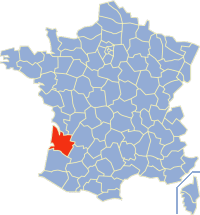
Structure and administration
Each commune is governed by a municipal council and a mayor responsible for local services, civil records, urban planning and elementary schools. Communes in Gironde are grouped into larger administrative layers — cantons and arrondissements — and participate in intercommunal organisations that pool resources for transport, waste management and economic development. Notable intercommunal bodies include the metropolitan and community structures centered on Bordeaux and other urban areas.
Geography and variety
Gironde's communes occupy a varied landscape: coastal towns and oyster-farming villages on Arcachon Bay, settlements along the Gironde estuary, vineyard communes in famous wine districts, and agricultural hamlets inland. This diversity creates marked contrasts in population, land area and local economy from one commune to another.
History and development
The modern commune system dates to the French Revolution, when municipalities were created to replace feudal jurisdictions. Over time communes have evolved through mergers, border adjustments and cooperative intercommunal arrangements to meet contemporary governance needs while preserving local identities.
Functions, examples and importance
- Local administration: mayors and councils deliver everyday services and legal acts.
- Statistical and postal units used for demographics and addressing.
- Economic roles: many communes host vineyards, tourism facilities or ports that shape the regional economy.
For an alphabetical or map listing see the official list of communes: List of communes. More information about the department and administrative context is available from the Gironde page: Gironde, the general concept of a département, and the national framework of France.
Questions and answers
Q: How many communes are in the Gironde department in France?
A: There are 542 communes in the Gironde department in France.
Q: What is the Gironde département?
A: The Gironde département is a region in France.
Q: What is the significance of the 542 communes in the Gironde department?
A: The 542 communes in the Gironde department represent the smaller administrative divisions within the region.
Q: Are all regions in France divided into communes?
A: Yes, all regions in France are divided into communes.
Q: Does the number of communes in a department vary across France?
A: Yes, the number of communes in a department can vary across France.
Q: What is the purpose of having communes within a department?
A: The purpose of having communes is to provide more localized administrative services and decision-making.
Q: Are communes equivalent to cities or towns?
A: Not necessarily, communes can range in size and level of urbanization, and can include smaller villages and rural areas in addition to cities and towns.
Related articles
Author
AlegsaOnline.com Communes of the Gironde department Leandro Alegsa
URL: https://en.alegsaonline.com/art/22093