
Communes of Eure-et-Loir, France: overview and administrative structure
An overview of the 403 communes of the Eure-et-Loir department in north-central France, their organization, history, and notable features.
Overview
The communes of the Eure-et-Loir département are the smallest units of local government in France. As basic municipal entities they vary from small rural villages to larger urban centres. In total there are 403 communes, each administered by a mayor and a municipal council that manage local services, urban planning, and community affairs.
Image gallery
1 Image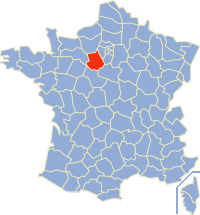
Administrative organization
Communes in the department are grouped into larger administrative layers: arrondissements, cantons and intercommunalities. The department has four main arrondissements — Chartres, Dreux, Nogent-le-Rotrou and Châteaudun — which serve as intermediate state administrative divisions. Many communes also cooperate within intercommunal structures to share resources and deliver services more efficiently.
Characteristics and governance
- Local government: each commune elects a municipal council and a mayor who implements council decisions.
- Size and population: communes range from sparsely populated hamlets to towns like Chartres and Dreux, reflecting both agricultural and urban landscapes.
- Services: responsibilities commonly include schools, local roads, waste management and cultural facilities.
History and development
The modern commune system dates from the French Revolution, which standardized local government across the country. Over the centuries boundaries and responsibilities have evolved, and recent decades have seen increased cooperation through intercommunal bodies to meet economic and infrastructural challenges.
Importance and notable communes
Communes are vital to daily life and local identity. Notable examples include the prefecture Chartres with its famous cathedral, and other principal towns that act as economic and transport hubs. For a complete enumeration see the list of communes of the department. Further context on the departmental role can be found under département governance pages.
Practical notes
Researchers or visitors looking into local administration should consult communal records and intercommunal websites for up-to-date information on services, elected officials and development plans. The structure of communes remains a cornerstone of local democracy in both rural and urban parts of the region.
Questions and answers
Q: How many communes are there in Eure-et-Loir department of France?
A: There are 403 communes in Eure-et-Loir department of France.
Q: What is a commune in France?
A: In France, a commune is a level of administrative division, similar to a town or a municipality.
Q: Which department is Eure-et-Loir located in France?
A: Eure-et-Loir is a department located in north-central France, within the Centre-Val de Loire region.
Q: What is the significance of Eure-et-Loir department in France?
A: Eure-et-Loir department is known for its rich history, scenic landscapes, and famous tourist attractions.
Q: What are some of the popular tourist attractions in Eure-et-Loir department?
A: Some popular tourist attractions in Eure-et-Loir department include the Chateau de Maintenon, the Chartres Cathedral, and the Parc des Etangs de Saint Quentin.
Q: Which region is Eure-et-Loir department a part of in France?
A: Eure-et-Loir department is a part of the Centre-Val de Loire region in France.
Q: How is Eure-et-Loir department divided for administrative purposes?
A: Eure-et-Loir department is divided into 4 arrondissements and 29 cantons for administrative purposes.
Related articles
Author
AlegsaOnline.com Communes of Eure-et-Loir, France: overview and administrative structure Leandro Alegsa
URL: https://en.alegsaonline.com/art/22089