
Communes of the Cher department (France): overview and local administration
Overview of the 290 communes of the Cher department in France: structure, governance, history, roles, and notable facts about local administration and intercommunal cooperation.
The Cher department in central France comprises 290 communes, the smallest territorial units of French local government. A complete index and map can be consulted via a list of communes, while general information about the department is available through resources on the Cher administrative site and on the broader département pages. For national context see material about France.
Image gallery
1 Image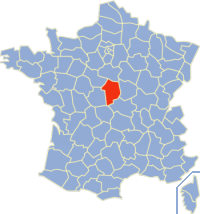
What a commune is
In France, a commune is a legal entity with an elected municipal council and a mayor who administers local services, civil records and basic planning. Communes vary widely in size and character: the Cher list includes Bourges, the prefecture and largest urban center, as well as many small rural villages. Population, area and facilities differ from one commune to another, but each has the same legal standing.
Organization and responsibilities
Communes manage primary schools, local roads, sanitation, building permits and community services. They collect local taxes and prepare municipal budgets. Many small communes pool resources through intercommunal structures such as communautés de communes or communautés d'agglomération to deliver services efficiently and coordinate economic development.
History and evolution
The modern commune system dates to the French Revolution, when parishes and seigneurial jurisdictions were reorganized into uniform municipalities. Since then communes have experienced occasional mergers, boundary adjustments and collaboration projects to adapt to demographic change, rural depopulation or urban growth while preserving local identity.
Importance and notable facts
- Communes are the primary point of contact between residents and public administration, handling civil status records and local democracy.
- Bourges serves as the administrative center of Cher, with many smaller communes relying on it for higher-level services.
- Rural communes in Cher often maintain historical churches, small markets and agricultural traditions that shape regional culture and tourism.
For researchers, planners and visitors, the full registry and maps of the 290 communes provide essential data for demographic study, heritage preservation and travel planning. See the referenced lists and departmental pages for official names, INSEE codes and up-to-date administrative arrangements: commune listings, departmental overview at Cher and governance notes on the département pages; contextual information is also available about the national framework of France.
Questions and answers
Q: What is the Cher département in France?
A: The Cher département is a region in France.
Q: How many communes are in the Cher department?
A: There are 290 communes in the Cher department.
Q: What is a commune?
A: A commune is a small administrative subdivision within a department in France.
Q: Are all communes in the Cher department listed in the text?
A: Yes, the text includes a list of all the 290 communes in the Cher department.
Q: What is the purpose of listing all the communes in the text?
A: The purpose of the text is to provide a comprehensive list of all the communes in the Cher department.
Q: Is the Cher department the only department in France with communes?
A: No, all departments in France have communes.
Q: How can one learn more about a specific commune in the Cher department?
A: To learn more about a specific commune in the Cher department, one can research its history, geography, and demographics online, or reach out to local government officials or tour guides.
Related articles
Author
AlegsaOnline.com Communes of the Cher department (France): overview and local administration Leandro Alegsa
URL: https://en.alegsaonline.com/art/22077