
Common juniper (Juniperus communis)
A widespread evergreen conifer of the Northern Hemisphere, valued for its aromatic berries, ecological role, and cultural uses including flavoring and traditional medicine.
The common juniper (Juniperus communis) is an evergreen conifer in the cypress family Cupressaceae. It is notable for having one of the widest distributions of any woody plant, occurring across the cool temperate regions of the Northern Hemisphere. Taxonomically it belongs to the genus Juniperus and is often treated as a single, highly variable species with numerous local forms and subspecies; more information about the species can be found via a dedicated species reference.
Image gallery
10 Images




Characteristics
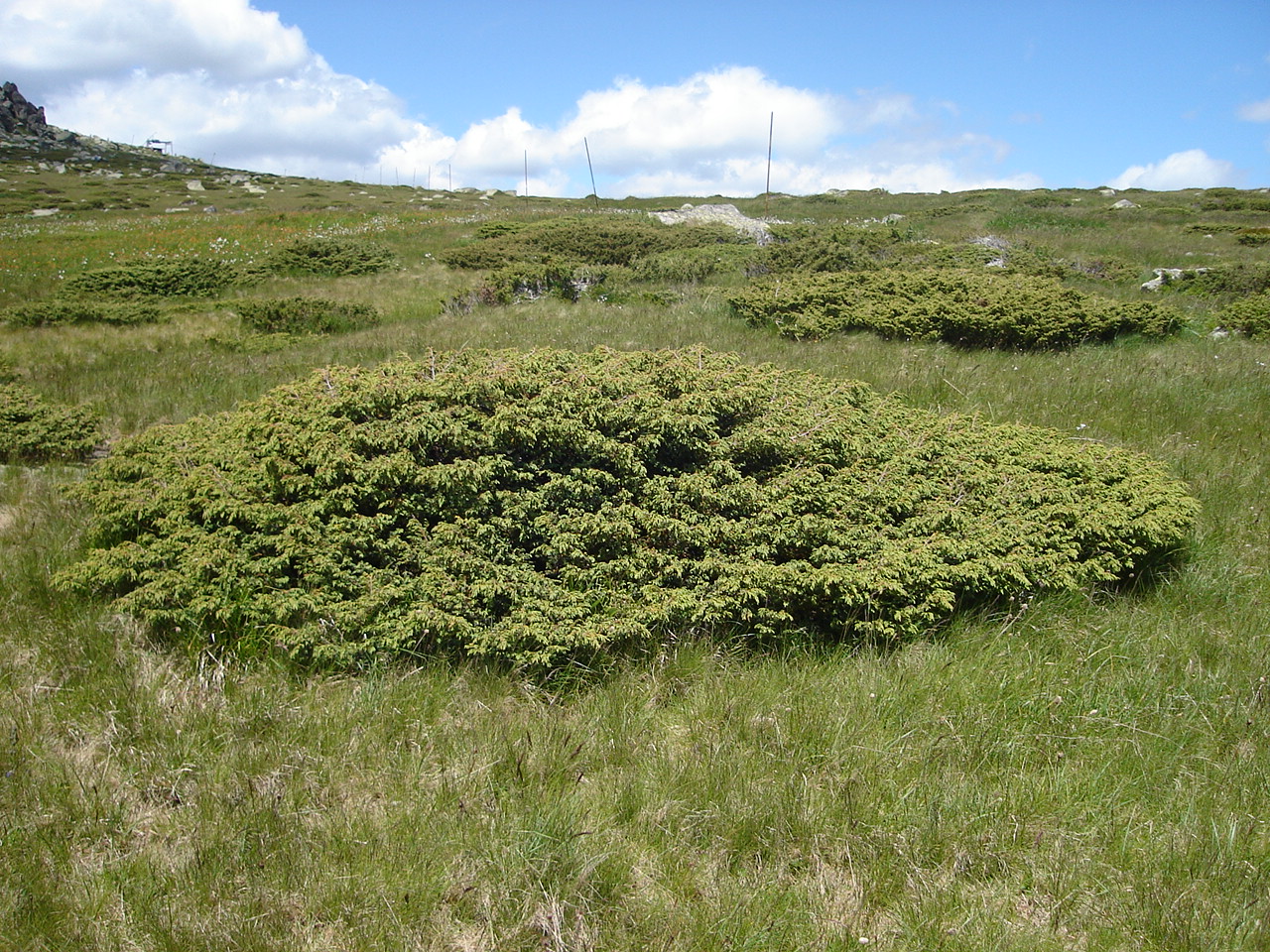
Common juniper varies from low, prostrate shrubs to small trees depending on climate and site. Leaves are needle-like, usually arranged in whorls of three, sharp to the touch and aromatic when crushed. It produces small cones: the pollen cones are dry, while the seed cones are fleshy and berry-like, commonly called "juniper berries." These cone-fruits often take two to three years to ripen and contain one to several seeds.
Distribution and habitat
Juniperus communis is circumpolar in the cool temperate zones and occupies a wide range of habitats including heaths, moorland, rocky slopes, and open woodlands. It tolerates poor, acidic soils and exposure to wind and cold, which contributes to its broad range. Regional treatments and distribution maps are available from botanical and conservation resources such as regional floras.
Uses and cultural importance
- Food and flavoring: The ripe cone-fruits are used as a spice and are the traditional flavoring in gin and various regional cuisines.
- Medicinal and traditional uses: Juniper berries have a long history of use in traditional remedies and as a diuretic and antiseptic ingredient, though modern medical claims require careful evaluation.
- Practical uses: The wood is dense and aromatic, used locally for fuel, small craft items, and ornamental plantings; many cultivated varieties are grown in gardens for form and foliage.
Ecology and conservation
Juniper berries are an important food source for birds and mammals, which disperse the seeds. The species can act as a pioneer on disturbed sites and contributes to soil stabilization. While common juniper remains widespread overall, local populations may be affected by habitat change, grazing pressure, and overharvesting of berries. Conservation assessments and management guidance can be consulted through botanical authorities and family-level information on Cupressaceae resources.
Because J. communis exhibits considerable morphological variation across its range, botanists recognize multiple subspecies and ecotypes adapted to local conditions. Gardeners and conservationists value the species both for its hardiness and for its role in native ecosystems.
Questions and answers
Q: What is the common juniper?
A: The common juniper is a type of plant that belongs to the genus Juniperus and the family Cupressaceae.
Q: What is the range of the common juniper?
A: The common juniper has the largest range of any woody plant and can be found all over the cool temperate Northern Hemisphere, including North America, Europe, and Asia.
Q: What type of climate does the common juniper prefer?
A: The common juniper thrives in cool temperate climates.
Q: What are some common uses for the common juniper?
A: The common juniper is used in the production of gin, as well as for medicinal purposes, and as a flavoring for various dishes.
Q: Is the common juniper a common plant species?
A: Yes, as its name suggests, the common juniper is a widely distributed and common species.
Q: How does the common juniper reproduce?
A: The common juniper reproduces through both sexual and asexual means, with seeds being produced from female cones and vegetative propagation occurring through rhizomes.
Q: What is the scientific name for the common juniper?
A: The scientific name for the common juniper is Juniperus communis.
Related articles
Author
AlegsaOnline.com Common juniper (Juniperus communis) Leandro Alegsa
URL: https://en.alegsaonline.com/art/22008
Sources
- commons.wikimedia.org : Juniperus communis
- doi.org : 10.2337/diacare.28.6.1534-a