
Combine harvester
A combine harvester is a machine that cuts, threshes, and cleans cereal crops in a single operation; this article explains its parts, operation, history, uses, and modern variations.
Overview
A combine harvester, often shortened to "combine," is an agricultural machine that performs reaping, threshing and winnowing in one continuous process. It is primarily used for cereal crops such as wheat, barley, oats, rye and rice, and in adapted form for maize (corn) and oilseeds. By integrating multiple tasks, the combine dramatically reduces the time and labor required to move a crop from standing field to stored grain.
Image gallery
10 Images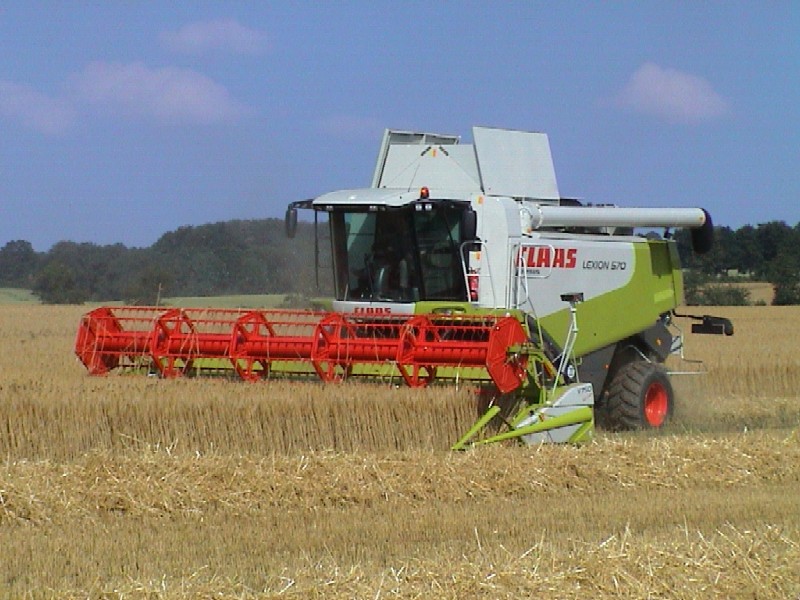


Main components and characteristics
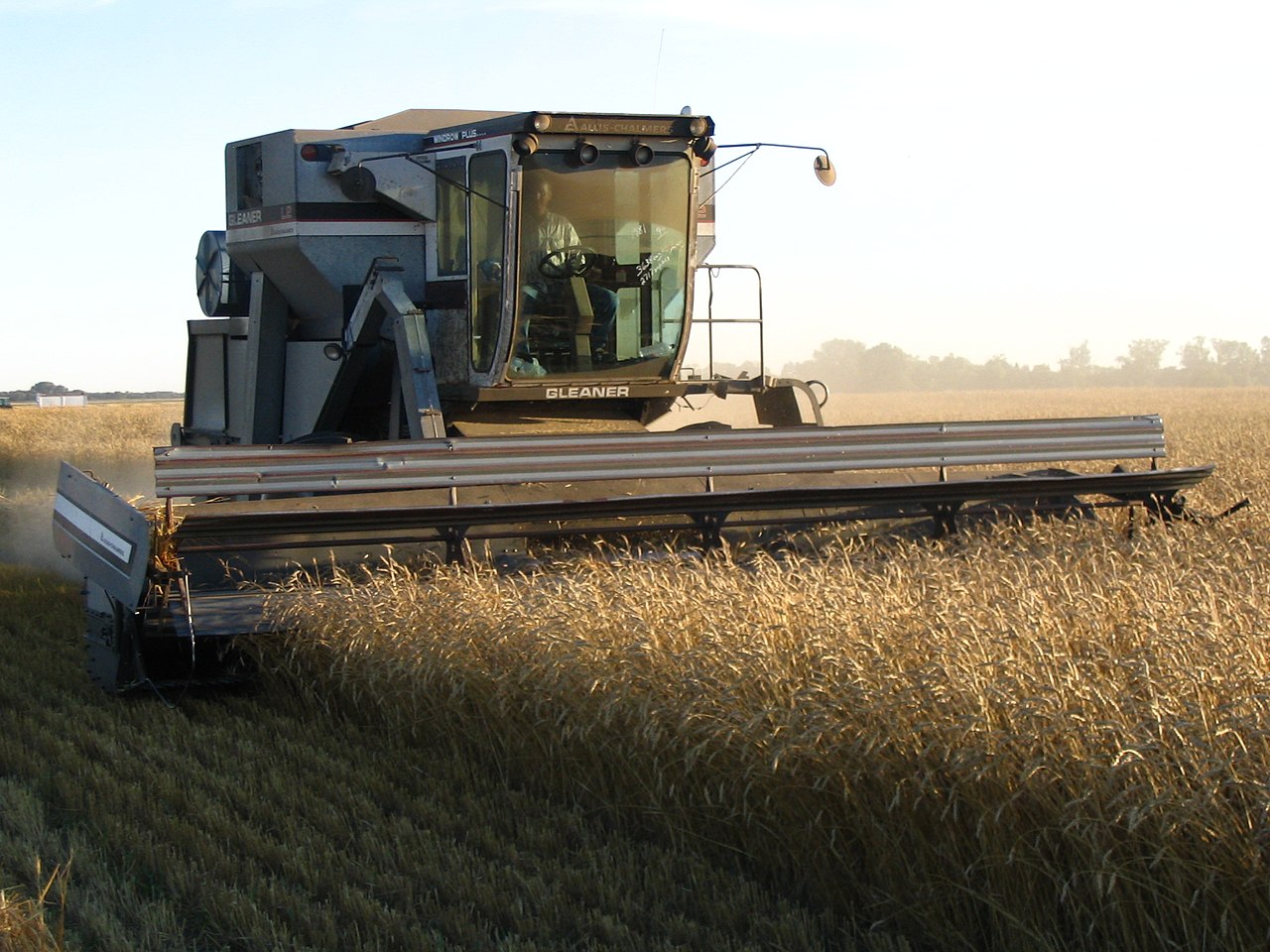
Typical combines consist of a header that cuts and gathers the crop, a feeder that moves material into the machine, a threshing mechanism (cylinder or rotor) that separates grain from straw, and a cleaning system of sieves and fans that removes chaff and impurities. Separated grain is conveyed to an on-board tank and later emptied by an unloading auger. Other notable parts include the straw walker or rotor, residue management equipment, and the operator cab with controls.
How a combine works
- Cutting and feeding: the header slices the crop and feeds it to the center of the machine.
- Threshing: the threshing drum or rotor beats the material to detach kernels from heads and stalks.
- Separation: straw and larger material are conveyed away while smaller grain falls through concaves.
- Winnowing: a fan and sieves remove lighter chaff and broken material.
- Grain handling: cleaned grain is stored in the tank; straw can be chopped or baled.
History and development
The combine evolved during the 19th and early 20th centuries from separate machines for reaping and threshing into integrated, drawn units and later into self-propelled harvesters. Mechanization spread alongside improvements in engines, metallurgy and road transport. Over the 20th century combines increased in size, capacity and sophistication, incorporating hydraulic controls, electronic systems and, more recently, guidance and yield-mapping technologies.
Uses, impact and notable variations
Combines are essential on commercial grain farms because they speed harvests and cut labor needs, changing farm size economics and rural labor patterns. Variants include draper and rigid headers, corn headers with snapping rollers, high-capacity twin-rotor machines, and smaller models for tight or hilly terrain. Modern combines may use GPS, telematics and on-board computers to monitor performance and grain quality.
Safety, maintenance and distinctions
Operators must observe safety around moving parts and follow routine maintenance of belts, bearings and sieves to maintain efficiency and prevent fires. When comparing machines, key distinctions are header type, threshing system (cylinder vs rotor), capacity, and whether the combine is tractor-drawn or self-propelled. For general agricultural context see grain processing and its role in farming.
Questions and answers
Q: What is a combine harvester?
A: A combine harvester is a machine that harvests crops.
Q: Why is it called a "combine" harvester?
A: It is called a "combine" harvester because it does three separate parts of harvesting crops at once: reaping, threshing, and winnowing.
Q: What is reaping?
A: Reaping is the process of cutting and collecting crops when they are ready for harvesting.
Q: What is threshing?
A: Threshing is the process of separating the parts of a crop that can be eaten by people from the parts that can't.
Q: What is winnowing?
A: Winnowing is the process of removing the already separated parts of the crop that can't be eaten by people, the chaff, while keeping the part that can be eaten, the grain.
Q: How has the combine harvester impacted the farming industry?
A: The combine harvester has resulted in far fewer people working in farming.
Q: Can a combine harvester harvest all types of crops?
A: No, it depends on the type of crop. However, a combine harvester is commonly used for cereal crops such as wheat, oats, and barley.
Related articles
Author
AlegsaOnline.com Combine harvester Leandro Alegsa
URL: https://en.alegsaonline.com/art/21873