
Colossus of Rhodes: ancient bronze statue and one of the Seven Wonders
A large Hellenistic statue of the sun god Helios erected on Rhodes c. 294–282 BC, famed as one of the Seven Wonders and destroyed by an earthquake in the 3rd century BC.
Overview
The Colossus of Rhodes was an enormous statue of the sun god Helios erected on the Greek island of Rhodes in the late Hellenistic period. Commissioned after a successful defense of the city, it became celebrated throughout the Mediterranean as an outstanding achievement of ancient engineering and art. Estimates place its height at about 70 cubits, roughly over 30 metres (about 100 feet), which made it one of the tallest statues of antiquity.
Image gallery
8 Images
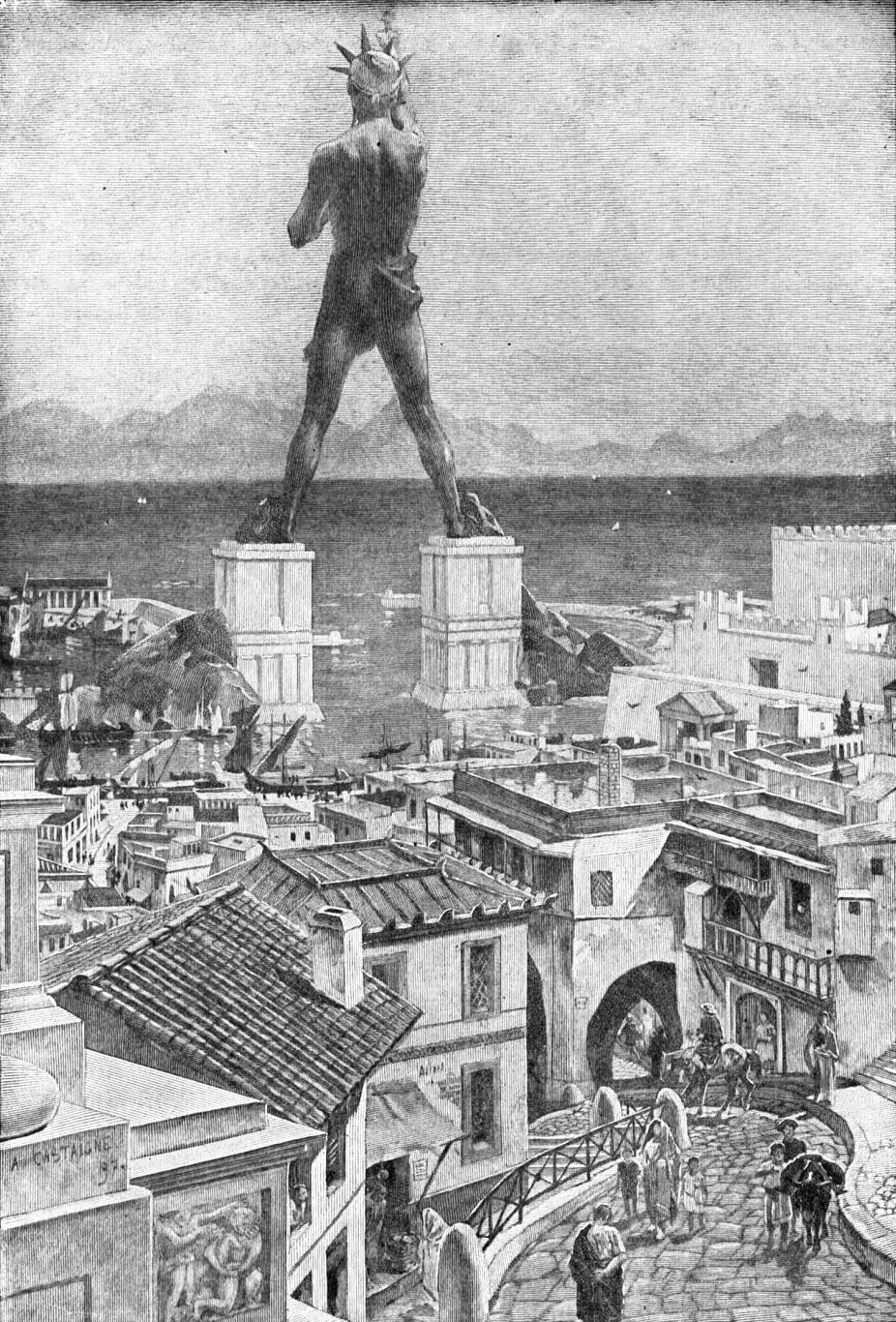
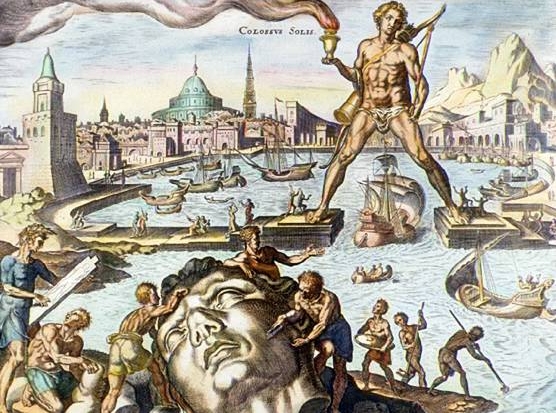
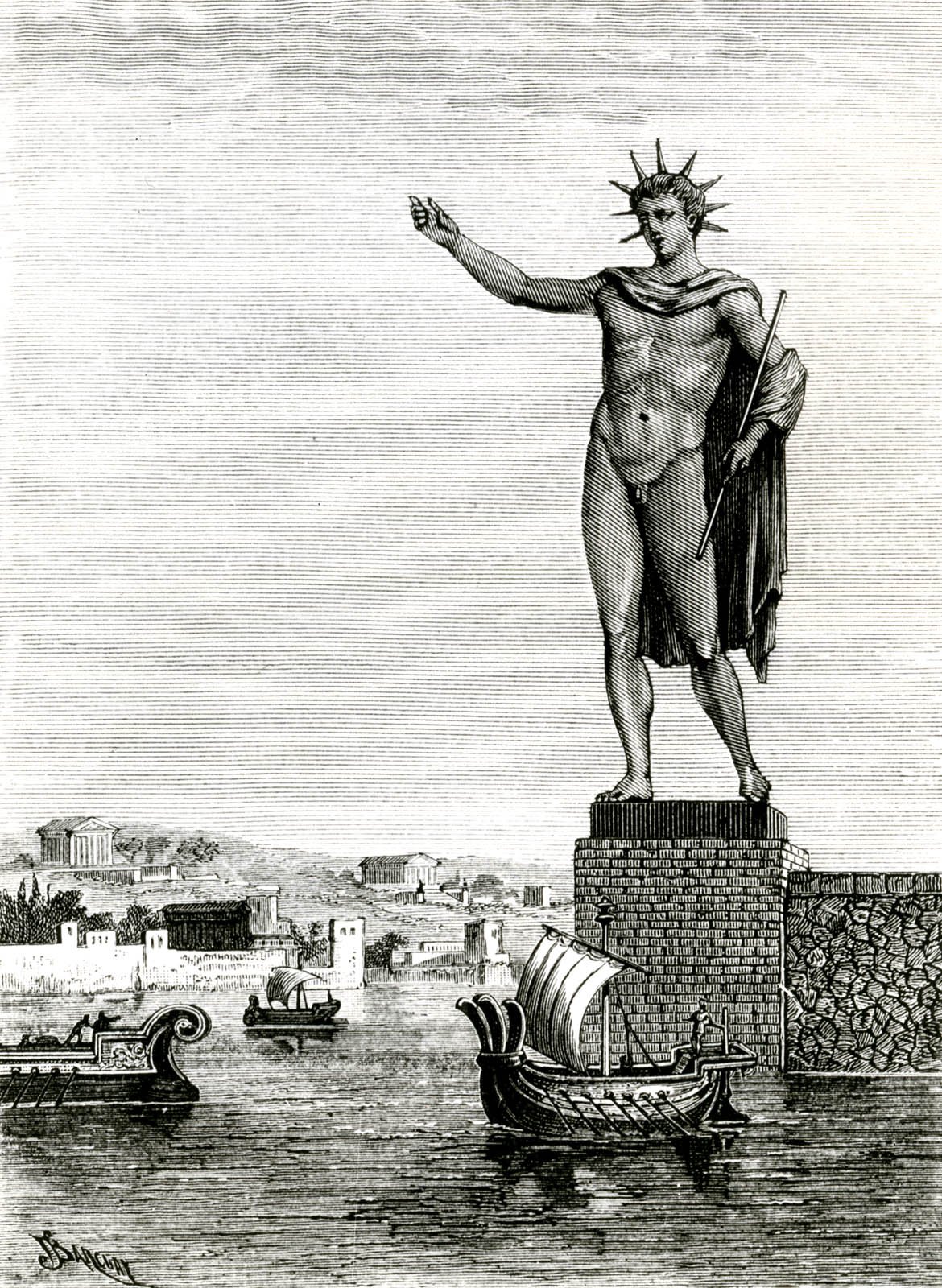


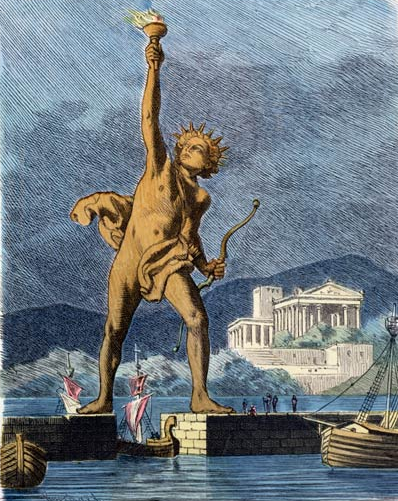
Design and materials
Contemporary descriptions and later accounts suggest the monument was built using metalworking techniques common to the era: a framework with external bronze cladding. The sculpture is often described as a representation of the god in a standing pose; details of its exact posture and finishing are uncertain and inferred from literary sources and parallels in Hellenistic sculpture. Technical aspects are discussed in modern summaries of ancient metallurgy and monumental statuary; see bronze and iron construction and the broader Greek sculptural tradition. The deity depicted is commonly identified as Helios, the personification of the sun.
History and context
The statue was constructed in the aftermath of a siege, intended as a civic symbol of resilience and gratitude. Ancient sources attribute the work to the sculptor Chares of Lindos, who is said to have been influenced by the school of Lysippos. Building is generally dated to the years between c. 294 and 282 BC. The island and its principal city are often referenced in accounts of the monument; see entries on Rhodes island and the city of Rhodes.
Destruction and aftermath
The Colossus stood for a few decades before being toppled by an earthquake in the 3rd century BC, around the mid-200s BC. After its collapse the remains reportedly lay on the ground for many years and were later described as a curiosity by travelers. Ancient and medieval writers record that the fragments were still visible and that some materials were offered for sale, though precise details vary in the sources.
Significance, myths and legacy
As one of the canonical Seven Wonders of the ancient world, the Colossus became a symbol of Hellenistic artistry and civic pride. It inspired numerous later imaginings and misconceptions, including the popular but unlikely image of the statue straddling the harbor entrance. Modern historians and archaeologists treat that depiction with skepticism; practical engineering and contemporary testimony make the harbour-straddling posture improbable.
Notable facts
- Ranked among the Seven Wonders in classical lists.
- Often cited as one of the tallest known ancient freestanding statues.
- Its story illustrates Hellenistic technical skill and the role of monumental art in public identity.
For further reading on ancient statuary, construction methods and the cultural role of the Colossus, see specialist surveys and museum collections that discuss Hellenistic sculpture and monumental bronze working (statue studies, materials, Greek art).
Questions and answers
Q: What was the Colossus of Rhodes?
A: The Colossus of Rhodes was a statue of the Greek god Helios made of iron and bronze.
Q: Who built the Colossus of Rhodes?
A: The Colossus of Rhodes was built by Chares of Lindos, a student of Lysippos.
Q: When was the Colossus of Rhodes built?
A: The Colossus of Rhodes was built between 294 and 282 BC.
Q: Where was the Colossus of Rhodes located?
A: The Colossus of Rhodes was located on the Greek island of Rhodes, at approximate coordinates 36°27'04"N, 28°13'40"E.
Q: What was the Colossus of Rhodes' height?
A: Before being destroyed in an earthquake, the Colossus of Rhodes was 70 cubits tall, over 30 metres (100 feet), making it the tallest statue of the ancient world.
Q: What happened to the Colossus of Rhodes?
A: The Colossus of Rhodes was destroyed in an earthquake.
Q: What was the significance of the Colossus of Rhodes?
A: The Colossus of Rhodes was one of the Seven Wonders of the World.
Related articles
Author
AlegsaOnline.com Colossus of Rhodes: ancient bronze statue and one of the Seven Wonders Leandro Alegsa
URL: https://en.alegsaonline.com/art/21764