
Color wheel: theory, models, history, and practical uses
Overview of the color wheel: structure, main models (RYB, RGB, CMY/CMYK, HSV), mixing principles, common color schemes, accessibility considerations, and practical guidance for art, design and print.
Overview
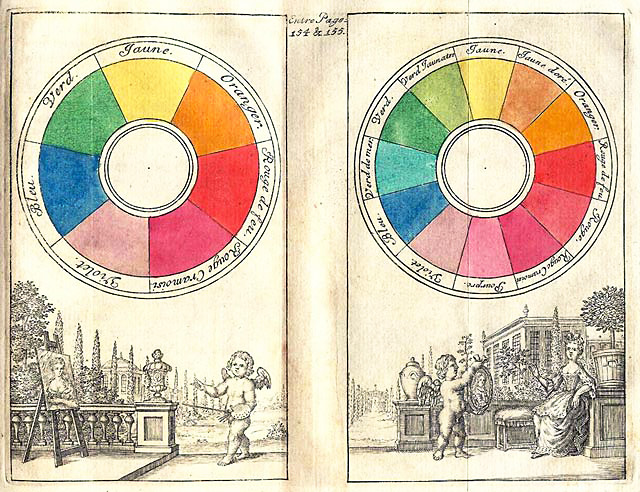
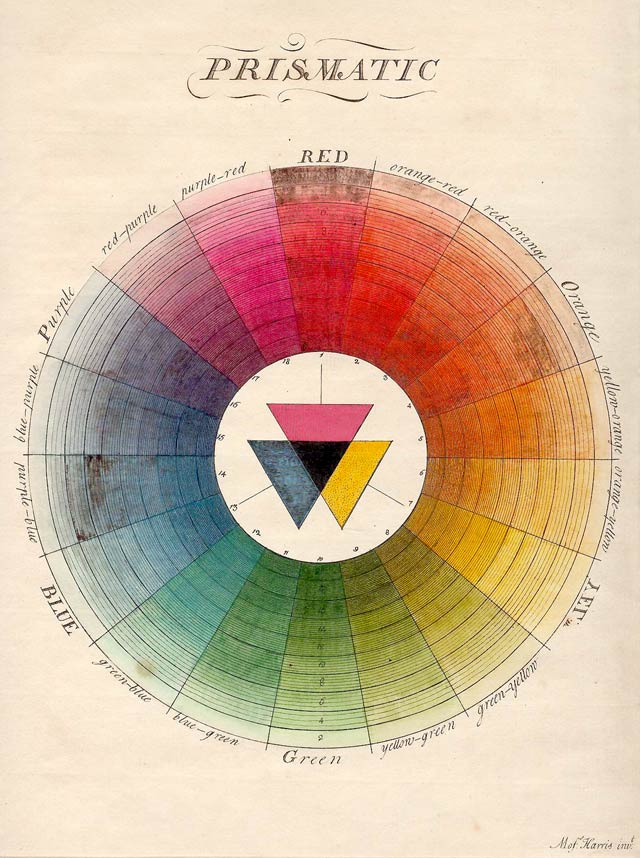
A color wheel is a circular diagram that arranges hues around a circle to show visual relationships among colors. It is a fundamental tool in art, design, photography and color science for choosing palettes, predicting mixtures and understanding contrast and harmony. The wheel distills complex color behavior into an intuitive layout that highlights oppositions, progressions and groups of related hues.
Image gallery
10 Images




Structure and key terms
Typical wheels place pure spectral hues around the circumference. Important attributes associated with colors are hue (the identifiable color family), saturation (intensity or purity), and value or brightness. In pigment practice, artists also use the terms tint (hue plus white), shade (hue plus black), and tone (hue plus gray). Many modern wheels represent hue on the circle while saturation and value are shown as radial or vertical dimensions in related diagrams.
Common models
- RYB (Red–Yellow–Blue): a traditional painter's model where red, yellow and blue serve as primary pigments for mixing. It remains common in art education and traditional color theory.
- RGB (Red–Green–Blue): an additive model used for light sources and displays; combining red, green and blue light produces white. This model underlies most digital color systems.
- CMY / CMYK (Cyan–Magenta–Yellow / plus Key/black): a subtractive model for printing where inks absorb light; black (K) is added in practical printing for depth and economy.
- HSV / HSB: a perceptual model separating hue from saturation and value/brightness; commonly shown as a circular hue map with saturation and value axes to ease color selection.
Color mixing and perceptual differences
Additive mixing (light) and subtractive mixing (pigment or ink) follow different rules: mixing colored lights moves toward white, while mixing pigments tends toward darker, muddier results. Perceptual models such as HSV and newer color appearance models aim to represent how humans perceive changes in hue, saturation and lightness, which is important when adjusting colors for visibility or aesthetic balance.
Color schemes and harmony
The wheel is the basis for common palette formulas used by artists and designers:
- Complementary: hues opposite each other on the wheel for strong contrast.
- Analogous: neighboring hues for subtle, cohesive palettes.
- Triadic: three equally spaced hues for lively, balanced combinations.
- Split-complementary: one hue plus the two adjacent to its complement, offering contrast with less tension.
Practical uses and considerations
Artists use pigment-based wheels when mixing paints; designers use RGB or HSV tools for screens; printers rely on CMYK-aware workflows and color management for accurate reproduction. Digital, interactive wheels allow precise numeric selection and conversion between models; an example tool is available here. Color choice also interacts with cultural context, material properties and lighting, so testing in the intended environment is important.
Accessibility, perception and limitations
Color wheels do not capture all aspects of human vision. Variations in hue discrimination, lighting, viewing device and common conditions such as color vision deficiency affect how combinations are perceived. Designers should check contrast for legibility and consider simulations of color blindness. For deeper study, consult educational resources and interactive demonstrations linked here.
Summary
The color wheel remains a concise, practical map of hue relationships. While multiple wheels and models serve different purposes—traditional pigment mixing, additive light, subtractive printing, or perceptual selection—they all help users anticipate contrast, harmony and the effects of mixing. Used alongside color management tools and accessibility checks, a color wheel is a versatile aid for creative and technical color decisions.
Questions and answers
Q: What is a color wheel?
A: A color wheel is a circular chart that displays primary and secondary colors.
Q: What is the most commonly used color wheel today?
A: The most commonly used color wheel today is the HSV color wheel, which stands for hue, saturation, value.
Q: What is the digital form of the HSV color wheel?
A: The digital form of the HSV color wheel is the RGB color wheel.
Q: How is the HSV/RGB color wheel described?
A: The HSV/RGB color wheel is described as having two versions: one with red, green, and blue as primary colors (electronic/computer color wheel), and one with magenta, yellow, and cyan as primary colors (printer's color wheel).
Q: Where are the primary colors located on the color wheel?
A: The primary colors are located at the top of the color wheel.
Q: What are the primary colors on the electronic/computer color wheel?
A: The primary colors on the electronic/computer color wheel are red, green, and blue.
Q: What are the primary colors on the printer's color wheel?
A: The primary colors on the printer's color wheel are magenta, yellow, and cyan.
Related articles
Author
AlegsaOnline.com Color wheel: theory, models, history, and practical uses Leandro Alegsa
URL: https://en.alegsaonline.com/art/21737