
Albrecht Rodenbach: Flemish poet and symbol of the movement
Albrecht Rodenbach (1856–1880) was a Belgian poet and student leader whose lyric writing and activism made him an emblematic figure of the 19th‑century Flemish Movement.
Overview
Albrecht Rodenbach (born Albertus Petrus Josephus Mansuetus Ferdinandus Rodenbach; 27 October 1856 – 23 June 1880) was a Belgian writer and activist whose short life left a lasting impression on Dutch‑language culture in Belgium. Born and buried in Roeselare, he combined poetry with public engagement and is often remembered as an emblematic voice of the late‑19th century Flemish Movement. Contemporary admirers praised him for giving emotional and moral energy to the cause of a revitalized Flemish culture.
Image gallery
3 Images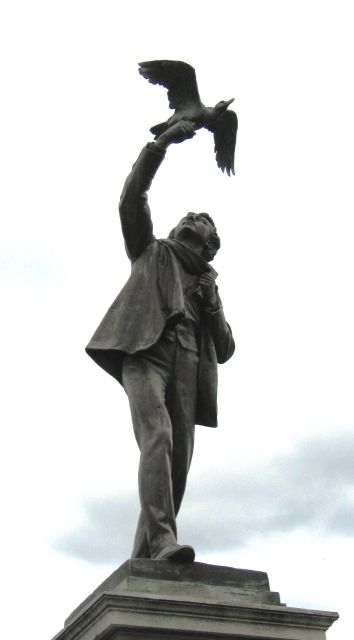


Life and background
Rodenbach grew up in a large family; his parents were local merchants and he had many siblings. He received a classical education at the Catholic minor seminary in his hometown, a formation that shaped both his literary tastes and his moral convictions. He later studied at the Catholic University of Leuven, where he became a prominent student figure. His family included other literary personalities: he was a cousin of the symbolist writer Georges Rodenbach.
Literary influences and style
Though his output was limited by his early death, Rodenbach became known for concise, passionate verse that blended romantic intensity with a civic, patriotic concern. He drew on native Flemish traditions and on modern Dutch‑language poets; writers such as Guido Gezelle and Flemish historical novelists like Hendrik Conscience are commonly cited as formative influences. His poetry often emphasized feeling, communal identity and a melancholic longing for cultural renewal.
Role in the Flemish Movement
Rodenbach was active in student circles that promoted the Dutch language and Flemish cultural rights. He co‑operated with contemporaries from Leuven and elsewhere, including the writer Pol de Mont, and he played a leadership role in student associations that organized readings, meetings and campaigns. Through speeches, poetry readings and organizational work he helped give the Flemish Movement an emotional and intellectual coherence that inspired younger activists.
Works, themes and reception
Although Rodenbach did not produce a large body of published work, his poems and occasional essays circulated widely among sympathizers and were read aloud at meetings. Major themes include devotion to language and homeland, the dignity of common people, moral renewal, and the interplay of hope and sorrow. Critics and historians emphasize his role more as a catalyst and symbol than as a prolific author: his personal example helped stimulate a wave of cultural activity in Flanders after his death.
Legacy and notable facts
Rodenbach died at 23 after a period of illness, cutting short a career that had already influenced contemporaries and later generations. He is commemorated in Belgian cultural history as a youthful, idealistic figure whose literary voice and organizational energy strengthened the case for Flemish cultural rights. Among notable facts: he was educated at a Catholic seminary, he served as a student leader, he was related to Georges Rodenbach, and he explicitly looked to earlier Flemish authors for inspiration. His life and work remain subjects of study for those interested in 19th‑century Flemish literature and national movements.
- Born: 27 October 1856, Roeselare
- Died: 23 June 1880, Roeselare
- Occupation: poet, student leader (poet, activist)
- Influences: Guido Gezelle, Hendrik Conscience
- Associates: Pol de Mont
- Nationality: Belgian
Questions and answers
Q: Who was Albrecht Rodenbach?
A: Albrecht Rodenbach was a Belgian poet who is remembered as a symbol of the Flemish Movement.
Q: What did Hugo Verriest call Albrecht Rodenbach?
A: Hugo Verriest called Albrecht Rodenbach the poet, the soul, the heart, the mind, the word of Reborn Flanders.
Q: Who inspired Albrecht Rodenbach's writing?
A: Albrecht Rodenbach was inspired by the writers Guido Gezelle and Hendrik Conscience.
Q: What was Albrecht Rodenbach's family background?
A: Albrecht Rodenbach was born to a family of 10 children. His parents were wine merchants.
Q: Who was Georges Rodenbach in relation to Albrecht Rodenbach?
A: Georges Rodenbach was a cousin to Albrecht Rodenbach.
Q: What was Albrecht Rodenbach's involvement in the Flemish movement?
A: Albrecht Rodenbach was the leader of the Flemish student’s association and, together with writer Pol de Mont, was involved in the Flemish movement.
Q: At what age did Albrecht Rodenbach die?
A: Albrecht Rodenbach died at the age of 23.
Related articles
Author
AlegsaOnline.com Albrecht Rodenbach: Flemish poet and symbol of the movement Leandro Alegsa
URL: https://en.alegsaonline.com/art/2173