
Colmar, Alsace: Historic Wine Town and Administrative Centre of Haut-Rhin
Colmar, Alsace: the historic wine town and administrative centre of Haut‑Rhin, known for timber‑framed old town, Little Venice canals, museums, vineyards and easy cross‑border access to Germany and Switzerland
Colmar is a commune commune in the historical territory of Alsace, in north‑eastern France. It serves as the administrative centre of the Haut‑Rhin department and is located within the Grand Est region.
Image gallery
10 Images


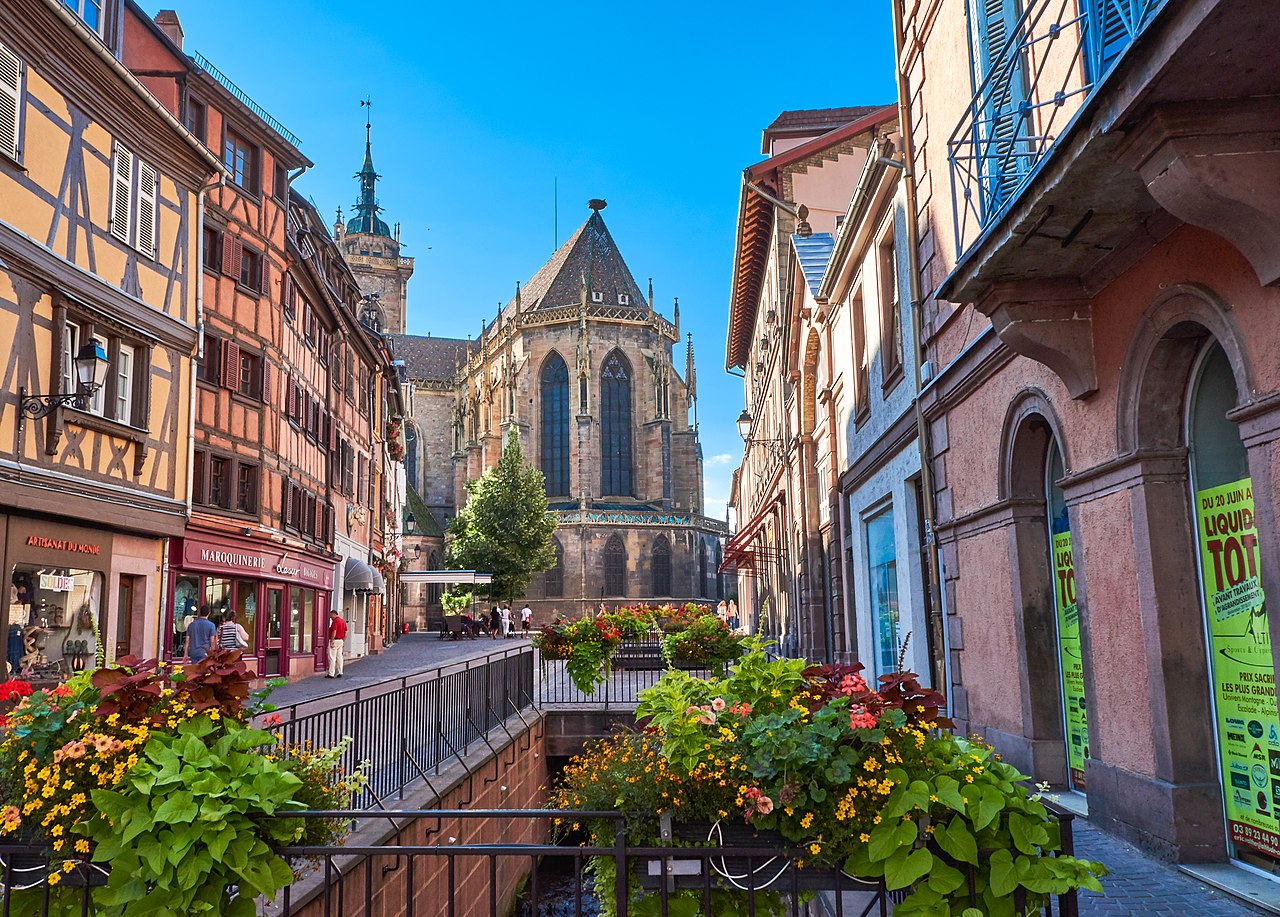

Overview
Colmar is noted for a well‑preserved medieval and early modern centre, which attracts many visitors for its timber‑framed houses, cobbled streets and canals. The town combines agricultural and light industrial activity with a significant tourism sector connected to the local wine industry and cultural institutions.
History
The town developed as an important market and crafts centre in the Middle Ages. Over centuries Colmar’s governance and cultural character were shaped by its location on the frontier between French and German-speaking lands; this history is reflected in the architecture and local traditions.
Geography and climate
Colmar lies in a plain at the eastern edge of the Vosges foothills, close to the Rhine valley. Its position provides a relatively sheltered, temperate climate compared with nearby uplands, which has long favoured viticulture in the surrounding countryside.
Economy and culture
The economy mixes wine production, food processing, precision manufacturing and services. Tourism plays a prominent role: visitors come for the historic townscape, museums and seasonal markets. Colmar also hosts festivals and cultural events that highlight local culinary and artisanal traditions.
Main sights
- Historic old town with half‑timbered houses and narrow lanes.
- "Little Venice" district beside the canals.
- Several museums and churches that trace the town’s Christian and civic history.
Transport and location
Well connected by road and rail, Colmar is within relatively short distances of the German and Swiss borders, making it a regional hub for cross‑border travel and commerce.
Questions and answers
Q: Where is Colmar located?
A: Colmar is located in the Haut-Rhin department of Alsace in northeastern France.
Q: What is Colmar?
A: Colmar is a commune and prefecture in the Grand Est region of France.
Q: In which department is Colmar located?
A: Colmar is located in the Haut-Rhin department of France.
Q: How would you identify Colmar on a map?
A: Colmar would be located in the northeastern part of France, in the Grand Est region.
Q: What is the Grand Est region?
A: The Grand Est region is a region in northeastern France that encompasses various departments, including the Haut-Rhin department where Colmar is located.
Q: Is Colmar a prefecture?
A: Yes, Colmar is a prefecture in the Haut-Rhin department of France.
Q: What is the significance of Colmar?
A: Colmar is a significant commune in France due to its status as a prefecture and its location in the Grand Est region. It is also known for its charming architecture and historical significance.
Tags
Related articles
Author
AlegsaOnline.com Colmar, Alsace: Historic Wine Town and Administrative Centre of Haut-Rhin Leandro Alegsa
URL: https://en.alegsaonline.com/art/21671
Sources
- insee.fr : "Commune de Colmar (68066)"
- map-france.com : "City of Colmar"
- annuaire-mairie.fr : "Ville de Colmar"
- weatherbase.com : "Colmar, France - Köppen Climate Classification"
- habitants.fr : "Habitants du départment: Haut-Rhin"
- insee.fr : "Régions, départements, arrondissements, cantons et communes"
- insee.fr : "Unité urbaine de Colmar (68501)"
- insee.fr : "Aire urbaine de Colmar (064)"
- insee.fr : "Commune de Colmar (68066)"
- colmar.fr : "Colmar et les villes jumelées"