
College of Arms: England’s Official Heraldic Authority
The College of Arms is the official English heraldic authority, responsible for granting coats of arms, recording pedigrees and advising on ceremonial and state occasions in the UK and some Commonwealth cases.
Overview
The College of Arms is the official heraldic authority based in London. It was established in the late 15th century under King Richard III and remains one of the few state-backed heraldic institutions in Europe with responsibility for regulating and granting heraldry. The College performs a mix of legal, artistic and genealogical functions: designing and issuing armorial bearings (commonly called coats of arms), recording entitlement to arms, and advising on the correct ceremonial use of heraldic devices.
Image gallery
10 Images


History and development
The office evolved from medieval royal heralds and was reconstituted in the 16th century. It was formally re-established under Philip and Mary I in 1555 and subsequently continued to develop as part of the Royal Household. Many of its practices reflect both medieval precedent and later statutory and customary developments. The present fabric of the College was rebuilt following the Great Fire of London and contains rooms and fittings dating from the 17th century, though its recorded origins reach back earlier.
Organization and jurisdiction
The College is staffed by a graded body of officers: the senior officials are the three Kings of Arms, supported by heralds and pursuivants who together carry out research, grants and ceremonial duties. Its statutory and customary remit covers England, Wales and Northern Ireland, acting on behalf of the Crown. By contrast, Scotland has a separate heraldic jurisdiction under the Lord Lyon King of Arms and a different legal framework for arms.
Grants of arms and procedural practice
Applying for a grant of arms usually requires the submission of identity documentation and supporting evidence. The College researches the applicant's background to ensure a grant is appropriate and to avoid duplication or conflict with existing armorial bearings. Grants are issued by letters patent and recorded in official registers. Those who can demonstrate descent from an armigerous ancestor may apply to have those arms matriculated or confirmed to them, often with differences—small changes that mark cadency and distinguish related lines.
Records, archives and genealogy
The College maintains extensive registers of grants, matriculations and pedigrees. These archives are valued by historians, genealogists and legal researchers for the documentary evidence they preserve. The officers undertake genealogical enquiry and pedigree verification as part of their adjudication process; the College also permits private registration of pedigrees after careful scrutiny of documentary proofs and citations. For matters of family history and genealogy, its records form a specialist repository accessible under defined conditions.
Ceremonial functions and public duties
Historically heralds served as messengers and envoys; many ceremonial roles survive in modern practice. Officers of the College still publicly read royal proclamations at events such as the accession of a sovereign and take part in the organisation of coronations and the investitures of orders of chivalry. They also participate in the formal introduction of new peers into the House of Lords. For public duties, College officers wear distinctive court dress—either red livery for routine household appearances or the traditional tabard bearing the royal arms for state occasions.
International and Commonwealth links
The College continues to be consulted in some cases beyond the United Kingdom. Commonwealth citizens from countries without a domestic heraldic authority may apply to the College in certain circumstances, and the institution maintains informal links with other heraldic bodies. Other nations in the Commonwealth have created their own services, such as the Canadian Heraldic Authority and the South African Bureau of Heraldry, but the College retains historical and advisory relevance across a wider community of interest, including the intergovernmental Commonwealth.
Location, building and archives
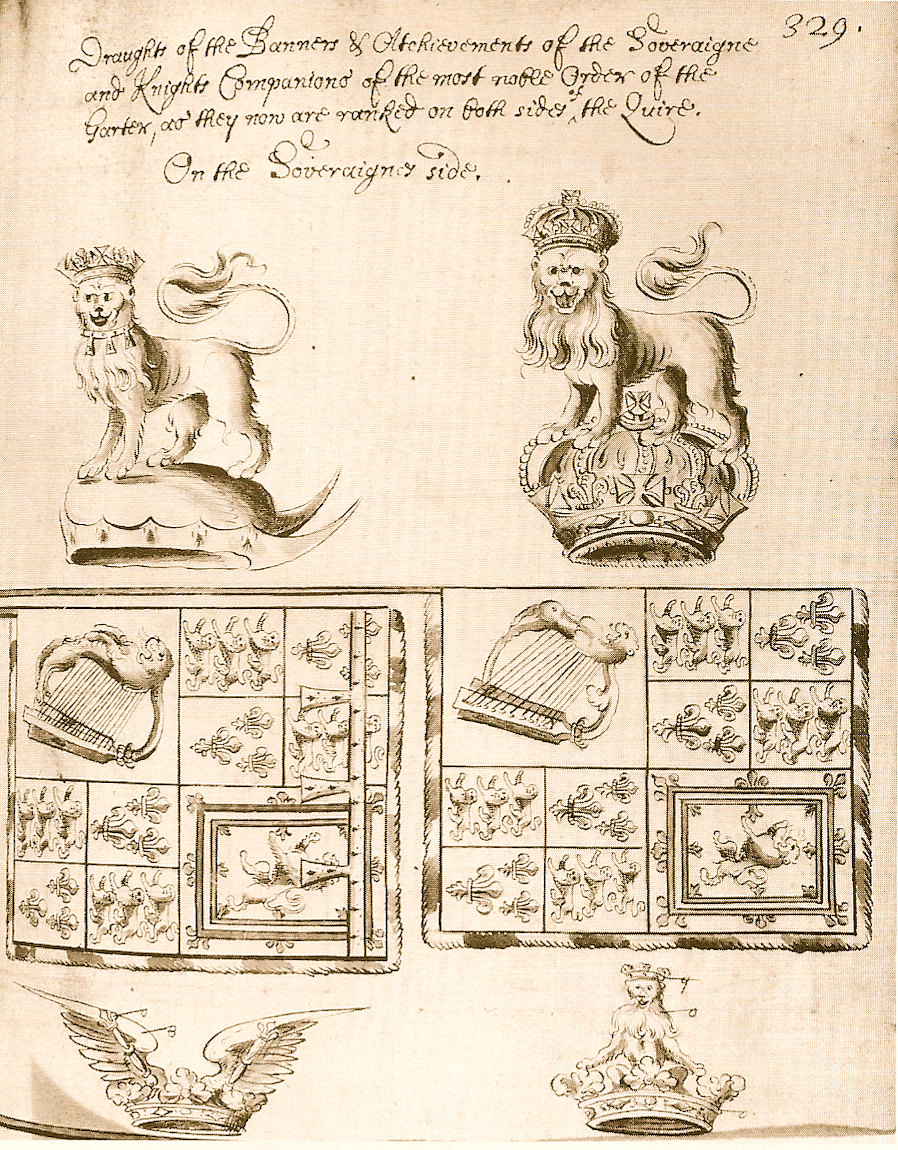
The College is located on Queen Victoria Street, close to St Paul’s Cathedral. Its premises include offices, meeting rooms and strongrooms that house registers and draughts of armorial art. The institution’s holdings are an important resource for scholars of social history, legal history and material culture, and the College undertakes conservation and cataloguing of older volumes and parchments as part of ordinary archival care.
Cultural references and public image
The College occasionally appears in literature and film where armorial or genealogical detail is relevant to plot or atmosphere. A well-known cinematic example is its role in the 1969 James Bond film On Her Majesty’s Secret Service, which features genealogical research and an armorial motto that later inspired the title of the Bond film The World Is Not Enough. Such references underline how heraldry and the College continue to capture public interest beyond strictly legal or ceremonial contexts.
- Main duties: grant arms, maintain registers, advise on ceremony and protocol.
- Staffing: Kings of Arms, heralds and pursuivants carry out research, art and ceremony.
- Records: registers of grants, matriculations and pedigrees form a specialist archive.
Questions and answers
Q: What is the College of Arms?
A: The College of Arms is a government heraldic authority in London, founded in 1484 by King Richard III. Its job is to control and grant new armorial bearings (also known as coats of arms).
Q: Who runs the College of Arms?
A: The College of Arms is run by the Kings of Arms, Heralds and Pursuivants who handle heraldic affairs in England, Wales and Northern Ireland on behalf of the Queen.
Q: Does Scotland have its own heraldic authority?
A: Yes, Scotland has its own heraldic authority called Lord Lyon King of Arms and his office.
Q: What other countries does the College grant arms to?
A: The College grants arms to citizens from other Commonwealth countries that do not have their own heralds. Canadians use Canadian Heraldic Authority and South Africans have the Bureau of Heraldry.
Q: How can people prove they are descended from an armigerous person?
A: People trying to prove they are descended from an armigerous person may be reissued that ancestor's arms with special marks called difference marks added to make it different from their cousins' coats of arms.
Q: What records does the college keep?
A: The college keeps many pedigrees (family trees) in their records which anyone may register with them after careful checking and official proofs before being altered.
Q: What public appearances do officers at the college take part in?
A: Officers at the college sometimes read Royal proclamations in public, for example at accession ceremonies or coronations, as well as helping plan state ceremonies such as introducing new peers into House Lords or orders of chivalry. For these occasions they wear either simple red livery or a tabard emblazoned with their master's arms (in this case royal arms).
Related articles
Author
AlegsaOnline.com College of Arms: England’s Official Heraldic Authority Leandro Alegsa
URL: https://en.alegsaonline.com/art/21582
Sources
- college-of-arms.gov.uk : "The history of the Royal heralds and the College of Arms"
- privycouncil.independent.gov.uk : "Privy Council: Record of Charters Granted"
- college-of-arms.gov.uk : "How the College of Arms works"