
Cobalt(II) oxide (CoO)
Cobalt(II) oxide, CoO, is the binary oxide of cobalt in the +2 state. It is a transition-metal oxide used as a pigment precursor, catalyst component and material for ceramics and battery materials.
Overview
Cobalt(II) oxide, commonly called cobaltous oxide, is the inorganic compound with formula CoO. It is the most straightforward oxide of cobalt in which the metal is present in the +2 oxidation state; the term cobaltous refers to this oxidation level. CoO typically occurs as crystalline material that may appear green, red, grey or brown depending on particle size, hydration and impurities. For basic classification and reference see chemical compound.
Image gallery
1 Image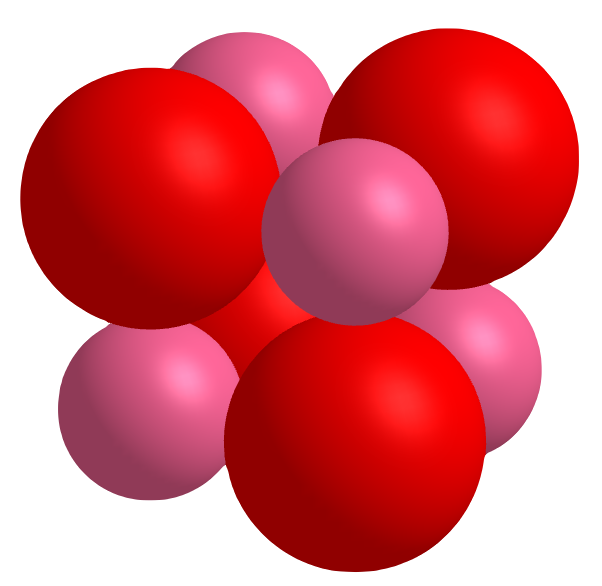
Structure and properties
Cobalt(II) oxide adopts a rock-salt type structure in which each cobalt ion is octahedrally coordinated by six oxide ions and vice versa. The compound is often non-stoichiometric and can contain defects or small amounts of higher oxidation states under some conditions. As a transition-metal oxide, CoO shows typical ionic and partially covalent bonding and displays paramagnetic behavior due to unpaired d electrons. For background on the cobalt oxidation state involved, consult Co(II) oxidation state and the nature of the Co2+ ion.
Preparation and chemical behavior
CoO is prepared by thermal decomposition of cobalt(II) carbonate, hydroxide or by partial reduction of mixed cobalt oxides. In air and at elevated temperature it can be further oxidized to mixed-valence oxides such as Co3O4; conversely it can be reduced to metallic cobalt under strong reducing conditions. It reacts with mineral acids to give soluble cobalt(II) salts and with oxygen or oxidizing agents to increase the cobalt oxidation state. General descriptions of the oxide anion are available at oxide.
Uses and applications
- Ceramics and glass: CoO is used as a coloring agent and as a precursor to cobalt-based pigments (for example in blue glazes and frits).
- Materials science: it is a precursor for lithium-ion cathode materials and other cobalt-containing functional oxides.
- Catalysis and chemicals: CoO and derived cobalt oxides are used in heterogeneous catalysis and in the production of specialty cobalt chemicals.
History, distinctions and safety
The name "cobalt" originates from medieval miners' names for troublesome ores; cobalt compounds have been used historically to impart blue color to glass and glazes. Cobalt(II) oxide should be distinguished from cobalt(II,III) oxide (Co3O4) and from cobalt metal; these materials have different structures, colors and reactivity. Like many transition-metal compounds, CoO should be handled with care: inhalation, ingestion or prolonged dermal exposure can be harmful, and appropriate industrial hygiene measures and safety data sheet guidance should be followed. Further practical and regulatory details are available from technical and material safety sources at supplier and safety guidance.
Questions and answers
Q: What is cobalt(II) oxide?
A: Cobalt(II) oxide is a chemical compound that contains cobalt in its +2 oxidation state as an ion, and oxide.
Q: What is the chemical formula for cobalt(II) oxide?
A: The chemical formula for cobalt(II) oxide is CoO.
Q: What are some physical properties of cobalt(II) oxide?
A: Cobalt(II) oxide can be found in the form of green or red crystals, as well as grey or brown powder.
Q: What is the other name for cobalt(II) oxide?
A: Cobalt(II) oxide is also known as cobaltous oxide.
Q: Which oxidation state does cobalt have in cobalt(II) oxide?
A: Cobalt has a +2 oxidation state in cobalt(II) oxide.
Q: What does cobalt(II) oxide contain besides cobalt?
A: Cobalt(II) oxide contains oxide besides cobalt.
Q: What is the chemical composition of cobalt(II) oxide?
A: The chemical composition of cobalt(II) oxide is CoO.
Tags
Related articles
Author
AlegsaOnline.com Cobalt(II) oxide (CoO) Leandro Alegsa
URL: https://en.alegsaonline.com/art/21287