
Clovis I — Frankish king who united Gaul and founded the Merovingian dynasty
Clovis I (c.466–511) was the first ruler to unite the Frankish tribes in Gaul, convert to Catholicism, and establish the Merovingian dynasty whose influence shaped early medieval France and Western Europe.
Overview
Clovis I (also spelled Chlodowech or Chlodwig) was a late 5th–early 6th century king of the Franks who established a realm in much of Roman Gaul and laid the foundations for what later became the medieval kingdom of the Franks. Born around 466, he succeeded his father, Childeric I, as king of the Salian Franks and, over several decades, extended his authority over neighboring Frankish groups and large parts of former Roman territory. He died in 511, leaving a kingdom that would become central to the history of Western Europe.
Image gallery
10 Images


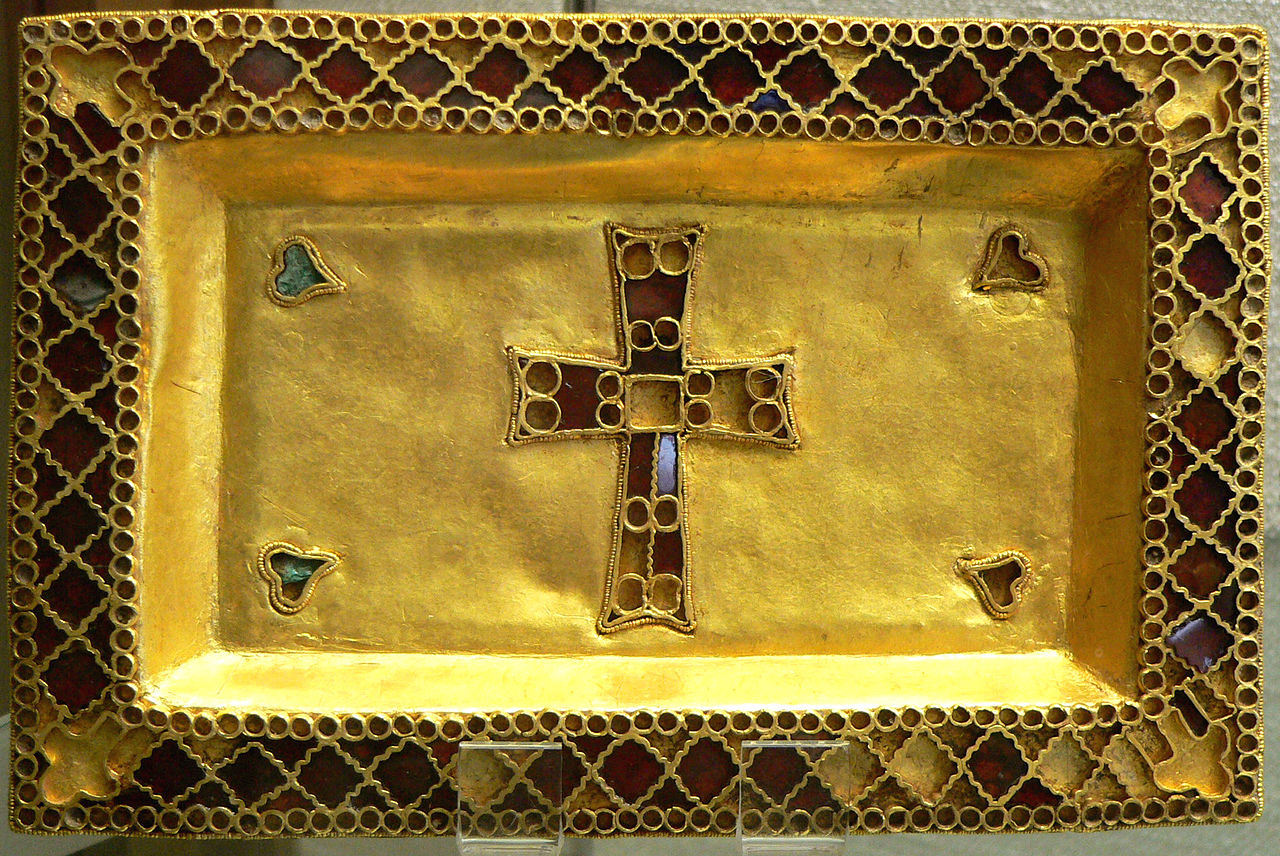


Political and military achievements
Clovis is best known for his military expansion and political consolidation. Early in his reign he defeated rival Frankish leaders to become the dominant Frankish king. His notable campaigns included the defeat of the Gallo-Roman ruler Syagrius, which removed a surviving Roman polity in northern Gaul, and later victories against Visigothic and Burgundian forces that increased his control over Aquitaine and much of southwestern Gaul. By the time of his death he had brought large portions of the former Roman province of Gaul under his rule and centralized authority around a royal household that came to be identified with the Merovingian dynasty.
Conversion and religious significance
Clovis’s conversion from pagan Germanic religion to Nicene (Catholic) Christianity is one of the most consequential events of his reign. Influenced by his Burgundian wife, Clotilde, he accepted baptism—traditionally dated to the 490s—in the cathedral at Reims. This conversion distinguished him from many other contemporary Germanic rulers who followed Arian Christianity and helped create a durable alliance with the Roman-Gallo population and the western church hierarchy. The alliance between the Frankish monarchy and the Catholic clergy became a defining feature of medieval Western Christendom.
Administration, law and dynasty
Clovis’s rule encouraged the adaptation of Roman administrative practices to a Germanic political culture. Frankish law codes that circulated in his realm and the later Salic Law reflect negotiations between custom and writ; while the precise authorship and timing of law collections are debated, they show the integration of Gallo-Roman and Frankish legal concepts. Clovis founded the Merovingian dynasty, whose kings retained the name and prestige of his line for several generations after his death.
Death, succession and legacy
Clovis died in 511 and, in keeping with Frankish tradition, his kingdom was divided among his sons. Although this practice led to fragmentation, the political identity he forged remained influential. In later medieval and modern narratives Clovis has often been presented as the founder of the French monarchy, a symbol of national origins, and a pivotal figure in the Christianization of northern Europe. Historians emphasize both his role as a military conqueror and as a ruler whose choices—especially his conversion—had long-term cultural and institutional consequences.
Further context and distinctions
- Names and language: his names gave rise to the modern French Louis and German Ludwig.
- People and places: he led the Franks from centers such as Tournai and Cambrai, on the frontier of modern France and Belgium.
- Religion: his conversion to Catholicism contrasted with the Arian form of Christianity common among other Germanic kings, and his baptism at Reims became a key ceremonial precedent.
- Historical setting: Clovis’s reign helped define political boundaries in Western Europe after the fall of Rome and reshaped control of former Gaul, while inaugurating the Merovingian royal line.
For readers seeking more detailed primary-source context, contemporary chronicles and later medieval histories provide accounts of his reign, though they mix historical information with legend and rhetorical aims. Modern scholarship examines Clovis both through archaeology and critical reading of early sources to separate later mythmaking from the political and cultural transformations of his time.
Questions and answers
Q: Who was Clovis I?
A: Clovis I was the first king of the Franks who united that nation. He succeeded his father Childeric I in 481 as King of the Salian Franks, one of two main groups of Frankish tribes.
Q: Where were the Franks occupying at that time?
A: The Franks were occupying an area west of the lower Rhine with their centre around Tournai and Cambrai along the modern frontier between France and Belgium.
Q: What religion did Clovis convert to?
A: Clovis converted to Catholicism, as opposed to Arian Christianity which was common among Germanic peoples, because his wife, the Burgundian Clotilde, was a Catholic.
Q: Where did he get baptized?
A: He was baptized in the Cathedral of Reims.
Q: What is considered to be founded by him?
A: It is considered that he founded both France (which his state closely resembled geographically at his death) and the Merovingian dynasty, which ruled the Franks for the next two centuries.
Related articles
Author
AlegsaOnline.com Clovis I — Frankish king who united Gaul and founded the Merovingian dynasty Leandro Alegsa
URL: https://en.alegsaonline.com/art/21121
Sources
- commons.wikimedia.org : Clovis I
- j-paine.org : The Oxford Merovingian Page