
Cloudberry (Rubus chamaemorus): description, habitat, and uses
Cloudberry (Rubus chamaemorus) is a circumpolar, herbaceous bog plant producing golden, vitamin C–rich aggregate fruits prized across northern Europe for preserves, desserts and liqueurs.
The cloudberry (Rubus chamaemorus) is a low-growing, perennial herbaceous plant of the rose family known for its soft, amber-colored aggregate fruit. The fruit looks superficially similar to a raspberry or blackberry but develops into a distinct golden or amber hue when ripe. Individual berries are made up of many drupelets and can become very soft and juicy; their flavor ranges from tart when fresh to rich and sweet when overripe.
Image gallery
10 Images


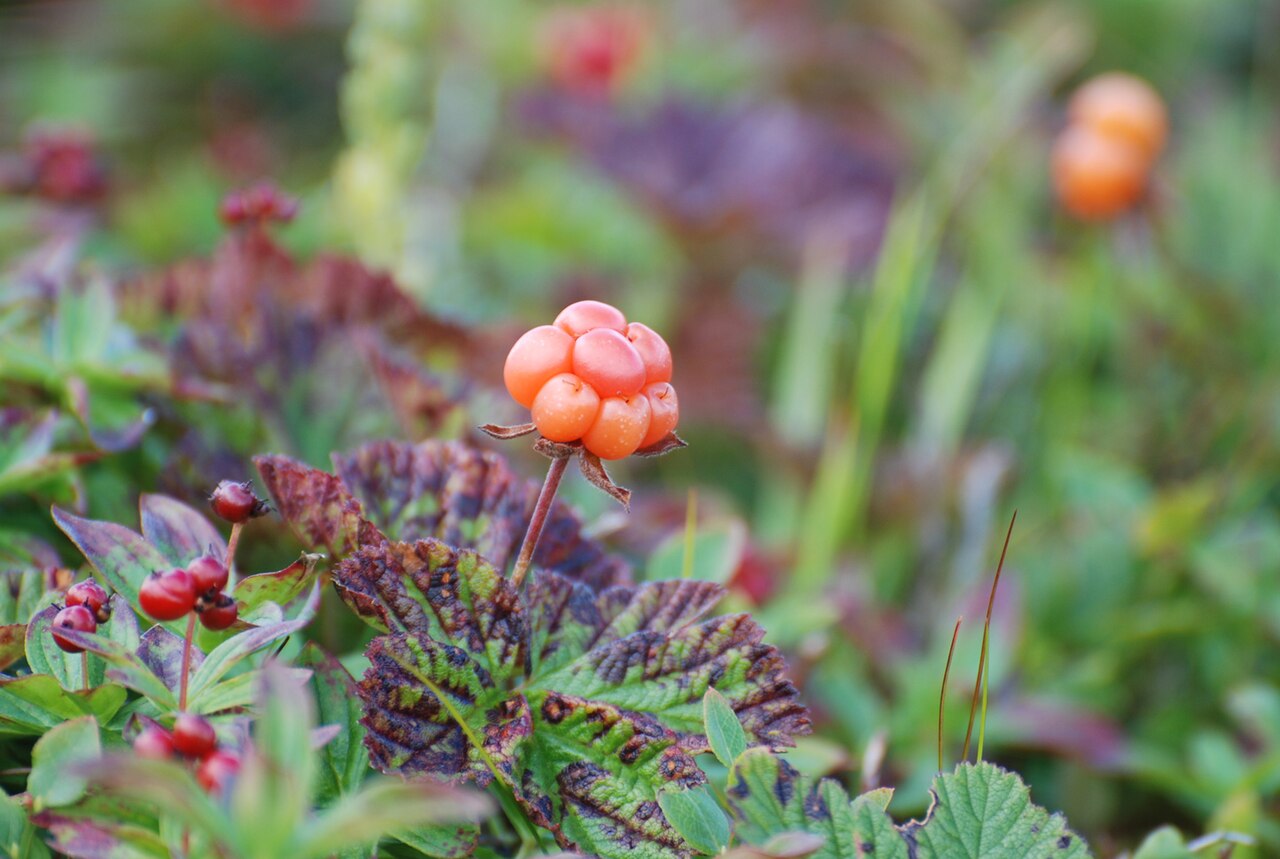

Characteristics
Cloudberry plants form a low rosette with rounded, lobed leaves and produce solitary flowers that later give rise to the clustered fruit. The species spreads locally by creeping rhizomes, forming dense patches, while birds and mammals transport its seeds to more distant sites. The ripe fruit is noted for its high content of vitamin C and aromatic compounds, and its texture can be creamy, sometimes compared to yogurt when very ripe.
Habitat and distribution
Cloudberries are circumpolar and associated with cold northern environments. They commonly grow in bogs, peatlands and wet tundra across alpine and tundra zones and in boreal forests. The berries are a wild-harvested resource in many northern countries and are particularly culturally and economically important in Russia, Norway, Sweden and Finland.
Culinary and cultural uses
Because of their distinctive flavor and limited supply, cloudberries are often used in high-value foods. They are made into jams, sauces, tarts and creams, pressed into juices or distilled into liqueurs. In parts of northern Europe and among indigenous communities, fresh or preserved cloudberries are a traditional ingredient and seasonal delicacy, prized for both taste and nutritional value. They are especially associated with Scandinavia where they appear in classic desserts and festive dishes.
Harvesting, commerce and cultivation
Most commercial cloudberries are wild-picked because the species is difficult to cultivate on a large scale. Harvests vary year to year, and the fruit can command high prices on wholesale markets due to limited supply and strong demand. Factors such as peatland access, weather and conservation rules influence availability and harvest volumes; some regions regulate picking to protect habitats and local populations. For more information on market and supply dynamics see wholesale prices.
Ecology and notable facts
Ecologically, cloudberries contribute to northern food webs: animals eat the fruit and disperse the seeds, while patches of the plant help stabilize peatland soils. They are sometimes called bakeapples or other regional names and have a long history of use by indigenous peoples for nutrition and medicine. Wild populations can be sensitive to habitat change, so sustainable harvesting and peatland conservation are important for the species' continued abundance.
For additional background and botanical details consult regional guides and plant databases linked here: plant description, alpine ecology, tundra habitats, fruit anatomy, color and ripening, similar berries, Russian use, Norwegian traditions, Swedish cuisine, Finnish markets, market prices, nutritional content, preserving techniques, beverages, Scandinavian culture.
Questions and answers
Q: What is a cloudberry?
A: A cloudberry (Rubus chamaemorus) is a herbaceous plant found in alpine, tundra and boreal forest. The fruit is an amber-colored edible fruit similar to the raspberry or blackberry.
Q: Where is the cloudberry most commonly cultivated?
A: The cloudberry is not widely cultivated, but it is mostly a wild plant. It is particularly in demand as a delicacy in Russia, Norway, Sweden and Finland.
Q: How much does the cloudberry go for on the wholesale market?
A: Wholesale prices for the cloudberry vary widely by the size of the yearly harvest, but they have gone for as much as €10/kg (in 2004).
Q: What are the characteristics of ripe cloudberries?
A: Ripe cloudberries are golden-yellow, soft and juicy, and are rich in vitamin C. They have a distinctive tart taste when eaten fresh.
Q: What happens when cloudberries become over-ripe?
A: When cloudberries become over-ripe, they have a creamy texture somewhat like yogurt, and a sweetened flavour.
Q: What are some common ways that cloudberries are consumed?
A: Cloudberries are often made into jams, juices, tarts, and liqueurs. They are very popular in Scandinavia.
Q: How does the cloudberry plant spread?
A: The cloudberry plant spreads by two means. Its seeds are spread by birds and mammals, and locally, its rhizomes develop into wide berry patches.
Related articles
Author
AlegsaOnline.com Cloudberry (Rubus chamaemorus): description, habitat, and uses Leandro Alegsa
URL: https://en.alegsaonline.com/art/21108