
Cloud forest (montane cloud forest)
A montane tropical or subtropical forest characterized by persistent low-level cloud cover at canopy height, abundant epiphytes and mosses, and strong roles in water capture and biodiversity.
Overview
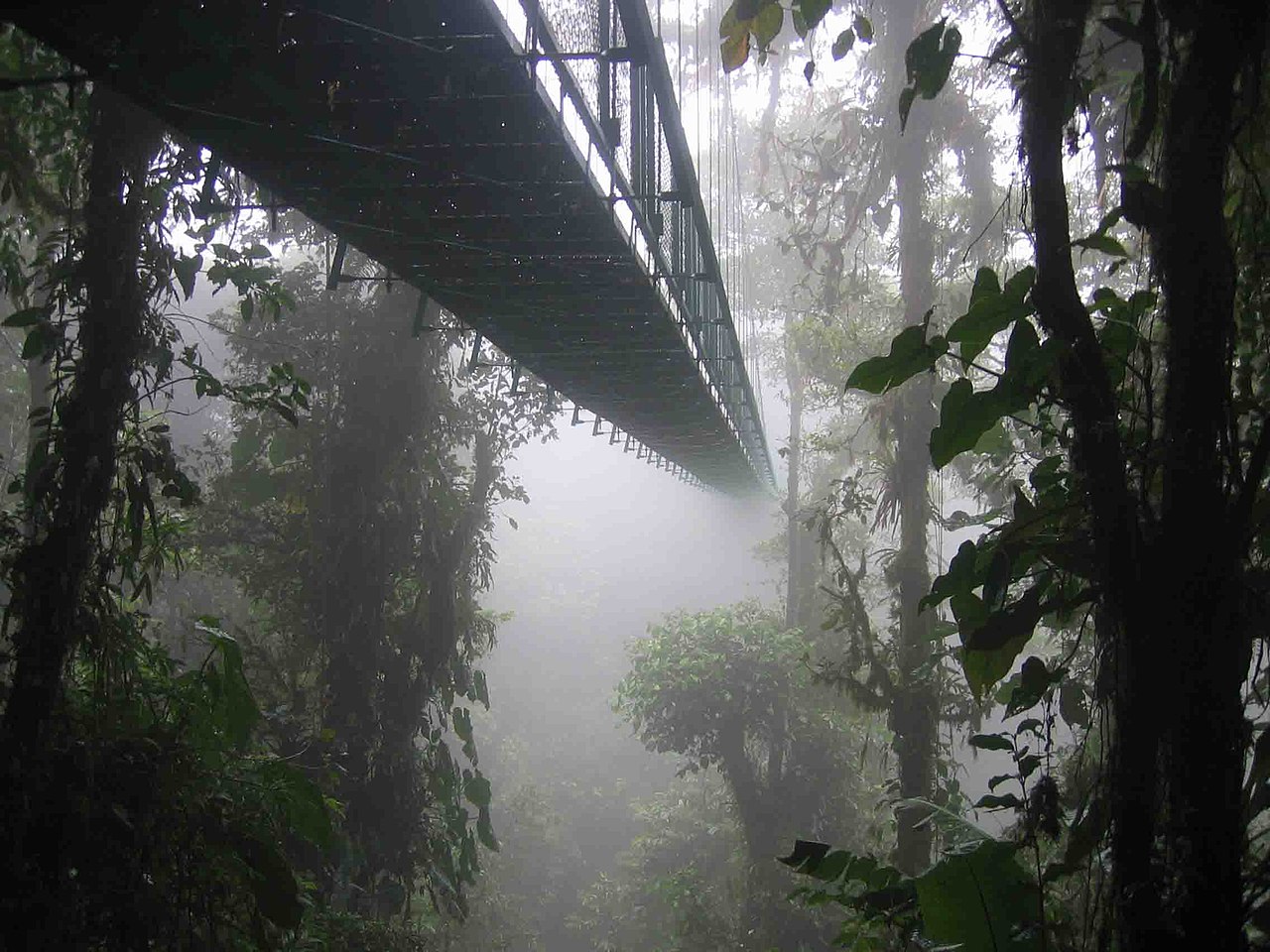
Cloud forests, also called montane cloud forests or fog forests, are forests in tropical or subtropical mountain regions that experience persistent cloud or fog at the level of the tree canopy. These forests are typically dominated by evergreen trees and are distinguished by high humidity, frequent immersion in mist, and reduced direct sunlight compared with lowland forests. The constant presence of clouds creates a cool, moist microclimate that supports a distinctive set of plants and animals.
Image gallery
9 Images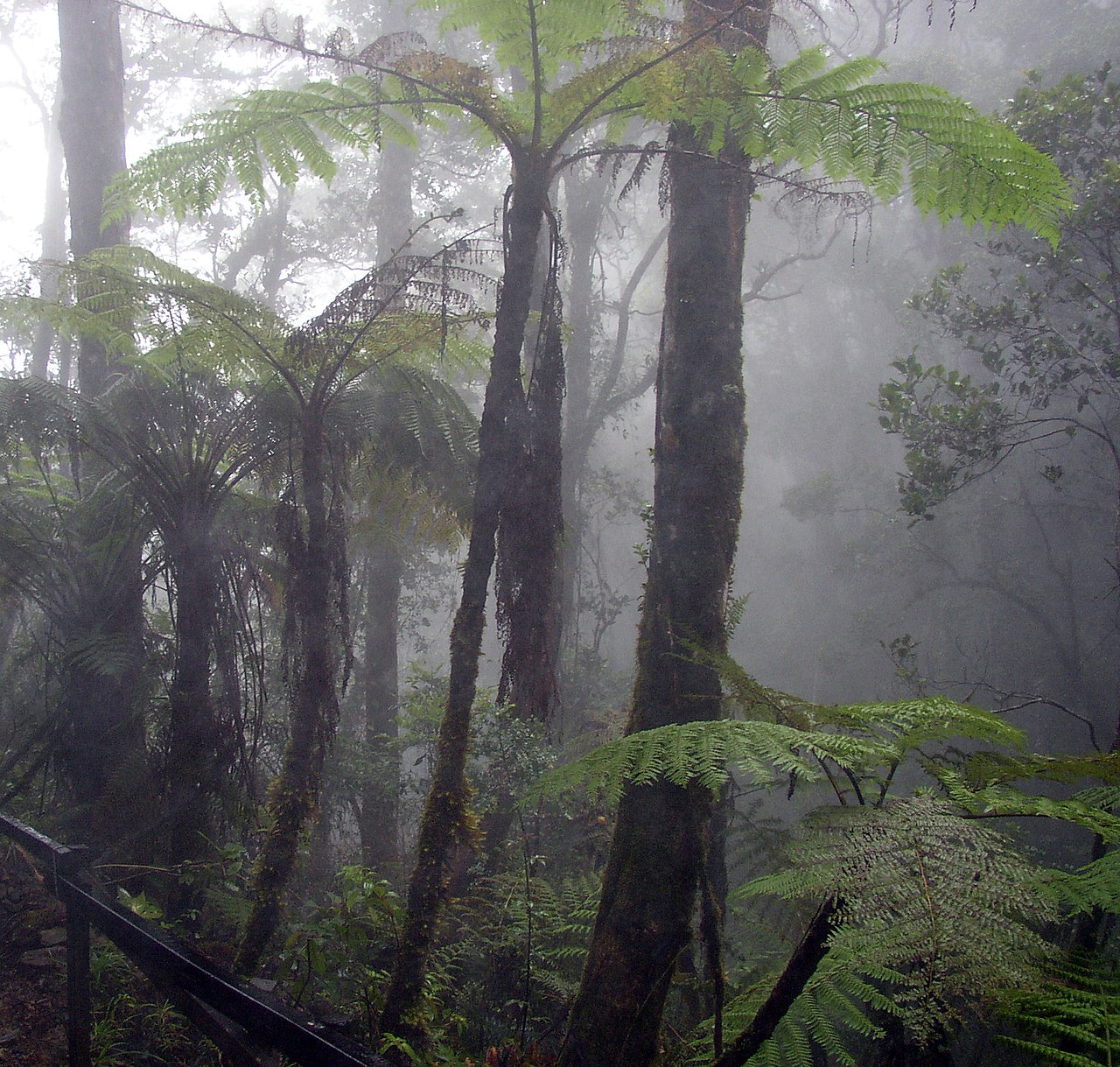




Characteristics and structure
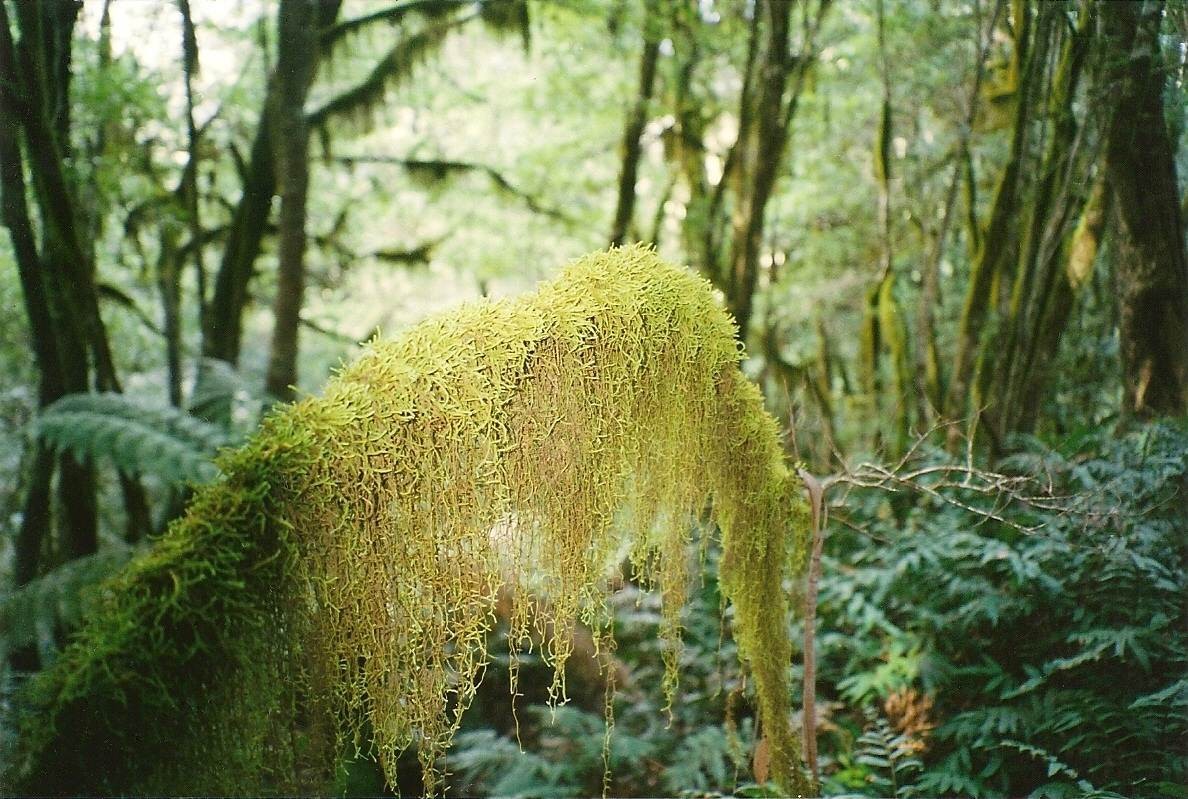
Cloud forests tend to have a dense canopy often draped with epiphytes — plants that grow on other plants without soil contact — including orchids, bromeliads and a profusion of mosses and liverworts. Trees commonly have thick trunks and gnarled branches covered in bryophytes and ferns. Soils are frequently shallow and acidic, with high organic matter from slow decomposition under cool, wet conditions.
- Atmospheric moisture: Frequent cloud immersion supplies water both as rain and as horizontal precipitation (fog capture).
- Water acquisition: Many plants obtain moisture directly from fog; this process is often described as fog drip, where droplets condense on leaves and fall to the ground.
- Microclimate: Lower daytime temperatures and reduced solar radiation create stable, humid conditions that favor specialist species.
Distribution and origin
Cloud forests occur on mountain slopes where orographic lift causes moist air to rise and cool, producing condensation at or just above canopy level. They are found in regions across the tropics and subtropics, including parts of Central and South America (for example in the Andes and Central American highlands), East Africa and Madagascar, Southeast Asia, and some islands. Elevation ranges vary by latitude and local climate; in some areas cloud forests may start as low as montane foothills and extend to much higher elevations where they transition to alpine scrub.
Ecological roles and importance
These forests are biodiversity hotspots that support many endemic and specialized species adapted to cool, moist conditions. Their dense epiphyte cover increases habitat complexity and provides food and shelter for invertebrates, amphibians and birds. Cloud forests play a key hydrological role: by intercepting fog and rainfall they help regulate downstream water supplies, sustain baseflows in rivers and reduce erosion. Because of this, they are important for local agriculture and human communities that depend on reliable water sources.
Examples and notable features
Well-known cloud forest areas include montane zones of the Andes, the Monteverde region of Costa Rica, cloud forest remnants in Madagascar and the Eastern Arc Mountains of Africa, as well as highland forests in Southeast Asia. In some places the canopy is low and stunted—termed "elfin" or "dwarf" cloud forest—where persistent wind and moisture limit tree height, creating a distinctive, mossy landscape.
Threats and conservation
Cloud forests are vulnerable to deforestation, agricultural expansion, road building and climate change. Rising temperatures and shifting cloud bases can reduce cloud immersion, shrinking the area suitable for cloud forest specialists. Conservation efforts focus on protecting watersheds, connecting fragments with corridors, sustainable use by local communities, and monitoring how changing climate patterns affect cloud formation. Because cloud forests deliver important ecosystem services, protecting them has both ecological and socioeconomic benefits.
For further information on plant types, climatic dynamics and conservation approaches see sources that explore montane ecosystems and cloud-driven hydrology (elevation and distribution details).
Questions and answers
Q: What is a cloud forest?
A: A cloud forest is a type of forest that is tropical or subtropical, high up on a mountain, and contains mostly evergreen trees.
Q: What is the characteristic feature of a cloud forest?
A: The characteristic feature of a cloud forest is that there is a large amount of water in the air, and cloud cover for much of the year, usually at the same height as the canopy.
Q: What type of vegetation is found in a cloud forest?
A: In a cloud forest, mosses are often found covering the ground and large plants grow there as well.
Q: Where do mossy forests usually grow?
A: Mossy forests usually grow on the saddles of mountains where the wind cannot blow away moisture from clouds.
Q: At what altitude do cloud forests grow?
A: Cloud forests grow from 500 to 4000 meters above sea level.
Q: Why do cloud forests receive less sunlight?
A: Cloud forests receive less sunlight because they usually grow where the fog is right at the level where the plants grow, so there is less sunlight to burn away the mist.
Q: How do many of the plants in a cloud forest take water?
A: Many of the plants in a cloud forest take water through fog drip, which is when water forms drops on tree leaves and then drips onto the ground below.
Tags
Related articles
Author
AlegsaOnline.com Cloud forest (montane cloud forest) Leandro Alegsa
URL: https://en.alegsaonline.com/art/21104
Sources
- hydrol-earth-syst-sci.net : hydrol-earth-syst-sci.net/8/1065/2004/hess-8-1065-2004.html