
Clothing in Ancient Greece: garments, materials, and social meanings
Overview of dress in ancient Greece: typical garments (peplos, chiton, himation), materials and manufacture, fastenings, social signals, regional variation, sources and legacy.
Overview
Clothing in ancient Greece combined a simple technical approach with great variety in appearance and social meaning. Most garments began as large rectangular lengths of woven fabric that were folded, wrapped and pinned rather than extensively cut. This economy of draping produced garments adaptable to different bodies and seasons and emphasized the fall and folds of cloth. For a general introduction see clothing and for cultural context see Ancient Greece.
Image gallery
10 Images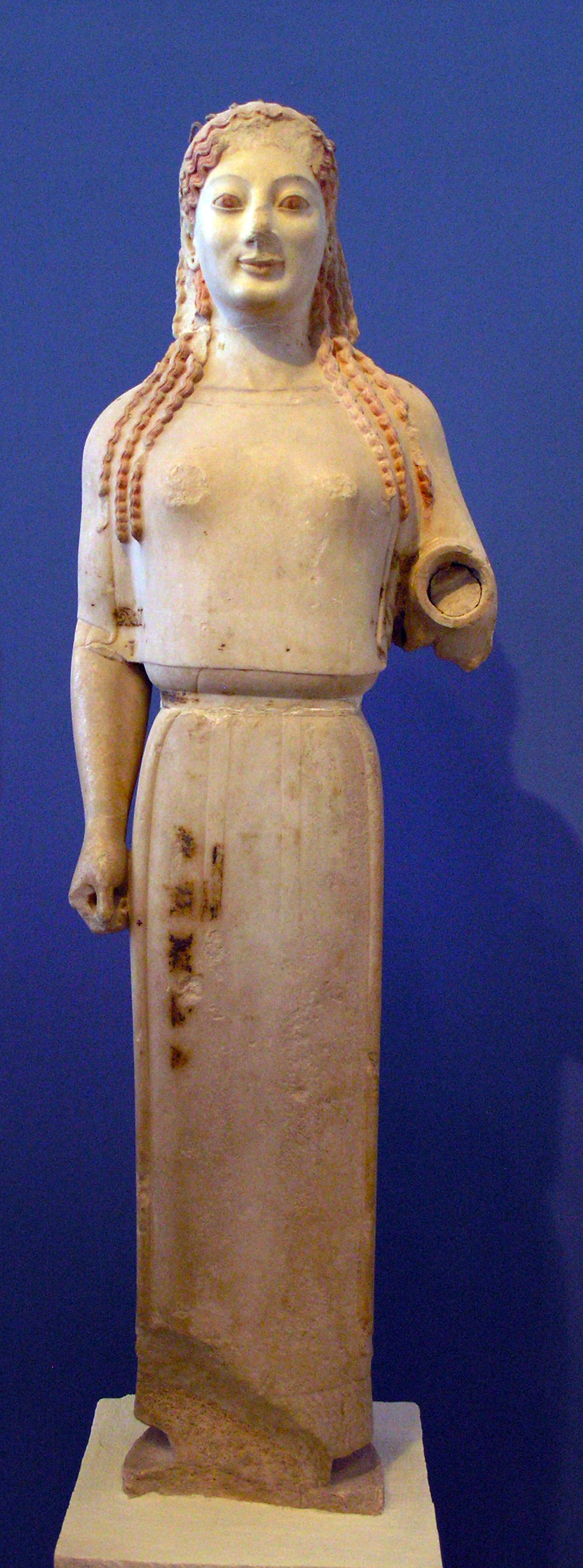




Typical garments and how they were worn
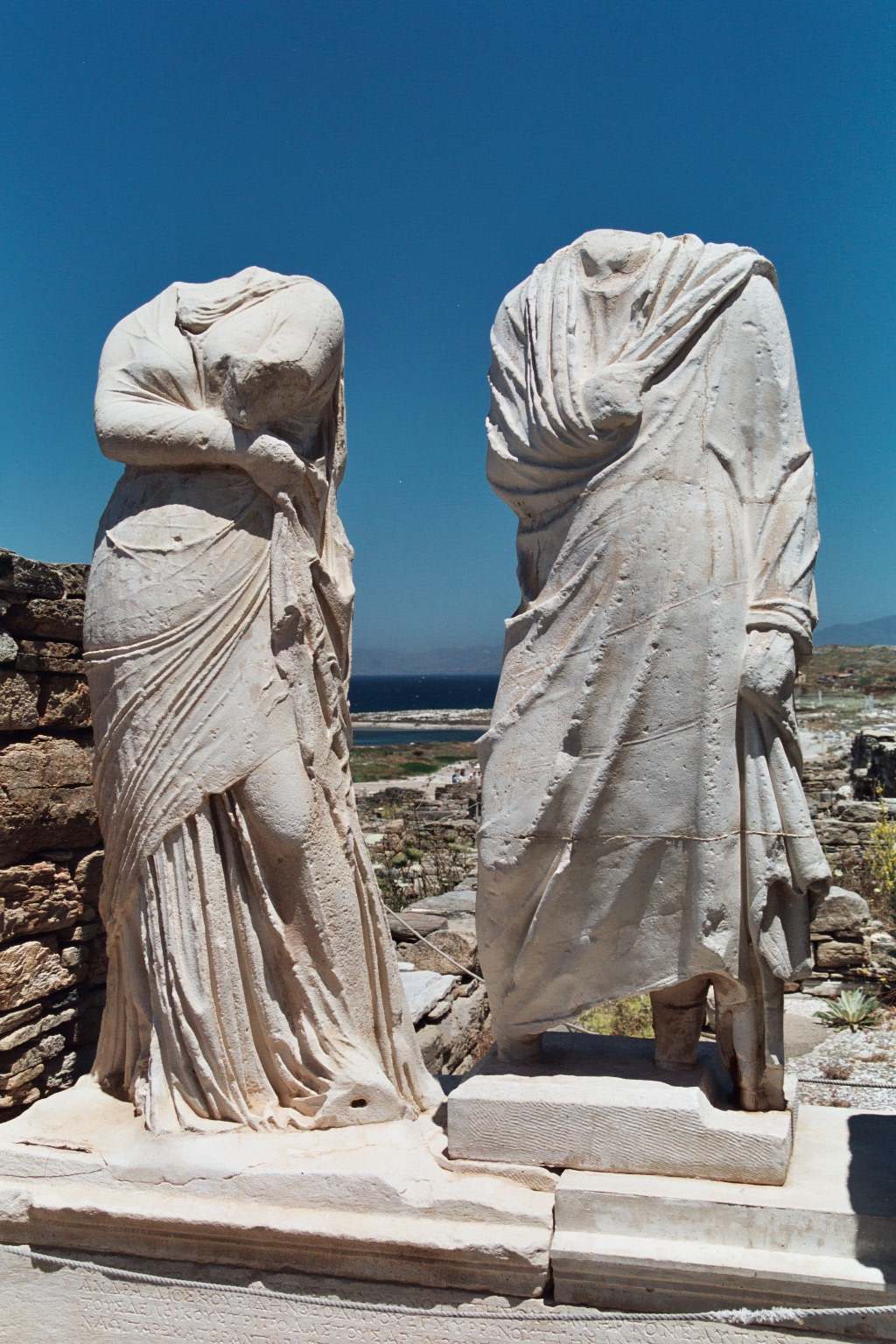
Common garments included the peplos and the chiton, both worn in multiple regional styles, together with the himation (a large cloak) and the chlamys (a shorter cloak used for travel and active dress). These items were typically rectangular sheets of cloth that could be arranged around the body in different ways. Some versions were only minimally sewn or not sewn at all; where sewing was used it was often limited to edging or to securing shoulder seams in certain chitons (minimal sewing). Fastenings—pins, brooches and fibulae—held folds in place, and belts or girdles shaped the silhouette (fibulae, belts).
- Peplos: a rectangular cloth folded and fastened at the shoulders and belted at the waist; commonly associated with women's dress.
- Chiton: a tunic made of lighter cloth, often linen for warm weather, with variations in length for men and women (linen vs wool).
- Himation and chlamys: large or small wraps used as cloaks, for additional warmth, modesty or display.
Materials, manufacture and decoration
Textiles were mainly wool and linen, produced by domestic spinning and weaving on simple looms. Wool was the everyday material while linen was preferred for lighter garments and in warmer areas. Cloth could be dyed, woven with patterned borders, or embellished with embroidery; luxury dyes such as purple from marine sources were costly and reserved for high status. The technical choice to use straight-woven rectangles made efficient use of the loom and allowed decorative borders to remain continuous (rectangular cloth).
Social meaning, variation and sources
Dress signalled age, gender, occupation and status. Quality of weave, color, ornament and the cut and length of garments distinguished citizens, foreigners, religious officials, athletes and slaves. Children’s clothing tended to be simpler, and active work often required shorter, freer garments. Our understanding comes from literary descriptions, vase painting, sculpture and the occasional textile fragment; these visual and material sources show how garments moved with the wearer and changed across Archaic, Classical and Hellenistic periods.
Legacy and study
The draped system suited the Mediterranean climate and the realities of preindustrial textile production, and classical Greek forms influenced Roman dress and later neoclassical revivals in art and fashion. Modern reconstructions and academic study draw on museum collections, archaeological finds and iconography to interpret how garments were made and worn.
Further reading and resources: rectangular cloth, sewing and construction, how garments covered the body, belts and girdles, fibulae and pins, linen production, wool and shepherding, clothing overview, cultural background.
Questions and answers
Q: What material was used to make clothing in Ancient Greece?
A: Clothing in Ancient Greece was made from either linen or wool.
Q: How was the cloth used to make clothes in Ancient Greece sewn?
A: The cloth was sewn very little, or not at all.
Q: What were some of the fastenings used to hold the clothing in place in Ancient Greece?
A: Clothing in Ancient Greece was held in place by belts, fibulae, or other fastenings.
Q: Were the pieces of cloth used to make clothing in Ancient Greece symmetrical?
A: It is not specified whether the pieces of cloth used to make clothing in Ancient Greece were symmetrical or not.
Q: Was clothing in Ancient Greece form-fitting?
A: Clothing in Ancient Greece was not form-fitting, as the rectangular pieces of cloth were put around the body.
Q: During what time period did people wear clothing made from big rectangular pieces of cloth held in place by fastenings in Ancient Greece?
A: People wore clothing made from big rectangular pieces of cloth held in place by fastenings during Ancient Greece.
Q: Was the clothing worn in Ancient Greece heavily decorated?
A: It is not specified whether the clothing worn in Ancient Greece was heavily decorated or not.
Related articles
Author
AlegsaOnline.com Clothing in Ancient Greece: garments, materials, and social meanings Leandro Alegsa
URL: https://en.alegsaonline.com/art/21098