
Claude Bernard: Pioneer of Experimental Physiology
Claude Bernard (1813–1878) was a French physiologist who shaped experimental medicine, introduced the concept of the internal environment (milieu intérieur), and advanced methods such as blind controls.
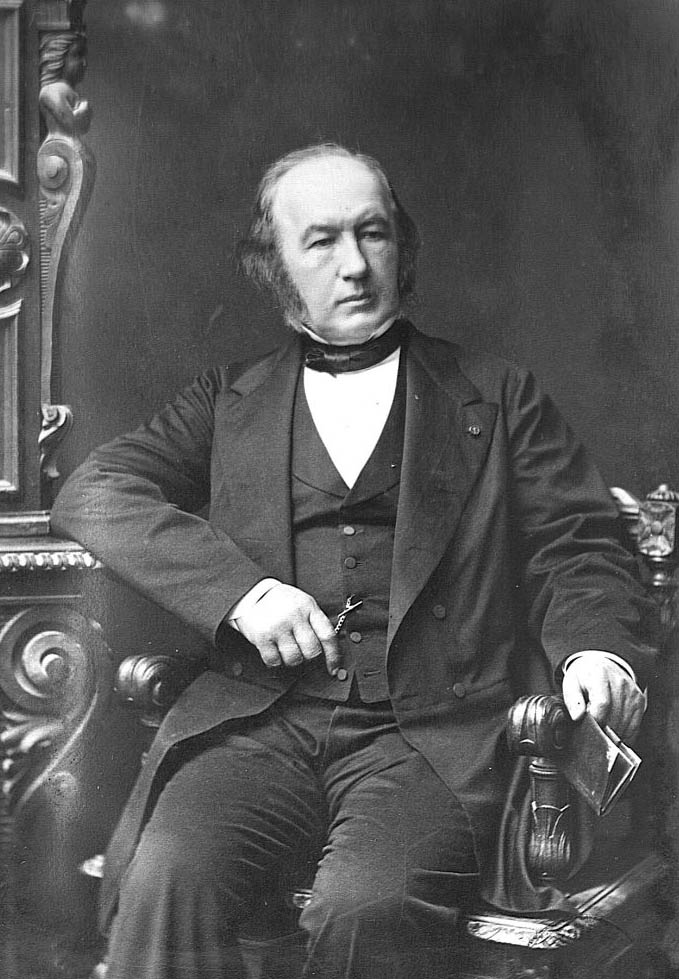
Claude Bernard (12 July 1813 – 10 February 1878) was a French physiologist whose laboratory work and writings established modern experimental physiology. He is widely regarded as one of the most influential scientists of the 19th century, credited with transforming observational medicine into an experimental discipline and insisting on methods that reduce bias and test hypotheses directly.
Image gallery
6 Images



Major contributions and discoveries
Bernard combined detailed experiments with a clear philosophy of method. His principal scientific contributions include:
- Formulating the idea of the milieu intérieur, the stable internal environment of organisms—a concept later popularized as homeostasis by Walter Cannon.
- Work on digestive physiology, including experiments showing the role of the pancreas and the presence of glycogen in the liver, which illuminated how the body processes nutrients.
- Investigations of the nervous regulation of blood vessels (the vasomotor system) and of pharmacological agents such as curare.
- Establishing animal experimentation as a systematic tool for physiological research and demonstrating how controlled manipulation yields causal insight.
Experimental method and scientific philosophy
Bernard emphasized that scientific conclusions must rest on careful, reproducible experiments rather than on authority or casual observation. In his influential book An Introduction to the Study of Experimental Medicine (1865) he argued that experiments must be planned to isolate causes and predicted effects. He was an early advocate of using blind experiments and other controls to make observations less subject to bias. His oft-quoted metaphor—"the science of life is a superb and dazzlingly lit hall which may be reached only by passing through a long and ghastly kitchen"—captures his view that difficult, sometimes unpleasant laboratory work is essential to scientific progress.
Life, training and public controversies
Born in Saint-Julien near Villefranche-sur-Saône, Bernard initially pursued literature and wrote comedies and plays; his early interest in drama is sometimes noted alongside his later scientific career. At age 21 he traveled to Paris with one of his works and was advised to study medicine instead. That change of direction led him into physiology and to prominent academic posts in France.
Bernard's reliance on experiments with live animals made him a lightning rod for controversy. He married Françoise Marie (Fanny) Martin, who helped finance his laboratory activity but disagreed with his methods; historical accounts report that she supported anti-vivisection sentiment in France. Bernard, for his part, defended animal experiments as necessary to discover physiological mechanisms and to advance medicine (animal experimentation).
Legacy and recognition
Bernard influenced generations of scientists through both his discoveries and his clear statement of experimental principles. His ideas about internal regulation and experimental design remain foundational in physiology, medicine and pharmacology. At his death he received public honors and a high-profile funeral, a rare recognition for a scientist at that time in France (public funeral). Earlier episodes of his life—such as his youthful playwriting—are remembered too, and his literary beginnings are sometimes cited to illustrate his intellectual versatility (plays and comedies).
Today Claude Bernard is taught in histories of science and in courses on experimental design: his insistence on hypothesis-driven experiments, controls, and skepticism toward untested claims remains central to scientific practice.
Questions and answers
Q: Who was Claude Bernard?
A: Claude Bernard was a French physiologist.
Q: What is Claude Bernard known for?
A: Claude Bernard is known for suggesting blind experiments to get scientific observations that are free of bias. He was also the first to define the term "milieu interieur," which is now known as homeostasis.
Q: How did Claude Bernard contribute to the standard scientific method?
A: Claude Bernard made animal experimentation a part of the standard scientific method.
Q: What did Claude Bernard mean when he said "the science of life is a superb and dazzlingly lit hall which may be reached only by passing through a long and ghastly kitchen"?
A: It means that in order to make great discoveries and advancements in science, one must go through difficult, unpleasant, and often gruesome processes like animal experimentation.
Q: Where was Claude Bernard born?
A: Claude Bernard was born in Saint-Julien near Villefranche-sur-Saône.
Q: Did Claude Bernard face any opposition for his methods of animal experimentation?
A: Yes, Claude Bernard faced opposition for his methods of animal experimentation, and his wife founded the first French society for anti-vivisectionists.
Q: How was Claude Bernard honored after his death?
A: After his death, Claude Bernard was given a public funeral, which was something that had never been given by France to a man of science before.
Related articles
Author
AlegsaOnline.com Claude Bernard: Pioneer of Experimental Physiology Leandro Alegsa
URL: https://en.alegsaonline.com/art/20796