
Classical mechanics: laws, scope, and applications
An encyclopedic overview of classical mechanics: core principles, main formulations, conservation laws, typical problems, applications in engineering and astronomy, and limits with respect to quantum mechanics and relativity.
Overview
Classical mechanics is the branch of physics that describes the motion of macroscopic bodies and the forces that change that motion. Given a set of initial conditions, classical mechanics provides methods to predict future motion and to reconstruct past trajectories for systems ranging from particles and rigid bodies to continuous media. Everyday phenomena such as the motion of projectiles, oscillations of springs, the rotation of wheels, and the orbits of planets and the trajectories of rockets are typically well described within the classical framework.
Image gallery
6 Images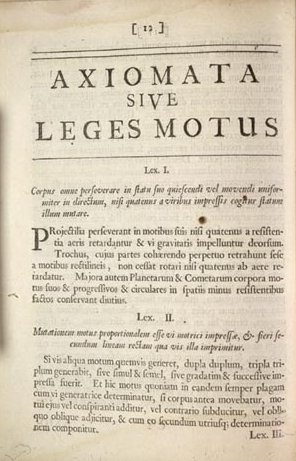


Fundamental formulations
Classical mechanics can be presented in several mathematically equivalent formulations that are useful in different situations. The Newtonian formulation focuses on forces and accelerations governed by Newton's laws. The Lagrangian approach uses generalized coordinates and the principle of stationary action to derive equations of motion, which is especially powerful for systems with constraints. The Hamiltonian formulation expresses dynamics in terms of energy functions and phase space and provides a bridge to statistical mechanics and modern theoretical methods.
Key laws and conservation principles
- Newton's laws: the principles of inertia, the relation between force and acceleration, and action–reaction form the operational core of many problems.
- Conservation laws: conservation of energy, linear momentum, and angular momentum follow from symmetries of space and time and are central tools for solving dynamics problems.
- Continuum hypotheses: for solids, fluids, and deformable bodies, matter is often treated as continuous, leading to field equations in continuum mechanics.
Typical problems and methods
Basic problems illustrate the scope and methods of classical mechanics: kinematics of particles, dynamics under constant and variable forces, central-force motion, small oscillations and normal modes, rigid-body rotation, collisions, and motion in resisting media. Analytical techniques include separation of variables, use of conserved quantities, perturbation methods for near-integrable systems, and variational calculus. Numerical methods—such as numerical integration of ordinary differential equations and symplectic integrators for long-term simulations—are widely used in practice.
Continuum and applied mechanics
When systems contain many degrees of freedom, such as beams, shells, fluids, and elastic bodies, classical mechanics leads to continuum theories: elasticity, plasticity, and fluid dynamics. These theories underpin engineering disciplines, allowing calculation of stresses, strains, flow, heat transfer, and stability of structures. Finite-element methods and computational fluid dynamics are modern tools that implement classical models for design and analysis.
Applications and significance
Classical mechanics is the foundation of mechanical, civil, aerospace, and many other branches of engineering. It governs vehicle dynamics, structural design, machine elements, control systems, and spacecraft trajectory planning. It also provides the basis for astronomical calculations and orbital mechanics used in mission design and satellite operations. Practical modeling often employs idealizations such as point masses, rigid bodies, and small-amplitude approximations to make complex problems tractable.
Limits and relation to modern theories
Classical mechanics is an excellent approximation when quantum effects are negligible and when speeds are much less than the speed of light. At atomic and subatomic scales the assumptions of classical theory fail and one must use quantum mechanics to describe discrete energy levels, wave–particle duality, and tunnelling phenomena; the microscopic scale of atoms is where these differences become essential. When bodies move at relativistic speeds or in strong gravitational fields, classical predictions must be replaced or corrected by special or general relativity. Despite these limits, for most engineering and everyday problems classical mechanics gives accurate and reliable results.
Historical context
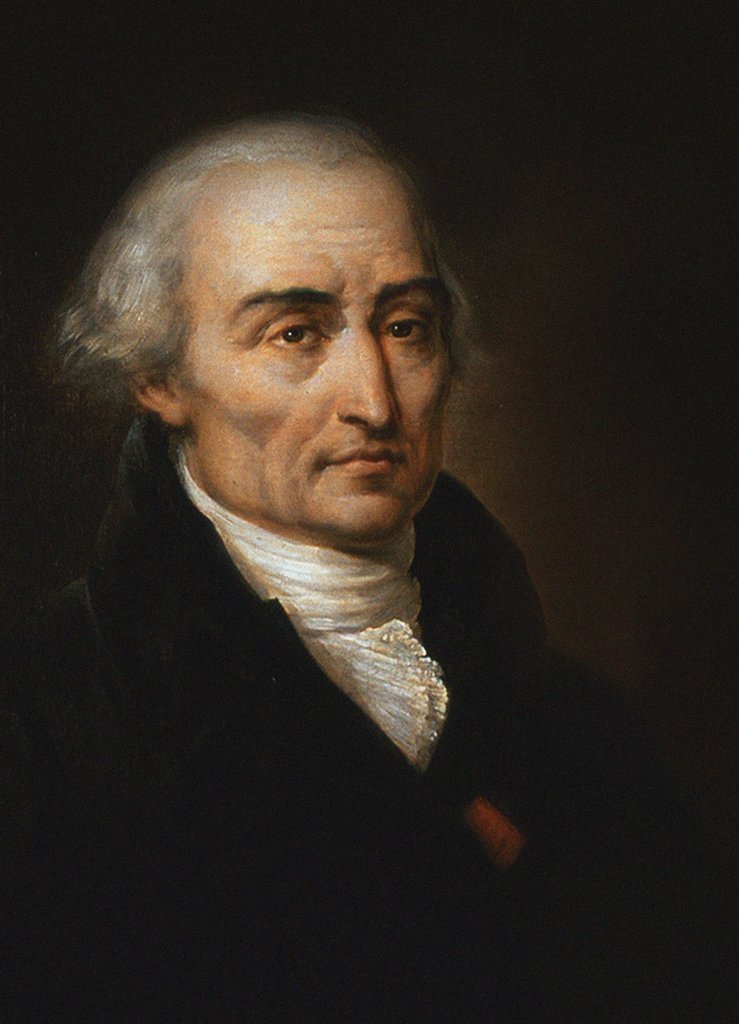
The development of classical mechanics spans several centuries: early experimental and conceptual advances by Galileo and Kepler were synthesized into a coherent theoretical framework by Isaac Newton. Later mathematical refinements by Euler, Lagrange, and Hamilton extended the reach of mechanics and introduced variational methods that remain central to modern theoretical physics. The subject evolved from a collection of empirical laws to a unified, mathematically rich discipline.
Pedagogy and further study
Introductory courses emphasize kinematics, Newton's laws, work and energy, and conservation principles through problem solving and laboratory experiments. Advanced study introduces Lagrangian and Hamiltonian formalisms, rigid-body dynamics, continuum mechanics, and nonlinear dynamics. For applied problems consult standard textbooks and computational resources in mechanics and dynamics. Educational portals and review articles provide practical examples and worked exercises useful for students and practitioners alike.
Computation and modern practice
Modern applications combine classical theory with numerical tools: symplectic algorithms preserve geometric properties in long-term integrations of orbital motion, finite-element analysis models stresses in complex structures, and multibody simulation packages handle constrained mechanical systems. Comparing classical predictions with experiments and with results from quantum or relativistic theories clarifies the domain of validity for different models and informs the choice of approximation in practical work.
For introductory reading, look for problem collections on kinematics, Newtonian dynamics, energy methods, and simple harmonic motion. For deeper theoretical and mathematical treatments explore variational principles, canonical transformations, and the role of symmetry in conservation laws. Further resources and historical surveys can be found through academic and educational outlets such as university course pages and specialty reviews (physics, planetary science, aerospace).
Questions and answers
Q: What is classical mechanics?
A: Classical mechanics is the part of physics that describes how everyday things move and how their motion changes because of forces.
Q: How can classical mechanics be used?
A: Classical mechanics can be used to predict how things like planets and rockets move, as well as predicting how they will move in the future and how they were moving in the past.
Q: When is classical mechanics not accurate?
A: Classical mechanics is not accurate when things are the size of atoms or smaller, or when things move close to the speed of light.
Q: What do we use instead of classical mechanics for small objects?
A: For small objects such as atoms, we use quantum mechanics instead of classical mechanics.
Q: What do we use instead of classical mechanics for fast-moving objects?
A: For fast-moving objects such as those close to the speed of light, we use special relativity instead of classical mechanics.
Q: Is there any overlap between these different forms of physics? A: Yes, there can be some overlap between different forms of physics depending on what type of motion is being studied.
Related articles
Author
AlegsaOnline.com Classical mechanics: laws, scope, and applications Leandro Alegsa
URL: https://en.alegsaonline.com/art/20779