
Clara Petacci: companion of Benito Mussolini and her fate in 1945
Clara Petacci (1912–1945) was the longtime companion of Benito Mussolini. Her life, correspondence, capture and death alongside Mussolini in April 1945 remain subjects of historical interest and controversy.
Overview
Clara Petacci (28 February 1912 – 28 April 1945) is best known as the last companion of Italian dictator Benito Mussolini. Born into a well-to-do Roman family, she became closely associated with Mussolini during the 1930s and remained personally loyal to him through the collapse of the Fascist regime.
Image gallery
4 Images


Early life and background
Petacci was born in Rome and raised in an educated household; her father was a physician. She moved in circles that brought her into contact with prominent political figures, and she began a private relationship with Mussolini when she was a young adult. Their correspondence and private exchanges were extensive and later became a source for historians studying Mussolini's personal life.
Relationship with Mussolini
The relationship combined intimacy, devotion and political proximity. Critics and biographers have noted that Petacci offered Mussolini emotional support, while she also benefited from his protection and status. Contemporary letters reveal a mixture of romantic attachment and the unequal dynamics of a powerful older statesman and a much younger partner.
Capture and death
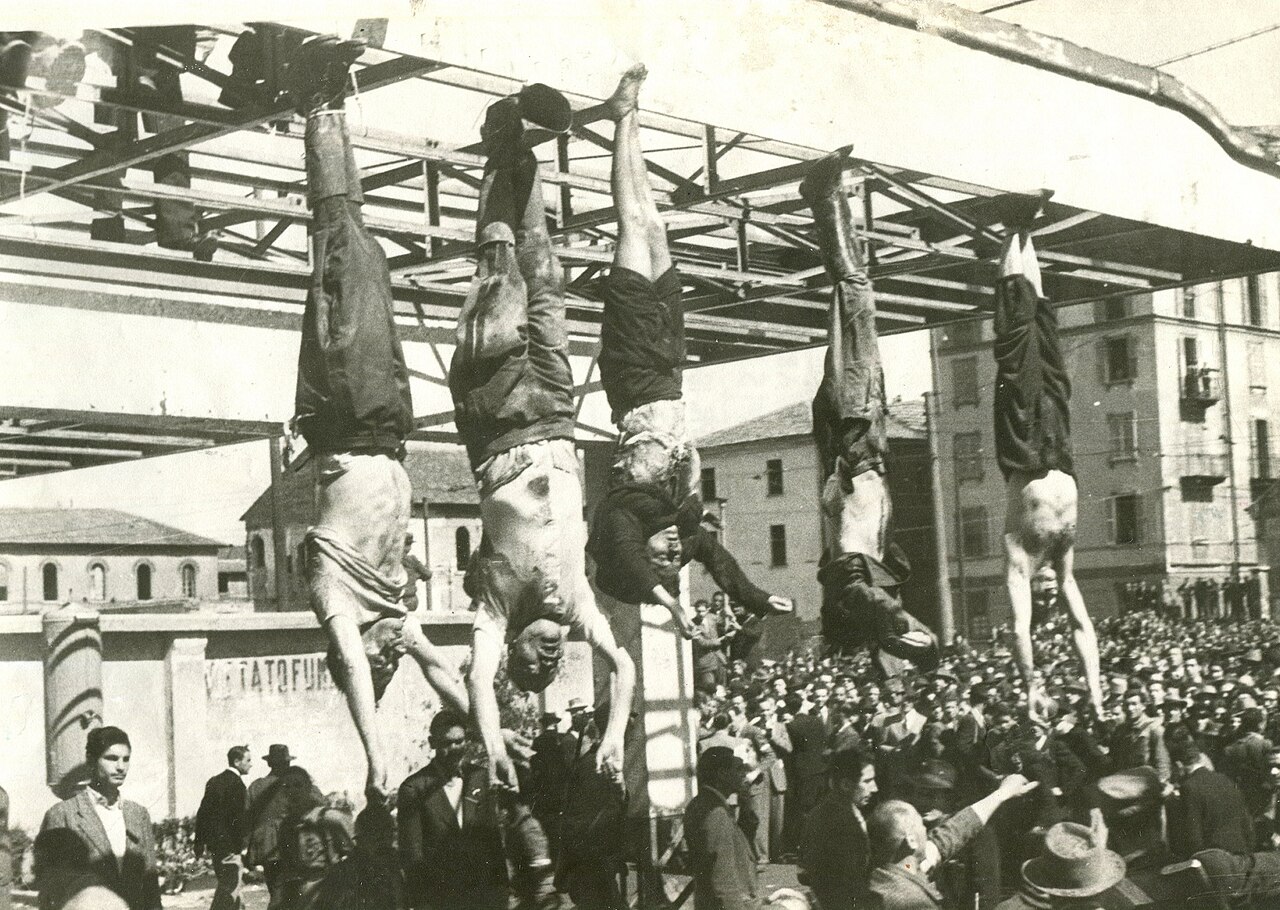
In late April 1945, as the Axis position in Italy collapsed, Mussolini attempted to flee toward Switzerland. He and Petacci were captured by Italian partisans near Lake Como while travelling with a small convoy. On 28 April 1945 both were executed by partisan forces; their bodies were subsequently transported to the city and publicly displayed. The treatment of their remains, which were hung and exhibited in central Milan, provoked strong emotions and has been the subject of ongoing historical debate.
Legacy and historical significance
Petacci's life and death are often discussed alongside the fall of Italian Fascism. Her letters provide historians with personal detail about Mussolini's private life and the human relationships that operated within the regime. Her fate has been interpreted variously: as a tragic consequence of loyalty, as part of wartime retribution, and as an emblematic episode of the violent end of Fascist leadership in Italy.
Key points and notable facts
- Born in 1912 into a Roman family; connected to Mussolini from the early 1930s.
- Maintained an intense personal correspondence with Mussolini; those papers have informed later biographies.
- Captured with Mussolini while fleeing in April 1945 and executed on 28 April 1945.
- Bodies were publicly displayed in Milan, an act that remains controversial in Italian memory and historiography.
- Her life is depicted and debated in historical works, films and public discourse; researchers continue to examine her role in the private life of a public figure.
For further reading and archival materials see selected references and collections linked through archival portals and specialized studies on Italian Fascism and the final days of Mussolini's rule. Related resources and digitized documents are indexed in several historical databases and museum collections.More on Clara Petacci
Questions and answers
Q: Who was Clara Petacci?
A: Clara Petacci was the last mistress of Benito Mussolini who was 28 years older than her. She was born in Rome.
Q: What happened to Clara Petacci?
A: Clara Petacci, along with other prisoners, was shot after being captured when Mussolini tried to escape to Switzerland with some helpers. She declined the opportunity to flee.
Q: Who was Benito Mussolini?
A: Benito Mussolini was an Italian politician and journalist who served as the Prime Minister of Italy from 1922 until his deposition in 1943.
Q: What was the relationship between Mussolini and Petacci?
A: Petacci was the last mistress of Mussolini.
Q: When was Clara Petacci born?
A: Clara Petacci was born on February 28th, 1912.
Q: What happened to the prisoners after they were shot?
A: The bodies of the prisoners, including that of Petacci, were hung head down in Milan.
Q: Did Petacci accept the opportunity to flee?
A: No, Petacci declined the opportunity to flee.
Related articles
Author
AlegsaOnline.com Clara Petacci: companion of Benito Mussolini and her fate in 1945 Leandro Alegsa
URL: https://en.alegsaonline.com/art/20673
Sources
- spiegel.de : "In Bed with Benito"