
Chugach Mountains (southcentral Alaska)
A coastal mountain range in southcentral Alaska, the Chugach Mountains form the northernmost part of the Pacific Coast Ranges, known for heavy snowfall, extensive glaciers, and large protected areas popular for recreation.
The Chugach Mountains form a rugged coastal range along southcentral Alaska. Extending roughly 310 miles (about 500 km), they mark the northern limit of the Pacific Coast Ranges of western North America. Peaks within the range vary in elevation; the highest is Mount Marcus Baker at 13,176 feet (4,016 m), though many summits are lower and sharply carved by glaciation. The range rises close to the Gulf of Alaska and Prince William Sound, which strongly influences local weather and glacial systems. Region overview and the range's relationship to nearby waters shape its climate and ecosystems.
Image gallery
10 Images


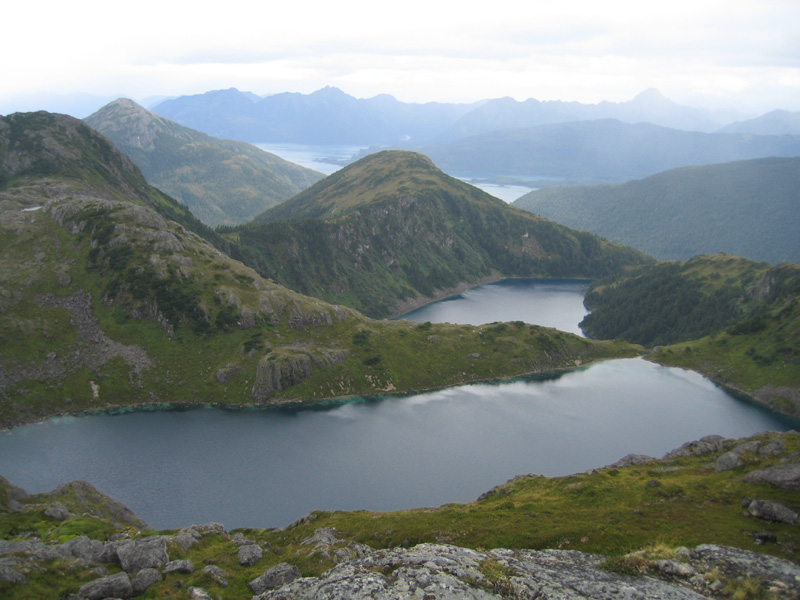


Geography and physical characteristics
The Chugach Mountains are characterized by steep slopes, deep valleys, and numerous glaciers that descend toward coastal fjords. Because the range lies where moist ocean air meets high terrain, it receives large amounts of precipitation in the form of rain and snow; this wet maritime climate supports an extensive ice cover on many slopes. The mountains are primarily made up of uplifted bedrock and have a complex geological history tied to tectonic activity along North America's western margin, forming part of a chain of coastal ranges that continue southward. For context on this larger system see the Pacific Coast Ranges and related mountain systems.
Protected areas, wildlife, and natural resources
Large tracts of the Chugach are conserved within state and federal units. Notable protected areas include Chugach State Park, Chugach National Forest, and the Kenai National Wildlife Refuge. These lands support a mix of alpine tundra, coastal forests, and productive estuaries where salmon return to spawn. Wildlife commonly found in and around the range includes brown and black bears, moose, mountain goats, wolves, and many seabirds; the coastal waters host significant populations of marine mammals and fish. Glaciers and snowpack in the Chugach contribute to freshwater supplies and to dramatic tidewater glaciers that meet the sea in places such as Prince William Sound.
Human use, recreation, and access
The Chugach Mountains are a major outdoor recreation destination for nearby communities, including Anchorage and smaller coastal towns. Activities include hiking, mountaineering, backcountry and heli-skiing, snowboarding, fishing, and wildlife viewing. The area near Valdez hosts high-profile ski and extreme-skiing events; for details see events near Valdez. Access across and through the range is provided by several highways and seasonal roads; a notable engineering feature is the long vehicle and rail tunnel that connects the port of Whittier with the road network on the other side of the range (Whittier access). These transportation corridors serve residents, industry, and visitors alike.
History, culture, and name
The name "Chugach" derives from the indigenous Chugachmiut (a Sugpiaq/Alutiiq group) who have long inhabited the coastal islands, fjords, and river valleys around the mountains. Early Russian explorers and traders recorded the name in various spellings during the period of Russian America; later American surveys standardized the modern form and applied it to the mountain range. Indigenous peoples and their descendants continue to rely on the land and sea near the Chugach for subsistence, cultural practices, and commercial activities.
Notable distinctions and conservation concerns
- The Chugach are the northernmost segment of the Pacific Coast Ranges, giving them a distinctive interface between maritime weather and interior Alaskan environments.
- Heavy snow and glacier-fed rivers make the range significant for regional water resources and for dramatic glacial landscapes.
- Like other glaciated mountain areas, the Chugach face conservation challenges tied to climate change, human recreation pressure, and land-use decisions affecting habitat and coastal fisheries.
For readers wanting maps, trail information, or management plans, consult regional park and national forest resources or the local visitor centers that cover the Chugach region and nearby coastal communities.
Questions and answers
Q: Where are the Chugach Mountains located in North America?
A: The Chugach Mountains are located in southcentral Alaska, which is the farthest north of the mountain ranges that make up the Pacific Coast Ranges of western North America.
Q: How long is the Chugach Mountain range?
A: The Chugach Mountain range is about 310 miles (500 kilometers) long.
Q: What is the highest point in the Chugach Mountains?
A: The highest point in the Chugach Mountains is Mount Marcus Baker, which stands at 13,176 feet (4,016 meters).
Q: Why do these mountains receive a lot of snow?
A: These mountains receive a lot of snow because of the wet weather on the coast.
Q: What are some parks and areas around the Chugach Mountains?
A: Some parks in and around the Chugach Mountains include Chugach State Park, the Chugach National Forest, and the Kenai National Wildlife Refuge.
Q: What outdoor activities are popular in the Chugach Mountains?
A: The Chugach Mountains are popular destinations for outdoor activities, including skiing and the World Extreme Skiing Championship that is held near Valdez.
Q: How can you travel through the Chugach Mountains?
A: Three highways run through the Chugach Mountains and there is also a tunnel from Portage that lets cars and trains go under the mountains to Whittier.
Related articles
Author
AlegsaOnline.com Chugach Mountains (southcentral Alaska) Leandro Alegsa
URL: https://en.alegsaonline.com/art/20275
Sources
- geonames.usgs.gov : "Chugach Mountains"
- commons.wikimedia.org : Chugach Mountains