
Chromosome inversion — types, mechanisms, and biological significance
Chromosome inversions are structural rearrangements in which a chromosome segment reverses orientation. This article explains types, formation, genetic consequences, detection methods, and evolutionary and clinical importance.
Overview
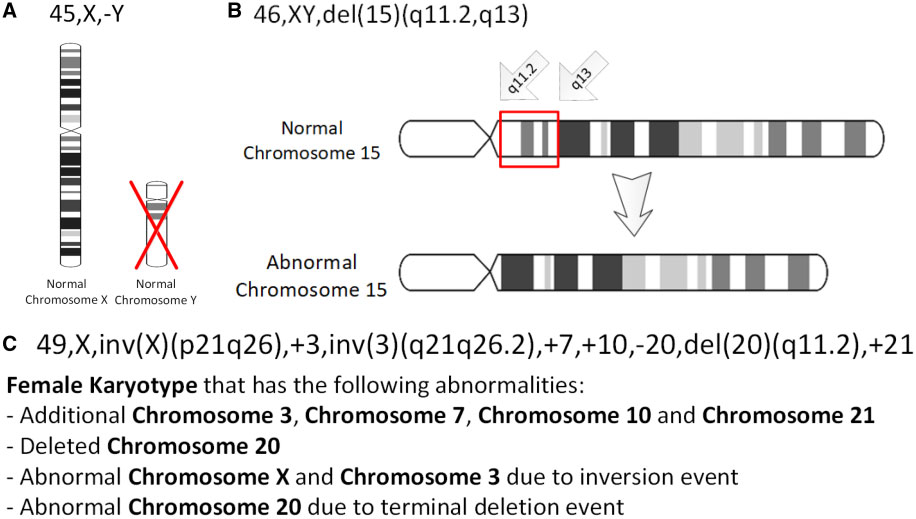
A chromosome inversion is a structural rearrangement in which a segment of a chromosome is flipped end to end so that the linear order of its internal elements is reversed. The process begins when a break occurs at two points (or at one point and an end) and the intervening piece is reinserted in the opposite orientation. In most cases the overall amount of DNA remains unchanged and the carrier can be phenotypically normal, but the order of genes along the affected region is reversed.
Image gallery
5 Images


Mechanism and types
Inversions arise by misrepair of double-strand breaks or through erroneous recombination events. Two main structural classes are recognized:
- Paracentric inversions occur within one arm of a chromosome and do not include the centromere.
- Pericentric inversions span the centromere and involve both chromosome arms.
The difference between these types is important because they produce different outcomes when crossing over happens in meiosis: paracentric crossovers can generate dicentric and acentric fragments, while pericentric crossovers tend to produce duplications and deletions in gametes.
Genetic consequences and detection
Carriers of balanced inversions typically have the same complement of DNA, so they frequently show no obvious symptoms. However, during meiosis chromosomes pair by forming an inversion loop; recombination within that loop can yield unbalanced gametes and increase the risk of infertility, miscarriage, or offspring with chromosomal imbalances. Cytogenetic methods such as karyotyping or fluorescent in situ hybridization (FISH), together with high-resolution sequencing and array technologies, are used to identify inversions and to characterize their breakpoints.
Evolutionary and clinical significance
Inversions can influence evolution by suppressing recombination within the inverted region. That reduced exchange can keep advantageous combinations of alleles together, contributing to local adaptation, the formation of supergenes, or even reproductive isolation between populations. Clinically, some inversions are harmless polymorphisms in human populations, while others are associated with reproductive problems or contribute to disease when breakpoint disruption affects important loci.
Examples and notable facts
In research, inversions have been well documented in species such as fruit flies, where they are a model for studying adaptation and speciation. In human genetics, particular pericentric inversions are sometimes described as common variants, though their interpretation depends on context and family history. The term itself is used broadly in genomics and cytogenetics to describe a category of structural variation generated by DNA breakage and rejoining or by non-allelic homologous recombination, a form of mutation affecting chromosome structure. For basic definitions and broader reading, see work on chromosome structure and rearrangements.
Questions and answers
Q: What is chromosome inversion?
A: Chromosome inversion is a type of genetic mutation where a segment of a chromosome is reversed end-to-end.
Q: How does chromosome inversion occur?
A: Chromosome inversion occurs when the chromosome breaks at two points (or at the end) and undergoes a 180-degree flip.
Q: What happens to the genes inside the inverted segment of a chromosome?
A: The genes inside the inverted segment of a chromosome are in the reverse order from their original arrangement.
Q: Are chromosome inversions common in humans?
A: Chromosome inversions are not common in humans, but they do occur and can cause health problems.
Q: What are some health problems that can be caused by chromosome inversion?
A: Chromosome inversions can lead to problems with fertility, developmental disorders, and other health issues.
Q: Can chromosome inversions be inherited?
A: Yes, chromosome inversions can be inherited from one or both parents.
Q: Can chromosome inversion be treated?
A: There is no specific treatment for chromosome inversion, but management of associated health problems may be necessary.
Related articles
Author
AlegsaOnline.com Chromosome inversion — types, mechanisms, and biological significance Leandro Alegsa
URL: https://en.alegsaonline.com/art/20217