
Chromalveolate (Chromalveolata): concept, members, and classification issues
Chromalveolata: a historical eukaryote grouping proposed to unite several algal and protist lineages sharing red‑algal derived plastids; later molecular work questioned its unity and reworked eukaryote relationships.
Overview
Chromalveolata (often written Chromalveolate or Chromalveolata) was proposed as a eukaryotic supergroup intended to bring together a variety of photosynthetic and non‑photosynthetic protists that were thought to share a common origin. The core idea invoked a single secondary endosymbiotic event in which a heterotrophic host acquired a red alga, producing plastids that typically contain chlorophyll c and related pigments. In some treatments Chromalveolata was presented as a refinement of Cavalier‑Smith's broader Chromista concept.
Image gallery
3 Images
Characteristic groups and traits
Organisms once placed in the chromalveolate assemblage vary widely in form and lifestyle. Major lineages commonly associated with the concept include:
- Alveolates — dinoflagellates, apicomplexans (parasites such as the malaria agents), and ciliates; many have membrane sacs (alveoli) beneath the cell surface.
- Stramenopiles (Heterokonts) — diatoms, brown algae, and related groups; often bear unequal flagella with characteristic hairs.
- Haptophytes — small photosynthetic cells important in marine plankton.
- Cryptomonads — unicellular algae, some retaining a reduced red‑algal nucleus (a nucleomorph) in their plastids.
Shared features used to support the grouping included red‑algal derived plastids, similar accessory pigments (for example fucoxanthin among some members), and certain cell structural traits, although not every member possesses all these characters.
History and classification debates
The chromalveolate hypothesis built on ideas about secondary endosymbiosis (secondary endosymbiosis) and was influential in late 20th‑ and early 21st‑century classifications. However, extensive molecular phylogenetic studies using many genes revealed that the proposed chromalveolate assemblage is not a single, coherent lineage. Instead, some groups (notably stramenopiles and alveolates) cluster with Rhizaria to form the widely recognized SAR clade, while the positions of haptophytes and cryptomonads have proved more variable. These results imply either multiple independent plastid acquisitions, widespread plastid losses, or complex endosymbiotic replacements.
Ecological and practical importance
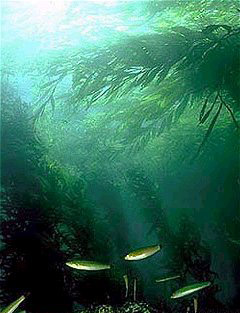
Whether or not the term is used, the organisms historically included in Chromalveolata are ecologically and economically significant. Diatoms and haptophytes are major contributors to marine primary production and global carbon cycling; brown algae form temperate and polar kelp forests; dinoflagellates can drive harmful algal blooms; and alveolate parasites (apicomplexans) include pathogens of humans and livestock. Their diverse metabolisms and pigments have made them subjects for studies of evolution, biotechnology, and climate impacts.
Current usage and notable distinctions
Today the label Chromalveolata is often treated as historical or provisional. Modern classifications more commonly use clades supported by molecular data (for example SAR) and treat haptophytes, cryptomonads, and related groups as separate lineages or place them in different higher‑level assemblages. Important conceptual distinctions remain: primary endosymbiosis gave rise to plastids in green and red algae, while secondary endosymbiosis (and further tertiary events) explains the presence of red‑algal derived plastids in many diverse protists. For further reading about the broader ideas and ongoing debates, see resources on the eukaryotic supergroup concept and reviews of plastid evolution (Chromista context, secondary endosymbiosis summaries, and molecular phylogeny surveys at plastid-focused reviews and pigment and pigment‑binding complexes).
Questions and answers
Q: What is Chromalveolata?
A: Chromalveolata is a eukaryote supergroup, proposed by Thomas Cavalier-Smith as a refinement of his kingdom Chromista.
Q: Who proposed the kingdom Chromista?
A: Thomas Cavalier-Smith proposed the kingdom Chromista.
Q: What is the origin of Chromalveolata?
A: The origin of Chromalveolata was thought to be a secondary endosymbiosis between a bikont and a red alga.
Q: What did this union led to?
A: This union led to plastids containing chlorophyll c.
Q: How was Chromalveolata classified by Cavalier-Smith?
A: Chromalveolata was one of the six major groups within the eukaryotes in Cavalier-Smith's classification.
Q: Has the classification of Chromalveolata been challenged?
A: Yes, the classification of Chromalveolata has been challenged.
Q: How many flagella does a bikont have?
A: A bikont is a cell with two flagella.
Related articles
Author
AlegsaOnline.com Chromalveolate (Chromalveolata): concept, members, and classification issues Leandro Alegsa
URL: https://en.alegsaonline.com/art/20194
Sources
- dx.doi.org : "Chromalveolates and the evolution of plastids by secondary endosymbiosis"
- doi.org : 10.1111/j.1550-7408.2008.00371.x
- pubmed.ncbi.nlm.nih.gov : 19335769
- doi.org : "The new higher level classification of eukaryotes with emphasis on the taxonomy of protists"
- doi.org : 10.1111/j.1550-7408.2005.00053.x
- doi.org : 10.1098/rsbl.2008.0224
- plosone.org : "EEF2 analysis challenges the monophyly of Archaeplastida and Chromalveolata"
- doi.org : 10.1371/journal.pone.0002621
- ncbi.nlm.nih.gov : 2440802
- pubmed.ncbi.nlm.nih.gov : 18612431