
Christian Heinrich Friedrich Peters — German‑American astronomer and asteroid discoverer
Biography of C. H. F. Peters (1813–1890): life and education, work at Hamilton College, 48 asteroid discoveries, co‑discovery of comet 80P/Peters‑Hartley, Peters v. Borst controversy and legacy.
Overview
Christian Heinrich Friedrich Peters was a 19th‑century observer known for his systematic searches that produced many asteroid discoveries and for a prominent later legal dispute. He is commonly listed as born on September 19, 1813, and as having died on July 18, 1890. He is often described as German‑American and is principally remembered as an astronomer and prolific finder of asteroids.
Image gallery
2 Images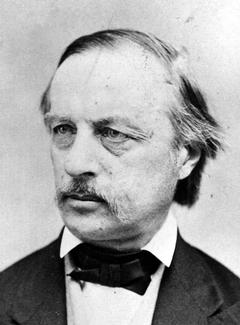

Early life and education
Peters was born in the border region of Schleswig‑Holstein, then under Danish rule (Denmark) and later associated with Germany as nation‑states changed. Contemporary accounts indicate he received rigorous training in mathematics and astronomy and had contact with the circle of Carl Friedrich Gauss. He was multilingual and spent periods of his life in Italy and in parts of the Ottoman world before emigrating to the United States in the mid‑19th century.
Astronomical career and discoveries
After moving to the United States Peters joined the observatory at Hamilton College in Clinton, New York, near Utica. There he pursued methodical telescopic searches and became one of the era's most productive asteroid hunters. He is credited with discovering 48 minor planets, beginning with 72 Feronia (first recorded discovery in 1861) and including later objects such as 287 Nephthys (1889). In addition to minor planets, Peters co‑discovered the periodic comet 80P/Peters‑Hartley and reported observations of various nebulae and galaxies known in his time.
Methods and working practice
Peters worked in an era when visual observation, meticulous note‑taking and careful positional measurements were essential. His procedure typically combined systematic sweeps of selected sky regions with careful recording of positions so that newly seen moving objects could be distinguished from fixed stars. Like many observers of the period, he made use of the best small and medium telescopes available at his college observatory and collaborated with assistants for night‑by‑night coverage.
Controversy: Peters v. Borst
Late in his career Peters became involved in a notable legal dispute with his former assistant, Charles A. Borst, concerning the ownership and publication rights to a star catalogue assembled at the college. The case, often called the "Great Star‑Catalog Case," reached the New York courts as Peters v. Borst. An initial decision favored Peters, but public opinion among some astronomers and newspapers was divided; subsequent appeals changed the procedural outcome and a retrial was ordered but never held before Peters' death. The episode underlined disputes of credit, authorship and institutional control that could arise in 19th‑century observational work.
Later life and legacy
Peters died shortly after the controversy. Historians recognize his skill as an observer and his contribution to the growing catalogue of minor planets in the years before and during the early use of astrophotography. The bodies he discovered provided targets for later study of orbital dynamics and composition, and his career exemplifies how small college observatories contributed to planetary and stellar cataloguing in the 19th century.
Selected facts
- Birth and death dates commonly given as September 19, 1813 and July 18, 1890.
- Described as German‑American, educated in northern Europe and active in the U.S.
- Profession: astronomer; noted for observations of asteroids.
- Born in Schleswig‑Holstein during a period of changing borders involving Denmark.
- Reported student or associate of Carl Friedrich Gauss and traveler in Italy and the Ottoman regions.
- Emigrated to the United States and served at Hamilton College in Clinton, near Utica.
- First major asteroid discovery: 72 Feronia; later: 287 Nephthys.
- Co‑discoverer of periodic comet 80P/Peters‑Hartley and observer of nebulae and galaxies.
For further research, readers may consult institutional archives, nineteenth‑century observatory reports and historical catalogues that preserve Peters' observational logs and publications. These primary materials help place his work in the practical and institutional context of 19th‑century astronomy.
Questions and answers
Q: When was Christian Heinrich Friedrich Peters born?
A: Christian Heinrich Friedrich Peters was born on September 19, 1813.
Q: Who did he study under?
A: He studied under Carl Friedrich Gauss.
Q: Where did he travel before going to the United States?
A: Before going to the United States in 1854, he traveled to Italy and Ottoman Turkey.
Q: How many asteroids did he discover?
A: He discovered 48 asteroids, beginning with 72 Feronia in 1861 and ending with 287 Nephthys in 1889.
Q: What was the "Great Star-Catalog Case" that went before the Supreme Court of New York?
A: The "Great Star-Catalog Case" was a legal dispute between Peters and his old assistant Charles A. Borst which went before the Supreme Court of New York in 1889.
Q: What other astronomical discoveries is Peters known for besides asteroids?
A: Besides asteroids, Peters co-found Periodic comet 80P/Peters-Hartley, and also found different nebulae and galaxies.
Related articles
Author
AlegsaOnline.com Christian Heinrich Friedrich Peters — German‑American astronomer and asteroid discoverer Leandro Alegsa
URL: https://en.alegsaonline.com/art/20090