
Christ
Christ, from Greek Χριστός meaning "the Anointed One," is the title used in Christian tradition for the promised Messiah and central figure believed to bring salvation.
Overview
The term Christianity uses as both title and name, Christ, originates in the Greek word Χριστός and its romanized form Khristós. The literal sense, often summarized as "the Anointed One", translates the Hebrew concept of the Messiah and expresses the expectation of a divinely appointed savior who brings salvation.
Image gallery
4 Images


Name, meaning and language
In Hebrew the corresponding term is commonly given as מָשִׁיחַ (Māšîah), rendered in Greek as Χριστός. The titles Messiah and Christ developed in different linguistic and religious contexts: the Hebrew term arose in ancient Israelite religion to describe one anointed for priestly, royal, or prophetic office, while the Greek term became standard in Hellenistic and Christian writings. Both names carry the connotation of being chosen or consecrated by God for a special role.
Biblical and early usage
Early Christian texts identify Jesus of Nazareth as the Messiah and therefore as the Christ, a claim that gave the nascent movement its defining name. Christians read portions of the Hebrew scriptures—often grouped as the Old Testament—as containing references and anticipations that point to the Christ. In the New Testament the title appears in creedal formulas and narrative proclamation, summarizing the belief that Jesus fulfills messianic promises and accomplishes salvation through his life, death and resurrection.
Development of doctrine (Christology)
Theological reflection on the identity and work of Christ produced the field known as Christology. Over the first centuries of the common era, debates about Christ's human and divine natures, his role as mediator between God and humanity, and the relation of his person to salvation led to councils and creeds that shaped orthodox formulations. Those discussions addressed how one may speak of Jesus as both human and divine while maintaining continuity with scriptural language and worship practices observed by early Christians.
Role in worship and culture
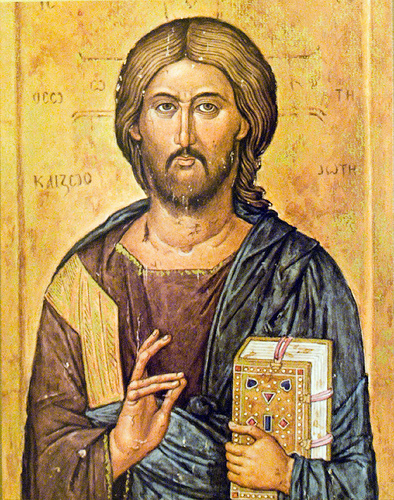
As a title, Christ appears throughout Christian liturgy, hymnody, art and devotional life. The combined name "Jesus Christ" is the central designation in Christian preaching and personal devotion. Representations of Christ in iconography and Western art have expressed theological claims about authority, compassion and kingship. The term also enters wider cultural language, literature and music where it can carry religious, historical and symbolic meanings.
Jewish and interreligious perspectives
In Jewish tradition the word "Messiah" retains distinct meanings tied to Jewish texts and expectations; most Jewish communities do not accept Jesus as the promised Messiah. In Islam Jesus (ʿĪsā) is honored as a prophet and is sometimes called the Messiah (al-Masīḥ) within Islamic literature, though Islamic theology rejects divine sonship as understood by mainstream Christian doctrine. These differing receptions underscore that "Christ" functions as a theological title with different implications across religious boundaries.
Scholarly approaches
Academic study of the title examines its linguistic origins, its place in ancient Jewish and Hellenistic thought, and its role in the formation of Christian identity. Scholars distinguish between historical inquiry into the figure called Jesus and theological claims about Christ; they also explore how the title was used by early communities, how it was interpreted in patristic and medieval theology, and how modern traditions continue to debate and reinterpret Christological language.
Further reading and related topics
- Articles on scriptural use and messianic expectation in Jewish and Christian texts: see general surveys under Old Testament studies and New Testament introductions.
- Historical Jesus research and the emergence of early Christology: introductory resources often reference the life of Jesus of Nazareth and subsequent interpretation.
- Comparative perspectives: Jewish readings of the Messiah and Islamic views of Jesus as the Messiah are relevant for interfaith discussion; consult summaries under Jewish tradition and Islamic theology topics.
- Language and translation: the relation of Hebrew and Greek terms is central to understanding how the title moved between linguistic worlds.
- Doctrinal formulations and creeds: classical creedal statements that shaped Christian claims about Christ are treated in theological overviews available in many introductions to Christianity.
The title "Christ" thus operates at the intersection of language, scripture, religious expectation and doctrine. It names a role promised in ancient texts, claimed by followers of Jesus, and interpreted in diverse ways across traditions and scholarly disciplines. For concise introductions and further study, readers may consult survey materials in religious studies and theologies that cover early Christian proclamation, messianic concepts in Judaism, and comparative religious perspectives on the figure known as the Christ.
Questions and answers
Q: What is the Christ?
A: The Christ is a title for the savior and redeemer who would bring salvation to the Jewish people and mankind.
Q: What does the term "Christ" mean?
A: The term "Christ" is the Greek translation of the Hebrew title Messiah, which means "the Anointed One".
Q: Who do Christians believe fulfilled messianic prophecies?
A: Christians believe that Jesus of Nazareth fulfilled messianic prophecies of Christian tradition.
Q: Is Christ a name or a title?
A: Both - it is used by Christians as both a name and as a title.
Q: Is Christ synonymous with Jesus?
A: Yes, they are synonymous.
Q: What was promised by God to Jewish people and mankind?
A: God promised salvation to Jewish people and mankind for the world.
Related articles
Author
AlegsaOnline.com Christ Leandro Alegsa
URL: https://en.alegsaonline.com/art/20053
Sources
- books.google.com : Jesus of history, Christ of faith