
Alaska Interior
The inland region of Alaska encompassing vast boreal forests, mountain ranges (including Denali), rivers, sparse settlements such as Fairbanks, and a long history of Indigenous presence, resource use and wilderness conservation.
The Alaska Interior is the central, inland portion of the U.S. state Alaska, characterized by broad valleys, wide river corridors and large tracts of largely undisturbed wilderness. It contrasts with Alaska’s coastal and maritime zones through its continental climate: cold, long winters and relatively warm summers. The interior is not a single administrative unit but a geographic and ecological region that shapes local life and travel.
Image gallery
9 Images



Geography and landforms
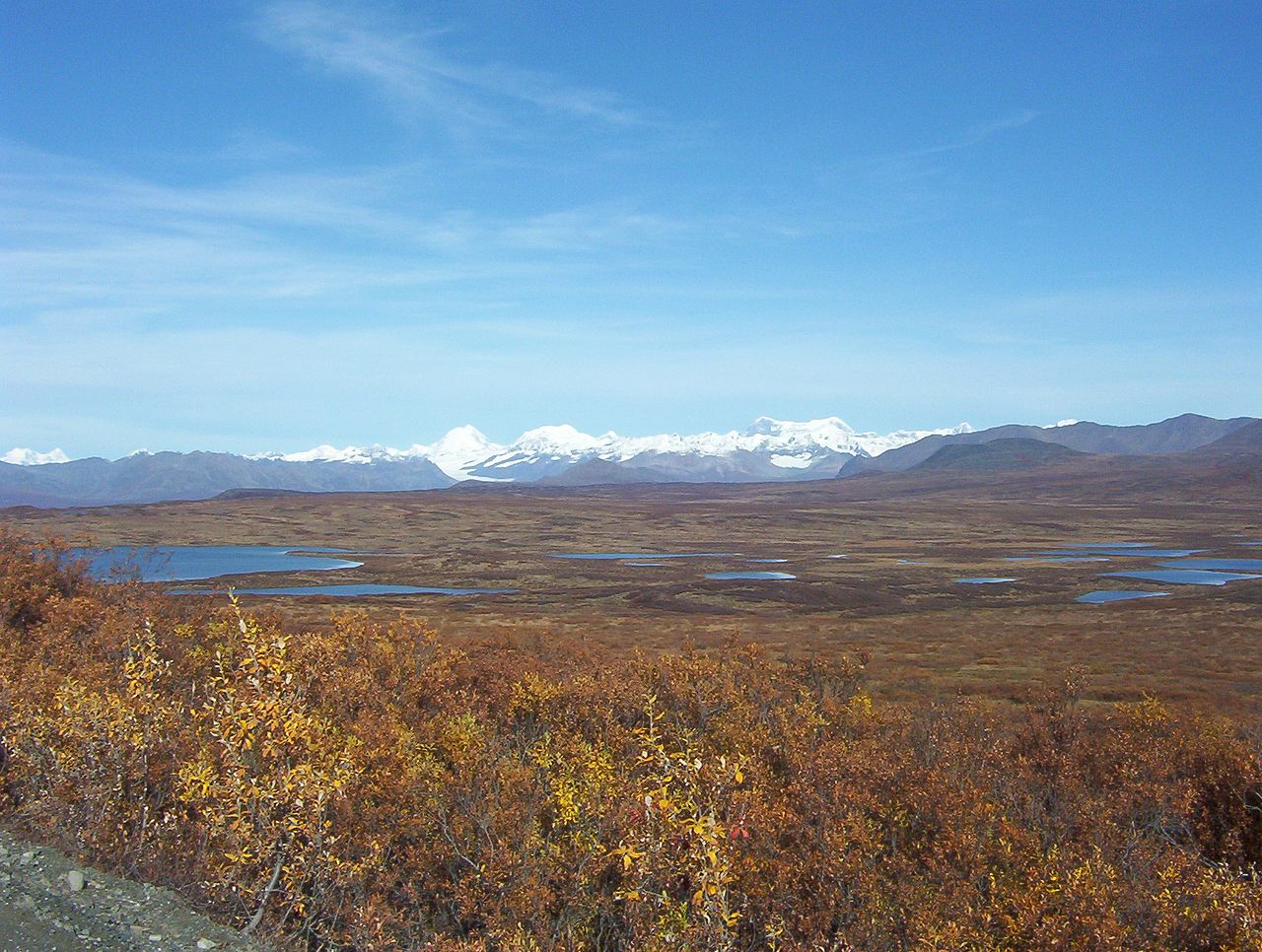
Mountain chains and uplands frame the Interior. The region includes parts of the Alaska Range, home to Denali (formerly Mount McKinley), and extends toward the Wrangell Mountains and the lesser-known Ray Mountains. Major rivers such as the Yukon and Tanana traverse broad floodplains, providing migration routes for fish and corridors for human movement. Permafrost, glacial remnants, and mosaic wetlands occur widely, producing varied soils and terrain.
Settlements and infrastructure
- Fairbanks — the region’s largest city and a principal hub for transportation, education and services.
- North Pole — a small community known for tourism themes tied to its name.
- Eagle — a historic river town near the Yukon.
- Delta Junction — where major highways meet and military activity has been important.
- Nenana — located on the Tanana River, historically linked to river and rail transport.
- Anderson — a small community near upland access routes.
Ecology and climate
The Interior is dominated by boreal forest (taiga) of spruce and mixed shrubs, transitioning to tundra at higher elevations. Wildlife includes moose, caribou, brown and black bears, wolves, and abundant migratory birds. Rivers support salmon runs where conditions allow. Seasonal extremes — including short growing seasons and deep winter cold — strongly influence plant communities and subsistence activities.
History and human presence
Indigenous Athabaskan peoples have lived in the Interior for millennia, developing seasonal patterns of hunting, fishing and trade tied to rivers and game migrations. Contact, exploration and later periods of resource extraction — notably gold prospecting and other mining activities — brought new settlements and transportation links. In the twentieth century, communities grew around rail, highways and air links while retaining strong subsistence traditions.
Economy and significance
The Interior’s economy blends local subsistence use with commercial activities: tourism (especially access to Denali and wilderness areas), natural-resource development, transportation services, and research into subarctic ecology and climate change. Conservation efforts and land management balance habitat protection with resource use, making the Interior important for both biological diversity and as a cultural landscape for Alaska’s residents.
Questions and answers
Q: What is the Alaska Interior?
A: The Alaska Interior is a region covering most of the state's territory that is characterized by wilderness and mountains.
Q: What are some of the mountains in the Alaska Interior?
A: Some of the mountains in the Alaska Interior include Mount McKinley (Denali), the Wrangell Mountains, and the Ray Mountains.
Q: What is the largest city in the Alaska Interior?
A: The largest city in the Alaska Interior is Fairbanks, which is also the state's second-largest city.
Q: What are some other towns in the Alaska Interior?
A: Other towns in the Alaska Interior include North Pole, Eagle, Tok, Glennallen, Delta Junction, Nenana, Anderson, Healy, and Cantwell.
Q: What is the natural environment like in the Alaska Interior?
A: The Alaska Interior is largely wilderness, with some of the most stunning mountains in the state.
Q: What kind of activities can visitors do in the Alaska Interior?
A: Visitors to the Alaska Interior can engage in a variety of outdoor activities, such as hiking, wildlife viewing, fishing, and hunting.
Q: Why is the Alaska Interior an important region?
A: The Alaska Interior is an important region because it contains many natural resources, such as oil, gas, and minerals, and is home to a diverse population of wildlife.
Tags
Related articles
Author
AlegsaOnline.com Alaska Interior Leandro Alegsa
URL: https://en.alegsaonline.com/art/2004
Sources
- wrcc.dri.edu : "State Extremes"
- tools.wmflabs.org : 65°N 152°W / 65°N 152°W / 65; -152