
Chirality (handedness)
Chirality is the geometric property of an object or system that makes it non-superimposable on its mirror image; important in geometry, chemistry, biology and materials science.
Chirality describes a geometric property: an object is chiral if it cannot be rotated or translated to coincide exactly with its mirror image. Everyday illustration of this is the pair of human hands: the left hand is a mirror image of the right, but no rotation will make one identical to the other. A chiral object and its mirror image are called enantiomers in chemistry; the two forms are often referred to informally as left- and right-handed.
Image gallery
4 Images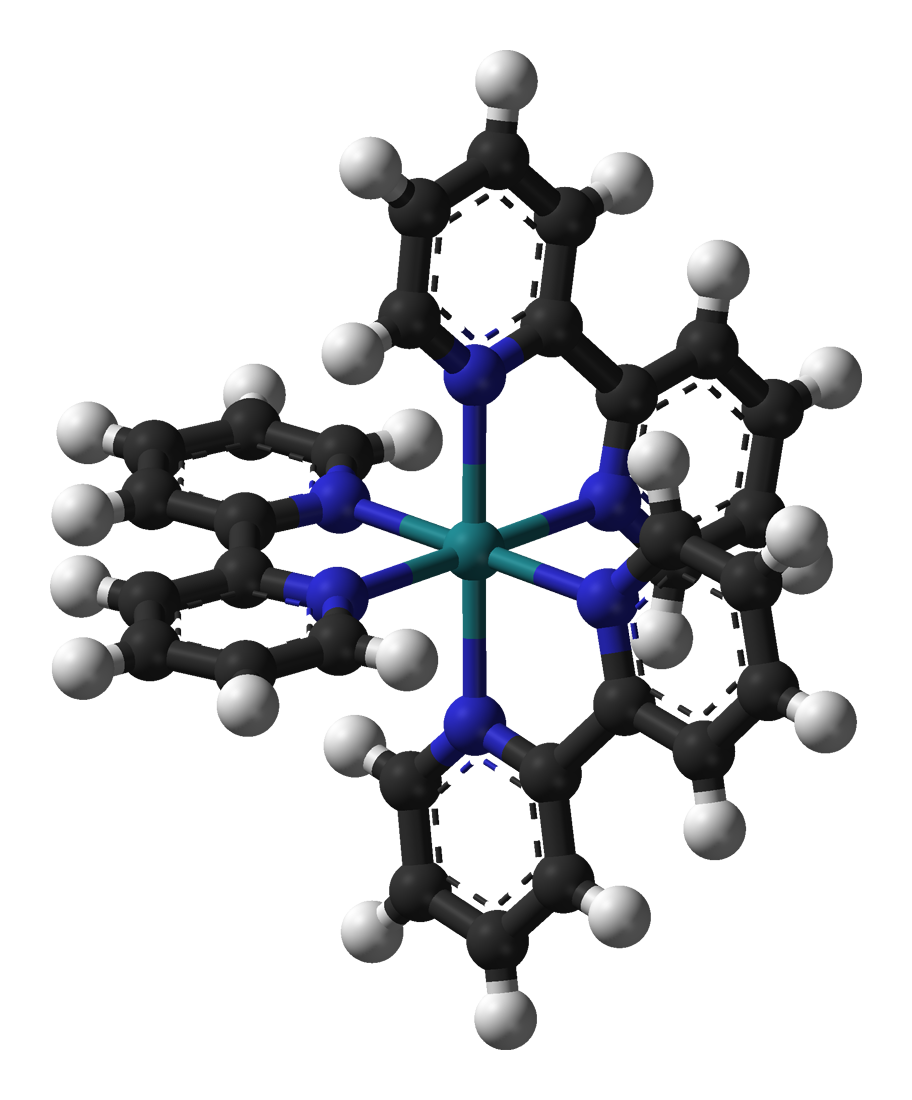


Defining characteristics
Chirality depends on three-dimensional arrangement rather than overall shape or size. A chiral object lacks an internal plane of symmetry and does not possess an inversion center that maps it onto its mirror image. In molecules, chirality typically arises when a carbon atom (or another center) is bonded to four different substituents, creating non-superimposable mirror images. In engineering, chirality can appear in shapes such as screws, propellers, or helical structures where direction (clockwise vs counterclockwise) matters.
History and etymology
The term chirality derives from the Greek kheir, meaning "hand," reflecting the classic hand analogy. The modern scientific use of the word was popularized in the late 19th century to describe asymmetry in crystals and molecules. Since then, the concept has been formalized in mathematics, stereochemistry and materials science as a way to classify and analyze handedness.
Occurrence and importance
Chirality is central in many fields. In organic chemistry and biochemistry most amino acids in living systems are one handed form (commonly called L) and sugars in organisms commonly occur as D enantiomers; this molecular handedness has profound implications for metabolism and molecular recognition. In pharmacology, two enantiomers of the same compound can have very different biological effects, so distinguishing and producing the desired enantiomer is critical. Optical activity—rotation of plane-polarized light—is a classical physical property used to detect molecular chirality.
Examples and practical notes
- Human hands and gloves: you cannot put a left-handed glove on a right hand; see human hands and the mirror-image relationship.
- Fasteners and threads: screws and bolts are chiral because their thread direction defines handedness.
- Molecules: many organic compounds exist as pairs of enantiomers with identical physical properties except in chiral environments or when interacting with polarized light.
- Everyday objects: propellers, spiral staircases and certain crystals display chirality in form or function; a left- and right-handed propeller produce different thrust directions.
In laboratory practice, chemists detect or separate enantiomers using polarimetry, chiral chromatography and techniques such as X-ray crystallography or chiral NMR shift reagents. Industrial synthesis often must control stereochemistry to avoid unwanted enantiomers. For accessible demonstrations of handedness and fitting problems, try fitting a left-handed glove onto the opposite hand: the difficulty illustrates non-superimposability in a familiar way.
Questions and answers
Q: What is chirality?
A: Chirality is when an object exists in two forms which are mirror images of each other and cannot be superimposed.
Q: What is an example of chirality in the human body?
A: The human hands are an example of chirality. The left hand is a mirror image of the right hand.
Q: Can you put a left-handed glove on your right hand?
A: No, you cannot put a left-handed glove on your right hand because they are chiral and mirror images of each other.
Q: Why can't you shake the right hand of a person using your left hand?
A: It is considered impolite to shake hands using the left hand, but it is also difficult due to chirality. The left hand is a mirror image of the right hand and cannot be superimposed.
Q: Is chirality unique to humans?
A: No, chirality is present in many objects, both natural and man-made.
Q: Can a chiral object be transformed to look exactly like its mirror image?
A: No, a chiral object cannot be transformed to look exactly like its mirror image by turning or moving it. The two forms cannot be superimposed.
Q: What is the significance of chirality in chemistry?
A: Chirality is important in chemistry because molecules with chiral centers can exist as enantiomers, which have different biological activity and can have different effects on the body.
Related articles
Author
AlegsaOnline.com Chirality (handedness) Leandro Alegsa
URL: https://en.alegsaonline.com/art/19825