
Chinese New Year (Spring Festival / Lunar New Year)
Annual celebration marking the new year in the traditional Chinese lunisolar calendar, covering timing, customs, zodiac signs, regional forms and modern observances worldwide.
Overview
Chinese New Year, commonly called the Spring Festival in mainland China and the Lunar New Year in many other places, is the principal traditional holiday for Chinese communities around the world. It marks the beginning of the year in the traditional lunisolar calendar, which aligns months with the cycles of the moon and occasionally inserts an extra month to keep seasons synchronized. Because that calendar is not identical to the Gregorian calendar, the festival falls on a different date each year, always between late January and mid to late February.
Image gallery
10 Images


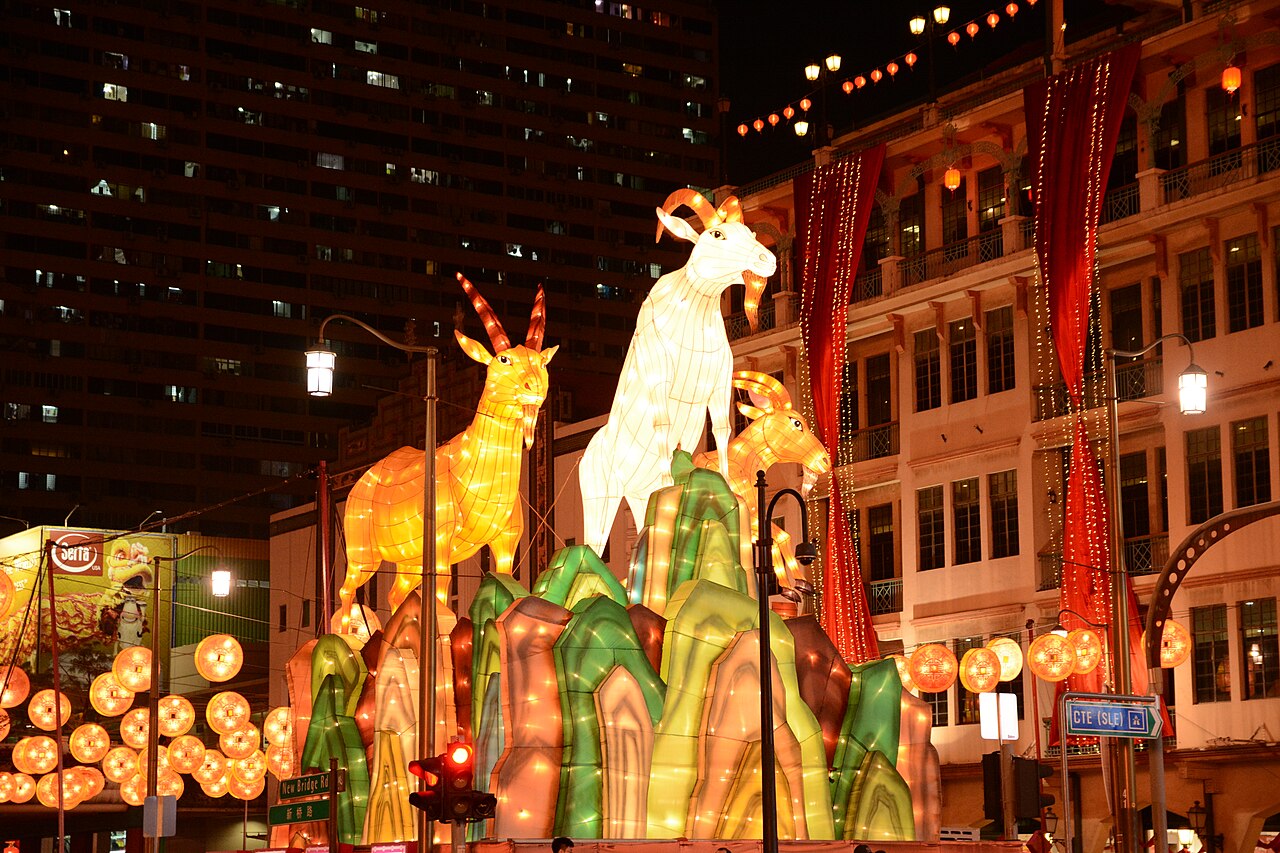


Calendar, timing, and the zodiac
The first day of the new year begins on the new moon that appears between late January and late February. The festival historically continued for fifteen days until the first full moon, which is celebrated as the Lantern Festival. Each year in the twelve-year zodiac cycle is associated with an animal sign; these signs are widely used to describe birth years and to shape cultural expectations and folk customs during the celebrations.
Common customs and symbols
Chinese New Year is characterized by a mix of family, ritual and public activities. Key practices include the reunion dinner on New Year's Eve, when extended family members try to gather; giving money in red envelopes to children; decorating homes with red paper couplets and lanterns; cleaning before the new year to sweep away bad luck; and lighting fireworks and firecrackers to mark the transition and, traditionally, to ward off misfortune. Food plays a central role, with specific dishes chosen for their symbolic meanings, such as fish for abundance and dumplings for wealth. Performances like dragon and lion dances remain common in many communities.
Regional variations and related festivals
Although the Chinese Spring Festival is the template for many East and Central Asian lunar new year celebrations, local calendars and customs produce important differences. The Vietnamese New Year (Tết) and the Korean New Year are usually close to the same dates, though variations in calendrical rules or local observance can shift them. Other lunar new year traditions of Tibet (Losar) and Mongolia (Tsagaan Sar) are similar in spirit but follow distinct local computations or cultural practices. In some countries and regions only the initial days are public holidays; in others the observance can stretch over a week or more.
History and cultural significance
The festival has ancient roots in agrarian and lunar-cycle rites, combined over centuries with folk legends, ancestor veneration and imperial court observances. It has adapted to changing political and social contexts: in modern times, state calendars, mass migration for family reunions and urban public spectacles have reshaped how people mark the season. The holiday remains an important moment for consolidating family bonds, renewing hopes for the year ahead and expressing cultural identity across diasporas.
Contemporary practice and economy
Today, Chinese New Year has both domestic and global impact. Large-scale travel for family reunions is a major seasonal phenomenon in countries with significant Chinese populations. Retail sales rise for foods, gifts and decorations, while public events and media programs broadcast special content for the holiday. At the same time, many customs are adapted to modern life—digital red envelopes, organized public lantern displays and municipal restrictions on firecrackers being some examples—so that the festival continues to evolve while retaining traditional motifs.
Common customs at a glance
- New Year’s Eve family reunion dinner and ancestor offerings
- Giving red envelopes (money) to children and younger relatives
- Putting up red couplets, paper cuttings and lanterns for good fortune
- Cleaning homes before the holiday and avoiding major cleaning on the first day
- Fireworks, lion and dragon dances, and public parades
- Celebration of the fifteenth day with the Lantern Festival
Related topics and further reading
- Spring Festival
- Lunar New Year terminology
- Festival dates and observance
- New moon and calendar start
- Traditional Chinese year numbering
- Chinese lunisolar calendar
- Moon phases and months
- Solar terms and seasonal alignment
- Earth’s orbit and calendar adjustments
- Sun-based season markers
- Difference from Gregorian New Year
- Typical date range in January
- Typical date range in February
- Global Chinese communities
- Traditional age reckoning
- Chinese zodiac animals
- Gift customs and exchanges
- Family reunion traditions
- Festival meals and symbolic dishes
- Comparisons with other winter holidays
- European winter celebrations
- Christian festival contrasts
- Red envelopes (hongbao)
- Symbolism of the color red
- Children’s gifts and modern variations
- Public holiday arrangements in the PRC
- Golden Week and adjusted weekends
- Vietnamese Tết
- Korean New Year
- Seollal observances
- Japanese historical lunar New Year
- Calendar reforms in Japan
- 19th-century calendrical changes
- Tibetan Losar
- Mongolian Tsagaan Sar
Questions and answers
Q: What is Chinese New Year also known as?
A: Chinese New Year is also known as the Spring Festival in China and the Lunar New Year in Singapore.
Q: How does the traditional Chinese calendar work?
A: The traditional Chinese calendar is based on changes in the moon, and it is sometimes adjusted to fit with the seasons of the year based on how Earth moves around the sun.
Q: When does Chinese New Year occur?
A: Chinese New Year occurs between January 21st and February 20th each year, but never on January 1st.
Q: What are some traditions associated with this holiday?
A: Some traditions associated with this holiday include giving children gifts of cash in red envelopes (hongbao) instead of toys or electronics, family gatherings with large meals, and using its 7th day to count people's ages instead of birthdays.
Q: Which countries celebrate Chinese New Year?
A: Countries that celebrate Chinese New Year include China, The Philippines, Singapore, Malaysia, Brunei, Indonesia and parts of Thailand.
Q: Are there other holidays similar to it?
A: Yes - Vietnam's Tet holiday and Korea's Korean New Year are usually celebrated on the same day as Chinese new year but can be different due to different ways of thinking about changes in the moon. Japan used to have a similar celebration until some changes were made during 19th century. Losar and Tsagaan Sar which are Tibetan and Mongolian new years respectively are close to but not always exactly on par with when China celebrates its new year.
Related articles
Author
AlegsaOnline.com Chinese New Year (Spring Festival / Lunar New Year) Leandro Alegsa
URL: https://en.alegsaonline.com/art/19771
Sources
- chinahighlights.com : "Chinese Lantern Festival"
- chinahighlights.com : China Highlights
- telegraph.co.uk : "The History behind China's Spring Festival"
- blogs.transparent.com : "Chinese New Year Celebration in Indonesia: A Road to a New-Found Identity"
- blogs.transparent.com : Indonesian Language Blog
- publicholidays.sg : "Start Planning: Chinese New Year"
- publicholidays.sg : Singpore Public Holidays
- chinahighlights.com : "The Origin and History of Chinese New Year"
- chinahighlights.com : "Chinese New Year: Traditions, Activities, Day-by-Day Guide"
- iacd.or.kr : "Hinc Sunt Leones: Two Ancient Eurasian Migratory Terms in Chinese Revisited"
- simple.wikisource.org : Instruction of the President of the Republic of Indonesia No. 14... about Chinese Religion, Beliefs, and Traditional Customs
- indoindians.com : "Chinese New Year in Indonesia"
- indoindians.com : Indoindians